

Sri Lanka’s economic revival is gaining momentum as decisive reforms and international support transform the nation’s financial landscape. Experts say this recovery, anchored by disciplined policy, could mark the end of repeated IMF programmes.
Discover how Sri Lanka is rebuilding its economy from crisis to confidence
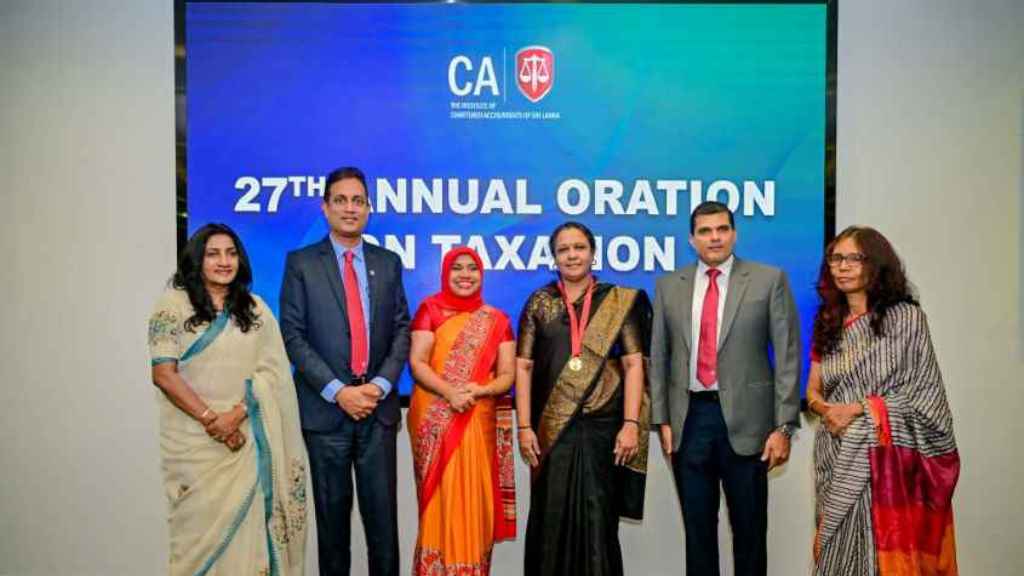
Sri Lanka’s economic journey, long marked by fiscal instability, has entered a new chapter. Speaking at the 27th Annual Tax Oration organized by CA Sri Lanka, Dr. Sujeetha Jegajeevan, Director of Economic Research at the Central Bank, analyzed the nation’s path from crisis to confidence. She emphasized that decades of structural weaknesses, amplified by global shocks and domestic policy missteps, culminated in the profound economic challenges faced today. However, ongoing reforms supported by the International Monetary Fund (IMF) and multilateral partners are laying a strong foundation for sustainable recovery.
The event drew senior Chartered Accountants, including President Heshana Kuruppu, Vice President Tishan Subasinghe, Faculty of Taxation Chairperson Sarah Afker, and CEO Lakmali Priyangika, reflecting the significance of the discussions on national economic reform.
Dr. Jegajeevan traced the roots of Sri Lanka’s crisis to persistent fiscal and external deficits over decades, resulting in unsustainable borrowing. “The debt burden became unmanageable not merely due to its size, but due to the inability to service it,” she explained. Weak revenue generation, high interest obligations, policy missteps, and global disruptions like the COVID-19 pandemic exacerbated these challenges, creating a perfect storm for economic instability.
In response, Sri Lanka embarked on a decisive corrective path. Engagement with the IMF, including the 17th programme, debt standstills, and restructuring of external obligations, were complemented by emergency fiscal and monetary measures to halt the freefall. Crucially, institutional reforms like the Public Financial Management Act and amendments to the Central Bank of Sri Lanka Act entrenched fiscal discipline and strengthened central bank independence. Governance reforms, including the Anti-Corruption and Proceeds of Crime Acts and CIABOC enhancements, further solidified accountability mechanisms.
“Unlike in the past, the most difficult reforms were front-loaded, not postponed,” Dr. Jegajeevan noted. Legal safeguards and strengthened institutions now limit policy reversals, while public awareness of the crisis has fostered broader support for reforms.
These interventions are already yielding results. Inflation has been reduced from a high of around 70% to single digits, exchange rate volatility has stabilized, the primary budget balance has turned positive, and debt restructuring has eased near-term repayment pressures. Improved market confidence is evident through sovereign rating upgrades and reduced bond yields, signaling a regained trust in Sri Lanka’s financial management.
Despite these achievements, Dr. Jegajeevan cautioned that stabilisation alone is insufficient. To regain lost output and align with regional peers, Sri Lanka must accelerate growth. She highlighted immediate priorities such as boosting service exports, including tourism and logistics, enhancing female labour force participation, adopting digital technologies and AI, and improving trade facilitation to stimulate private sector-led growth.
For medium-to-long-term recovery, she stressed the importance of structural reforms in labour markets, land policy, education, and capital markets. Innovation, research and development, climate resilience, and global integration were identified as critical components for sustainable, inclusive growth. “Stability provides a platform, but strategic growth initiatives will define Sri Lanka’s economic trajectory for decades,” Dr. Jegajeevan concluded.
The insights shared at CA Sri Lanka’s 27th Annual Tax Oration underscore the nation’s shift from crisis management to confidence-building, demonstrating how disciplined policy, institutional reforms, and strategic international support can reshape economic prospects. With continued focus on growth-oriented reforms, Sri Lanka is poised to move beyond its historical cycles of vulnerability and toward lasting economic resilience.