

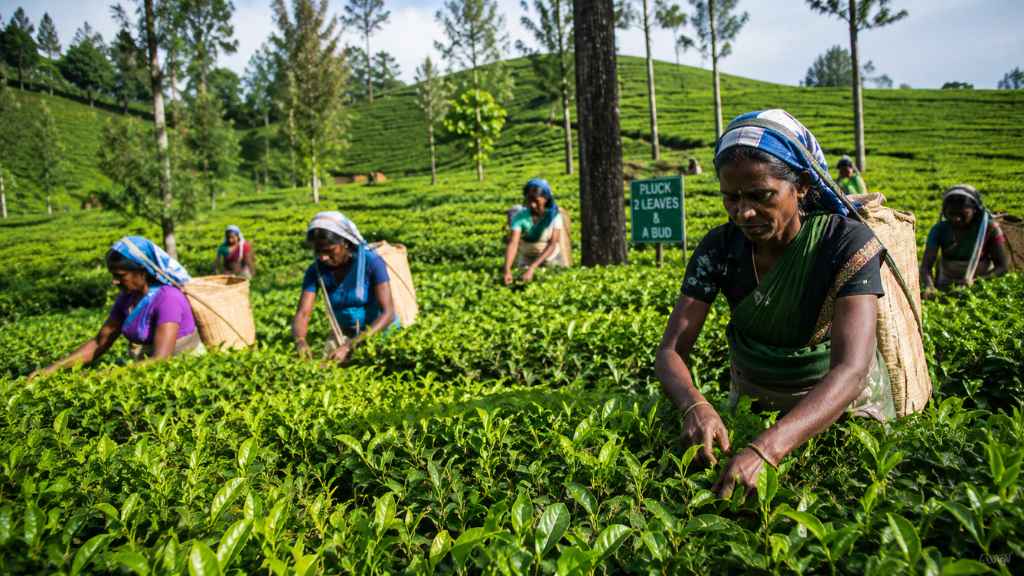
TEA calls for urgent support to lift tea smallholder productivity, exports, urging the Government to provide targeted financial assistance to farmers as declining production continues to limit Sri Lanka’s export earnings despite sufficient processing capacity.
TEA calls for urgent support to lift tea smallholder productivity, exports and boost output
The Tea Exporters Association (TEA) made the appeal during a meeting with President Anura Kumara Dissanayake on 26 June, highlighting the urgent need to revive the country’s tea sector by improving the productivity of tea smallholders, who account for around 75% of national tea production.
Speaking at the meeting, TEA Chairman Huzefa Akbarally said Sri Lanka’s tea exporters have the capacity to process and export approximately 400 million kilograms of tea annually. However, actual export volumes remain significantly below that level because of declining production across the sector.
According to the association, national tea production has fallen steadily from 340 million kilograms in 2013 to an estimated 261 million kilograms in 2025. While export earnings have remained relatively stable at around US$1.5 billion a year, the industry has struggled to increase foreign exchange income as lower production has constrained export volumes.
The TEA noted that more than 480,000 tea smallholders form the backbone of Sri Lanka’s tea industry. However, productivity has dropped to around 150 kilograms of green leaf per acre per month, well below the estimated potential of 600 kilograms per acre per month.
The association attributed the decline to a series of policy-related disruptions over recent years, including the glyphosate ban and broader restrictions on agrochemical use, which affected plantation productivity and crop management.
To address the issue, the TEA called for an urgent nationwide infilling programme aimed at restoring optimal plantation density. Many smallholder tea lands currently have fewer than 3,000 tea bushes per acre, compared with the recommended 5,000 plants per acre, limiting yields and long-term profitability.
The association proposed that the Government work with international financial institutions and local banks to provide loans or grant assistance to support replanting and infilling activities. It estimated that the one-time investment required for infilling would be around Rs. 200 per plant.
According to TEA estimates, restoring plantation density would generate substantial long-term economic benefits. Improved productivity could increase farmers’ earnings to more than Rs. 450 per plant annually after two years. Over a 30-year production cycle, each additional plant could also generate more than Rs. 850 in foreign exchange earnings for the country at current market prices.
The association stressed that supporting tea smallholders would not only improve rural incomes but also strengthen Sri Lanka tea exports, enhance export competitiveness and increase foreign exchange inflows at a time when the country is focused on sustaining its economic recovery.
During the discussion, President Dissanayake expressed support for the proposal and reaffirmed the Government’s commitment to strengthening export-oriented agriculture. The President emphasised the importance of increasing export revenue from tea and other agricultural industries as part of the country’s broader economic development strategy.
The TEA said the Government had indicated its willingness to extend the necessary support to improve tea production and export performance through targeted interventions.
Also attending the meeting were Treasury Secretary Dr. Harshana Suriyapperuma, the Chairman of the Export Development Board, and other senior government officials, who discussed measures to improve the long-term sustainability and global competitiveness of Sri Lanka’s tea industry.