

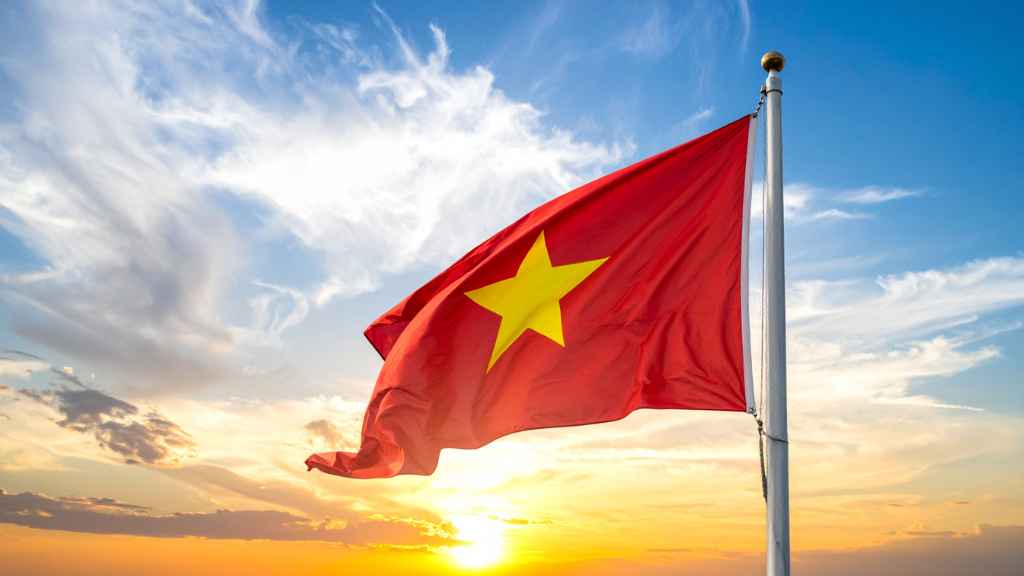
The Vietnam 14th Party Congress begins on January 14, 2026, celebrating four decades of economic renewal, as the nation now ranks as a $514 billion economy driven by innovation, market reforms, and strategic development.
Vietnam 14th Party Congress highlights four decades of growth and innovation
Vietnam is preparing to host its 14th Party Congress, a landmark event marking nearly four decades of economic transformation since the launch of Doi Moi, or “renewal,” in 1986. Over the past forty years, the nation has moved from a centrally planned economy to a dynamic, socialist-oriented market system, attracting investment and establishing Vietnam as a competitive force in global trade.
According to an online portal reporting on the congress, Vietnam’s economy grew by an estimated 8.01 percent in 2025, reaching $514 billion and positioning the country as the 32nd largest economy in the world. Between 2021 and 2025, the economy averaged 6.1 percent growth annually, with per capita GDP rising to $5,026, placing Vietnam among upper middle-income nations.
The Party Central Committee has emphasized the importance of balancing economic progress with social equity, drawing on President Ho Chi Minh’s philosophy of a state “of the people, by the people, and for the people.” This approach underpins the formulation of policies designed to sustain long-term growth while ensuring broad-based benefits for citizens.
Stability as a Foundation for Growth
Ahead of the congress, Party General Secretary To Lam urged government agencies to prioritize macroeconomic stability and inflation control. In a key speech, he highlighted the “dialectical relationship between stability and development,” emphasizing that high growth must rest on a foundation of economic balance.
From a modest $16 billion economy in 1985, Vietnam faced sharp contraction to $6.39 billion amid currency devaluation. Reforms in the late 1980s separated commercial banking from the central bank, and the 1990 law restructuring the State Bank of Vietnam laid the groundwork for modern financial governance. Following these reforms, Vietnam experienced rapid growth, supported by foreign investment and international trade agreements.
Today, Vietnam’s economy operates as a free-market system where businesses must compete with imports, producing goods that meet both domestic and international standards. The state economy maintains a guiding role, while private enterprise serves as the primary engine of national growth.
Innovation, Science, and Lean Governance
The 14th Party Congress aims to cement a new growth model driven by science, technology, and a lean government structure. General Secretary To Lam highlighted innovation and digital transformation as essential for achieving long-term double-digit growth.
Recent administrative reforms have introduced a two-tier local government system, eliminating district-level administration and reducing units directly subordinate to central authorities by nearly 35 percent. Commune-level mergers cut local administrative units by 66.9 percent. These changes are intended to streamline governance, reduce legal compliance costs, and create a transparent environment conducive to domestic and foreign investment.
At the core of Vietnam’s reform agenda is a decisive shift from administrative control toward service-oriented governance, development facilitation, and modernized institutional frameworks. The Party’s strategic focus integrates technological advancement with human capital development, national defense, and international engagement.
A Path Toward 2030 and 2045 Goals
The congress positions Vietnam on a trajectory toward ambitious long-term objectives. By 2030, the country aims to consolidate economic prosperity, strengthen innovation-driven industries, and enhance its global competitiveness. By 2045, the vision includes building a peaceful, independent, democratic, and prosperous nation, reflecting the Party’s holistic approach to growth and governance.
According to reports, the congress will emphasize efficient use of state capital, development of international financial centers, free trade zones, and digital assets as part of Vietnam’s strategic modernization. This comprehensive approach seeks to harness science and technology as not just an economic necessity but a strategic foundation for national development and international standing.
Vietnam’s progress over the past four decades illustrates the transformative power of reform-minded policy and a balanced approach to stability and growth. The 14th Party Congress underscores the country’s ongoing commitment to innovation-led development and positions Vietnam as a model of economic resilience in Southeast Asia.