

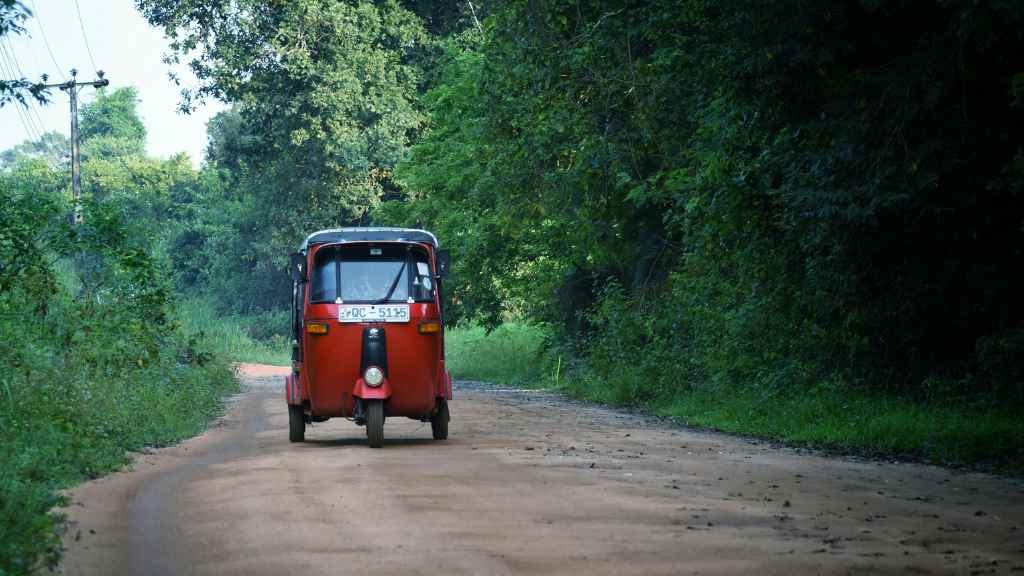
Ella transport clashes have exposed growing tensions within Sri Lanka’s tourism transport sector, placing visitors in uncomfortable situations and raising broader questions about regulation, livelihoods, and the country’s global reputation as a safe and welcoming destination.
Ella transport clashes highlight risks to Sri Lanka’s visitor economy
Ella transport clashes between traditional tuk-tuk drivers and app-based taxi operators have recently drawn national attention, following a series of incidents that unsettled both locals and tourists in the popular hill-country destination. Images and videos circulating on social media showed drivers being threatened and, in some cases, assaulted by organized groups widely described as tuk-tuk enforcers. Alarmingly, several tourists were caught in the middle of these confrontations, turning what should have been a peaceful holiday experience into moments of fear and confusion.
For visitors unfamiliar with Sri Lanka’s internal transport dynamics, these encounters created a stark contrast to the country’s long-standing image of warmth and hospitality. Tourism depends heavily on trust, predictability, and a sense of safety. When travelers witness or experience conflict firsthand, particularly in public spaces such as roads and taxi stands, the damage extends far beyond a single incident. It shapes perceptions, influences travel recommendations, and quietly erodes confidence in the destination.
While the incidents in Ella appeared sudden, they are the result of deeper structural pressures that have been building for more than a decade. Limited job creation, persistent youth unemployment, and weak long-term economic planning pushed many young people toward three-wheeler driving as a form of immediate income and independence. Over time, this informal solution evolved into a vast, loosely regulated transport network that now supports tens of thousands of families across the country.
As traditional markets contracted and operating costs rose, competition within the sector intensified. The arrival and rapid adoption of app-based transport platforms further altered the landscape. Tourists, already accustomed to using such services globally, naturally gravitated toward them in Sri Lanka for their price transparency, digital tracking, and perceived safety. This shift, however, placed additional strain on traditional drivers who often lack the tools, training, or institutional backing to adapt smoothly.
The resulting friction has increasingly spilled onto the streets. When disagreements escalate into intimidation or violence, the consequences are not limited to those directly involved. They ripple outward, affecting tourists, local commuters, nearby businesses, and ultimately the credibility of Sri Lanka’s tourism sector. Ella transport clashes, therefore, represent more than a local dispute; they signal a systemic failure to manage change within a critical service industry.
In modern tourism economies, adaptation is not optional. Service providers must evolve alongside global trends and customer expectations. This transition, however, cannot be forced through conflict or fear. The three-wheeler community requires structured support, including education on changing market realities, incentives to improve service standards, and pathways toward professionalization. Without these measures, resistance to change will continue to manifest in destructive ways.
Law enforcement plays a central role in restoring order, yet concerns persist about inconsistent application of regulations and uncertainty among officers regarding jurisdiction and rules. Victims of harassment, including tourists and app-based drivers, frequently report unclear responses when seeking assistance. This lack of decisive, uniform enforcement creates space for informal power structures to thrive, allowing disputes to recur without resolution.
A sustainable response requires a coordinated national framework rather than isolated crackdowns. Clear regulations governing fares, operating zones, and conduct are essential. Equally important are enforceable codes of ethics, standardized training programs, and transparent complaint mechanisms. Excessive and arbitrary pricing, a recurring complaint among both tourists and locals, undermines confidence and damages the perception of fairness within the transport system. Price clarity is not merely a consumer convenience; it is a reputational safeguard.
Government authorities must also acknowledge that the three-wheeler sector is now an entrenched component of Sri Lanka’s economic and social fabric. Attempts to marginalize or suppress it without providing alternatives are unlikely to succeed. What is required is a balanced, pragmatic strategy that combines regulation with education, enforcement with fairness, and short-term control with long-term employment creation.
If left unaddressed, Ella transport clashes risk becoming a recurring narrative, reinforcing negative impressions at a time when Sri Lanka can least afford reputational harm. Tourism recovery depends not only on scenic beauty and marketing campaigns but also on functional systems that protect visitors while sustaining livelihoods. The lessons from Ella are clear: unresolved structural issues, when ignored, eventually surface in ways that threaten both social stability and economic recovery.