

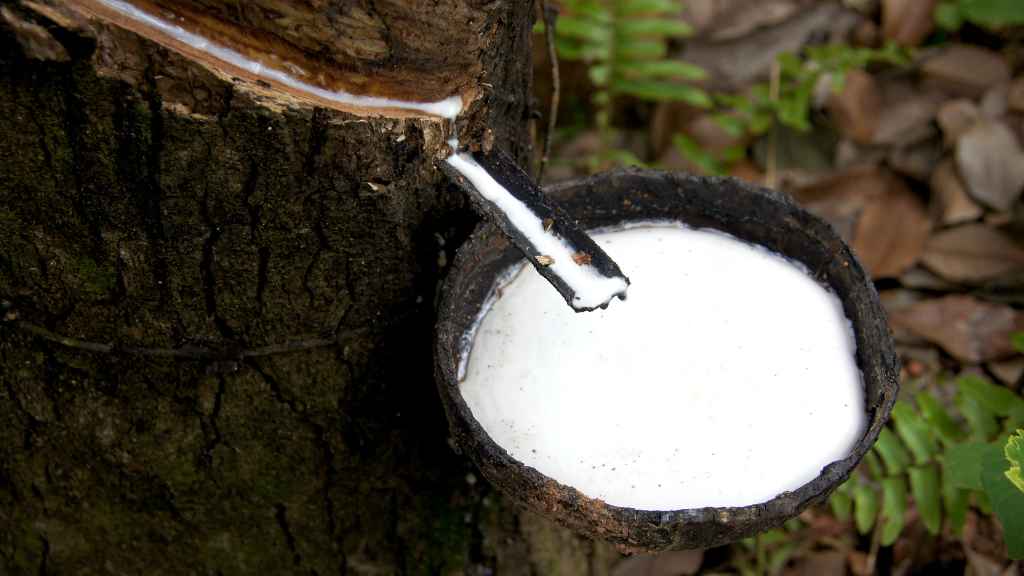
Sri Lanka secures a €8 million EU grant to drive green rubber growth, boosting sustainable practices and economic development. The initiative targets decarbonising the rubber value chain while enhancing youth and women’s participation in sustainable agriculture.
EU grant empowers Sri Lanka’s rubber sector with sustainable green growth
Sri Lanka has successfully secured a €8 million grant from the European Union to advance green economic growth in the country’s rubber sector, the Finance Ministry announced on Tuesday. The funding will support the AgriGreen Initiative – Green Economic Growth through Sustainable Agriculture Practices, a project designed to modernise and decarbonise rubber production while promoting environmentally responsible practices.
The grant agreement, formalised between the Government of Sri Lanka and the EU, reflects the continued partnership between the two entities in fostering sustainable development, strengthening food security, and integrating Sri Lanka more effectively into global export markets. By focusing on modernising segments of the rubber value chain, the project aims to balance economic expansion with environmental stewardship and social inclusivity.
Implementation of the initiative will be led by the Ministry of Plantation and Community Infrastructure, in close collaboration with the Rubber Development Department and the Rubber Research Institute of Sri Lanka, with strategic support from the EU. The project will specifically target environmentally friendly agricultural techniques, highlighting opportunities for youth and women to play an active role in transforming the sector.
Secretary to the Ministry of Finance, Planning, and Economic Development, Dr. Harshana Suriyapperuma, signed the agreement on behalf of the Sri Lankan government. Representing the EU, Dr. Johann H. Hesse, Head of Cooperation at the EU Delegation to Sri Lanka, formalised the partnership, signalling mutual commitment to sustainable growth and cooperative development.
Officials noted that the grant underscores the EU’s dedication to Sri Lanka’s economic reform and sustainability agenda. At a time when policymakers are navigating fiscal consolidation alongside structural reforms, the initiative exemplifies a strategic approach to integrating environmental responsibility into economic progress. The project is expected to deliver measurable outcomes in sustainable production, improved export competitiveness, and strengthened food security for local communities.
The AgriGreen Initiative will concentrate on specific segments of the rubber value chain, introducing advanced techniques that reduce carbon emissions and promote sustainable resource use. In addition to technological upgrades, the project aims to develop human capital by engaging young professionals and women entrepreneurs, empowering them to contribute meaningfully to both economic and environmental objectives.
Experts suggest that the EU grant will enhance Sri Lanka’s capacity to meet international sustainability standards, boosting the competitiveness of its rubber products in global markets. With climate-conscious production practices becoming a priority for international buyers, integrating green solutions into the rubber sector can position Sri Lanka as a leader in sustainable commodity production.
Beyond the economic benefits, the project reinforces a broader policy goal of aligning Sri Lanka’s growth trajectory with global sustainability frameworks. By integrating environmentally responsible practices into agriculture, policymakers anticipate long-term benefits for local ecosystems, community livelihoods, and national food security.
The partnership also demonstrates the EU’s ongoing support for Sri Lanka’s reform agenda, highlighting shared objectives of promoting green economic growth, sustainable consumption and production, and inclusive development. By combining financial assistance with technical expertise and institutional collaboration, the initiative represents a comprehensive approach to sustainable sector transformation.
Overall, the EU-funded AgriGreen Initiative is a milestone in Sri Lanka–EU cooperation. Through its focus on decarbonisation, inclusive participation, and sustainable practices, the project is set to modernise the rubber industry, foster economic resilience, and contribute to a greener, more sustainable future for the country.