

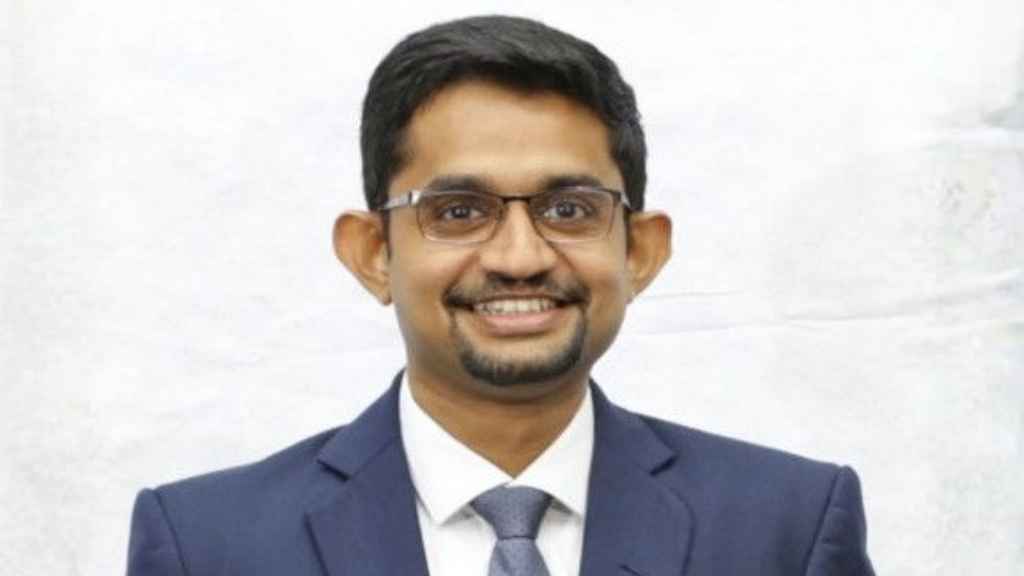
Ceylon Chamber appoints Shiran Fernando Secretary General/CEO as part of a carefully planned leadership transition, reinforcing institutional continuity and governance stability within one of Sri Lanka’s most influential business organizations.
Ceylon Chamber appoints Shiran Fernando Secretary General/CEO in leadership transition
The Ceylon Chamber of Commerce has announced that Shiran Fernando will assume the role of Secretary General and Chief Executive Officer with effect from May 8, 2026, succeeding Buwanekabahu Perera, who concludes a three-year tenure marked by institutional strengthening and expanded global engagement.
The transition reflects a structured succession strategy aimed at maintaining continuity while adapting to evolving economic and business challenges. Chairman Krishan Balendra emphasized that the decision aligns with the Chamber’s long-standing commitment to governance discipline and leadership stability, noting that strong institutions are built through deliberate planning rather than abrupt change.
During his tenure, Perera oversaw a period of notable institutional consolidation. His leadership coincided with enhanced engagement between the Chamber and both domestic and international stakeholders, strengthening its role as a key interface between the private sector and policymakers. Notably, his tenure included serving as Chair of the Indian Ocean Rim Association Business Forum, where Sri Lanka’s private-sector presence in the region gained increased visibility and influence.
The Ceylon Chamber appoints Shiran Fernando Secretary General/CEO decision signals a continuation of this trajectory, with Fernando bringing extensive experience in economic policy, research, and institutional strategy. Having been closely involved with the Chamber for nearly a decade, he has served in multiple senior roles, including Chief Economist, Head of the Economic Intelligence Unit, and most recently as Chief Economic Policy Adviser.
His appointment represents a strategic alignment between policy formulation and execution. Fernando has played a central role in shaping the Chamber’s policy advocacy, particularly in areas related to macroeconomic reform, business climate improvements, and private-sector development. This deep institutional knowledge is expected to enable a seamless transition, minimizing operational disruptions while maintaining strategic momentum.
Within the broader context of Sri Lanka private sector leadership, the transition comes at a critical time. The country is navigating a complex economic recovery phase, requiring coordinated efforts between government institutions, private enterprises, and international partners. Organizations such as the Ceylon Chamber play a pivotal role in facilitating dialogue, influencing policy, and representing business interests in national decision-making processes.
The Chamber’s emphasis on continuity is further reflected in its broader leadership structure. Alikie Perera, who serves as Deputy Secretary General, Chief Operating Officer/Financial Controller, and CEO of GS1 Lanka, continues in her role, providing a stabilizing influence. With over three decades of service, she has contributed to multiple leadership cycles and has been instrumental in maintaining operational integrity and financial discipline.
Her involvement in flagship initiatives such as the Sri Lanka Economic and Investment Summit and the Best Corporate Citizens Awards underscores the Chamber’s role in shaping national business discourse. These platforms have evolved into recognized benchmarks, contributing to both domestic and international engagement.
The Ceylon Chamber appoints Shiran Fernando Secretary General/CEO transition also highlights the importance of institutional memory in governance. By retaining experienced leadership while introducing new strategic direction, the Chamber aims to balance continuity with innovation. This approach is particularly relevant in dynamic economic environments where adaptability must be matched with stability.
From a governance perspective, the transition illustrates a model of structured succession planning. Rather than reactive leadership changes, the Chamber has adopted a proactive approach, ensuring that incoming leadership is well-integrated into existing systems and familiar with organizational priorities. This reduces execution risk and enhances the organization’s ability to respond to emerging challenges.
The appointment also carries implications for Ceylon Chamber leadership transition dynamics more broadly. It signals confidence in internal talent development and reinforces the value of long-term engagement within the institution. By promoting from within, the Chamber leverages accumulated expertise while fostering a culture of continuity and accountability.
Looking ahead, Fernando’s leadership will likely focus on advancing policy advocacy, strengthening private-sector engagement, and supporting Sri Lanka’s economic reform agenda. His background in economic analysis and policy advisory positions him to navigate complex macroeconomic challenges while aligning the Chamber’s initiatives with national priorities.
At the same time, the evolving global economic landscape presents both opportunities and risks. Trade dynamics, geopolitical shifts, and technological transformation will continue to shape the operating environment for businesses. The Chamber’s ability to anticipate and respond to these changes will be critical in maintaining its relevance and influence.
The Ceylon Chamber appoints Shiran Fernando Secretary General/CEO milestone ultimately reflects an institution that prioritizes long-term resilience over short-term adjustments. By combining experienced leadership with forward-looking strategy, the Chamber is positioning itself to remain a central pillar of Sri Lanka’s business ecosystem.
As the transition takes effect, stakeholders across the private sector and beyond will be closely watching how the new leadership builds on existing foundations while addressing emerging challenges. The outcome will play a significant role in shaping the Chamber’s contribution to Sri Lanka’s economic trajectory in the years ahead.