

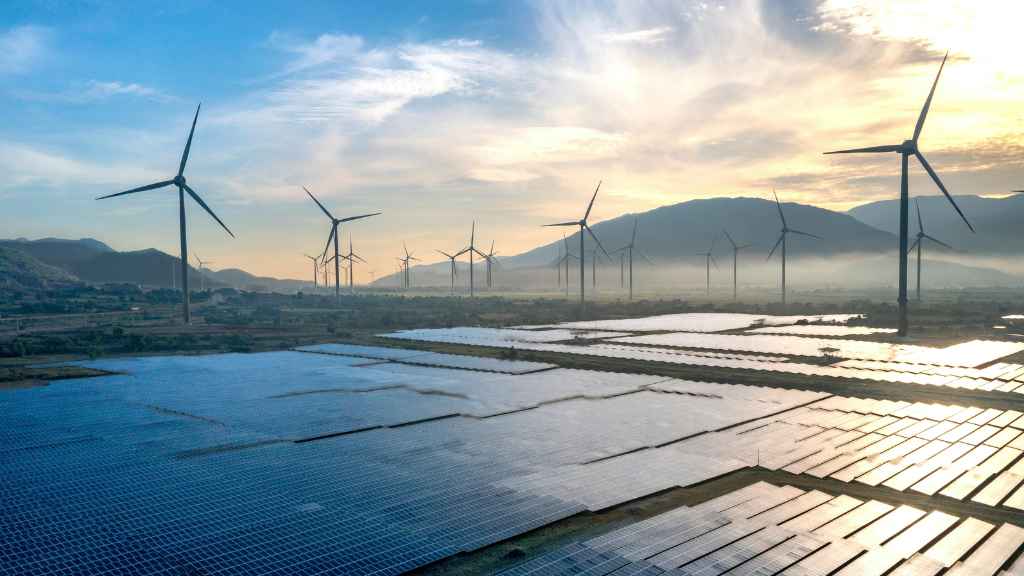
Sri Lanka greenlights battery storage plan as the government accelerates efforts to stabilize its rapidly expanding renewable energy sector and address rising peak electricity demand across the national grid.
Sri Lanka greenlights battery storage plan to stabilize renewable growth
Sri Lanka has taken a decisive step toward strengthening its energy infrastructure, with Cabinet approval granted for a 300 MW Battery Energy Storage Systems (BESS) initiative designed to support the country’s growing reliance on renewable energy. The move reflects both an operational necessity and a strategic pivot toward grid resilience, as energy demand continues to outpace earlier projections.
The Public Utilities Commission of Sri Lanka (PUCSL) advanced the project timeline significantly, shifting its implementation from the originally planned 2032 horizon to the 2028–2029 period. This adjustment follows updated data showing that peak electricity demand is rising approximately two years faster than anticipated under the Long-Term Power Generation Plan. The acceleration underscores a structural mismatch between generation capacity and consumption patterns, particularly during peak hours.
At the core of the Sri Lanka greenlights battery storage plan is a dual-structured procurement strategy aimed at addressing both centralized and decentralized storage needs. The primary component involves the deployment of 25 standalone battery storage units, each with a capacity of 10 MW/40 MWh. Collectively, these systems will contribute 250 MW to the national grid. These units are to be integrated directly into the medium-voltage distribution network operated by the Ceylon Electricity Board (CEB), enhancing localized grid stability and reducing transmission bottlenecks.
From an infrastructure financing and operational perspective, these projects will follow a Build, Own, and Operate (BOO) model. This approach transfers upfront capital expenditure and operational responsibility to private developers, who will manage the facilities over a 15-year period. The BOO structure not only mitigates fiscal pressure on the government but also incentivizes efficiency and performance through private-sector participation. Over time, this decentralized storage network is expected to act as a distributed energy buffer, absorbing fluctuations and ensuring continuity of supply.
The second component of the plan targets a 50 MW capacity specifically designed to complement existing renewable energy installations, particularly solar power plants. Unlike the standalone systems, these battery units will be co-located with solar facilities, enabling direct storage of excess daytime generation. This addresses one of the most critical inefficiencies in solar energy systems—curtailment during off-peak demand periods.
This segment will be procured through a competitive bidding process, ensuring cost efficiency and technological competitiveness. Oversight and execution will be handled by the Renewable Energy Procurement and Operations Supervision Division under National System Operator (Private) Limited, an entity that has evolved from the operational framework of the CEB. This institutional transition reflects a broader restructuring aimed at improving governance and operational agility within Sri Lanka’s power sector.
Energy Minister Nalinda Jayatissa emphasized the necessity of this two-pronged strategy, noting that solar power generation has already exceeded the integration limits outlined in the 2023–2042 long-term energy plan. The rapid expansion of solar capacity, while beneficial for sustainability goals, has introduced volatility into the grid due to its intermittent nature. Without adequate storage solutions, surplus energy generated during daylight hours cannot be effectively utilized, leading to inefficiencies and potential system instability.
The Sri Lanka greenlights battery storage plan directly addresses this challenge by enabling energy time-shifting—storing surplus electricity during low-demand periods and dispatching it during peak consumption windows. This capability is critical for maintaining grid frequency stability and avoiding reliance on expensive, fossil-fuel-based peaking power plants.
From a systems perspective, the integration of battery storage introduces several second-order benefits. It enhances grid flexibility, reduces curtailment losses, and improves the overall capacity factor of renewable assets. Additionally, it creates a more predictable energy supply curve, which is essential for industrial consumers and long-term economic planning.
However, the initiative also carries execution risks. These include potential delays in procurement processes, technological integration challenges, and regulatory bottlenecks. The success of the BOO model will depend heavily on contract structuring, tariff mechanisms, and the credibility of private sector participants. Furthermore, the competitive bidding process for the solar-integrated segment must balance cost minimization with quality assurance to avoid suboptimal installations.
Despite these risks, the strategic logic underpinning the Sri Lanka greenlights battery storage plan is robust. By decoupling energy generation from consumption timing, the country is effectively transitioning toward a more resilient and adaptive energy system. This is particularly গুরুত্বপূর্ণ in a context where renewable energy penetration is increasing rapidly, and traditional grid infrastructure is under strain.
In the broader regional context, Sri Lanka’s move aligns with global trends toward energy storage as a critical enabler of renewable energy expansion. Countries with high solar and wind penetration are increasingly investing in battery systems to manage intermittency and ensure reliability. Sri Lanka’s approach—combining standalone distributed storage with integrated solutions at generation sites—represents a hybrid model that could serve as a benchmark for other emerging economies.
Ultimately, the plan signals a shift from capacity expansion to system optimization. While adding more renewable generation remains important, the focus is now on maximizing the utility of existing assets and ensuring that the grid can accommodate future growth without compromising stability.