

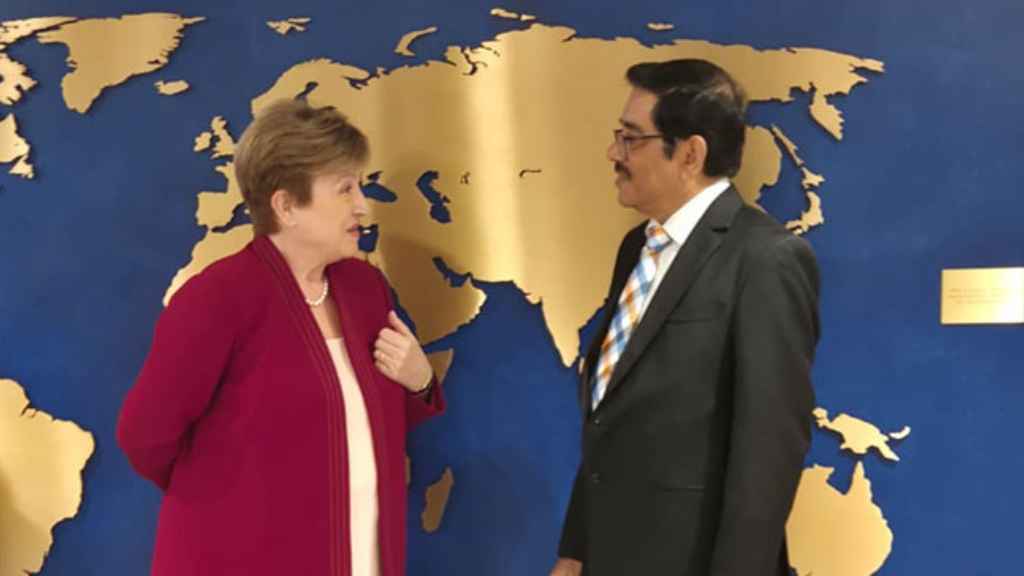
IMF Reaffirms Support for Sri Lanka, Commends Progress as the country continues its recovery under challenging global conditions. The latest engagement signals confidence in ongoing reforms despite geopolitical and economic uncertainties.
IMF Reaffirms Support for Sri Lanka, Commends Progress despite global risks
Sri Lanka’s economic reform trajectory received a renewed vote of confidence from the International Monetary Fund during high-level discussions held on the sidelines of the IMF-World Bank Spring Meetings 2026. The Sri Lankan delegation, led by Central Bank Governor Dr. Nandalal Weerasinghe, engaged with senior IMF and World Bank officials, as well as rating agencies and investors, to review progress and outline the path forward for the Sri Lanka economy.
IMF Managing Director Dr. Kristalina Georgieva acknowledged the country’s progress, particularly highlighting the achievement of a staff-level agreement for the combined fifth and sixth reviews under the Extended Fund Facility program. This milestone reflects continued alignment between Sri Lankan authorities and IMF Sri Lanka program targets, reinforcing confidence in the reform agenda.
The IMF’s endorsement comes at a time when Sri Lanka is navigating a complex external environment. Deputy Managing Director Dr. Kenji Okamura noted that global headwinds, including the ongoing Middle East conflict, have created uneven economic pressures across countries. For Sri Lanka, these challenges have manifested through higher energy prices, disruptions to trade flows, and broader uncertainty in global markets.
Despite these pressures, IMF Sri Lanka assessments indicate that the country has made notable progress in stabilizing key macroeconomic indicators. Fiscal consolidation efforts, improvements in external balances, and structural reforms have contributed to restoring a degree of economic stability. However, the IMF emphasized that sustaining this momentum will require continued policy discipline and adherence to reform commitments.
A central issue discussed during the meetings was the importance of maintaining cost-reflective pricing mechanisms, particularly in the energy sector. Dr. Okamura underscored that timely adjustments to energy prices are essential for reducing fiscal risks and ensuring the sustainability of public finances. Such measures, while often politically sensitive, are critical for maintaining macroeconomic stability in the Sri Lanka economy.
The IMF also highlighted the need for targeted and time-bound financial support measures to mitigate the impact of external shocks. As global uncertainties persist, policymakers must strike a balance between providing relief to vulnerable sectors and maintaining fiscal discipline. This approach is particularly important in avoiding the re-emergence of structural imbalances that contributed to the country’s previous economic crisis.
Governor Weerasinghe, representing Sri Lanka at the discussions, expressed appreciation for the IMF’s continued support and flexibility in program implementation. He noted that recent challenges, including the impact of a severe cyclone and evolving geopolitical developments, have required adaptive policy responses. The IMF’s willingness to accommodate these realities within the program framework has been instrumental in sustaining reform momentum.
From a strategic perspective, the reaffirmation of support by the IMF carries significant implications for investor confidence. Engagements with rating agencies and investors during the Spring Meetings provided an opportunity to communicate progress and reinforce Sri Lanka’s commitment to economic reform. Positive signals from the IMF Sri Lanka program can help improve market perceptions, potentially facilitating access to external financing and reducing borrowing costs over time.
However, risks remain. The global economic environment continues to be volatile, with energy price fluctuations and geopolitical tensions posing ongoing challenges. For Sri Lanka, maintaining resilience will depend on the ability to implement reforms consistently while managing external shocks effectively.
The broader message emerging from the discussions is clear: IMF Reaffirms Support for Sri Lanka, Commends Progress, but also underscores the importance of staying the course. Reform fatigue, policy reversals, or delays in implementation could undermine the gains achieved so far. As such, sustained commitment to fiscal discipline, structural reforms, and prudent monetary policy will be essential.
Looking ahead, the Sri Lanka economy stands at a critical juncture. While significant progress has been made in stabilizing the economy, the transition toward sustainable and inclusive growth is still underway. Continued collaboration with international partners such as the IMF will play a key role in navigating this phase.
IMF Reaffirms Support for Sri Lanka, Commends Progress as a signal of confidence, but also as a reminder of the work that lies ahead. The challenge now is to translate this support into tangible outcomes that strengthen economic resilience and deliver long-term prosperity.