

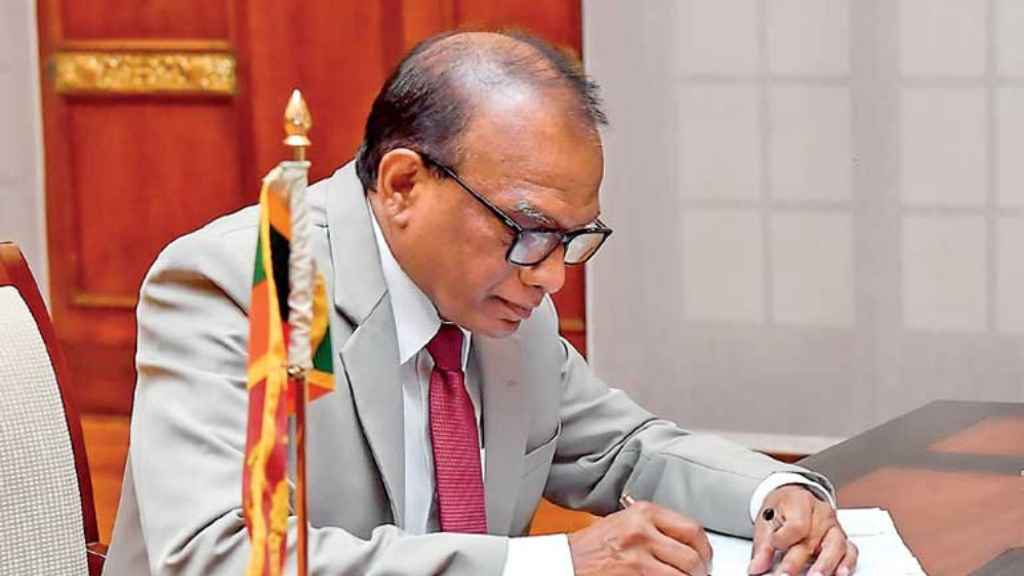
Anura Karunathilaka new Energy Minister marks a significant cabinet shift in Sri Lanka, following a sudden resignation tied to controversy within the country’s energy sector.
Anura Karunathilaka new Energy Minister sworn in amid leadership changes
President Anura Kumara Dissanayake has appointed Anura Karunathilaka as the new Energy Minister after the resignation of Kumara Jayakody, who stepped down amid allegations connected to a coal procurement scam. The development signals an urgent effort by the government to stabilize leadership within a critical sector that has faced ongoing scrutiny.
Karunathilaka was officially sworn in before the President at the Presidential Secretariat, assuming responsibilities at a time when energy governance remains under intense public and institutional focus. His appointment comes as authorities seek to restore confidence in procurement processes and ensure greater transparency in the management of national energy resources.
In addition to his new role, Karunathilaka will continue to oversee his existing portfolio as Minister of Ports and Civil Aviation. The consolidation of these responsibilities places him in a strategically influential position within the government, spanning both energy infrastructure and key transport sectors. Analysts suggest that this dual role could enhance coordination between energy logistics and national development priorities, particularly in areas such as fuel imports and port operations.
The resignation of Kumara Jayakody has drawn attention to broader governance challenges within Sri Lanka’s energy sector, especially in relation to procurement practices and regulatory oversight. The allegations surrounding the coal procurement process have heightened calls for accountability and reforms aimed at improving transparency.
Karunathilaka’s appointment is therefore viewed not only as a routine cabinet reshuffle but also as a corrective step in response to governance concerns. Observers note that his immediate priorities are likely to include reviewing procurement frameworks, strengthening institutional oversight, and ensuring uninterrupted energy supply amid ongoing economic pressures.
The energy sector remains central to Sri Lanka’s economic recovery, with reliable power generation and cost-effective procurement playing a crucial role in supporting industries, businesses, and households. As such, the leadership transition comes at a pivotal moment when policy continuity and administrative stability are essential.
Government officials have yet to outline specific policy directions under Karunathilaka’s tenure, but expectations are that reforms and operational improvements will be accelerated to address both short-term challenges and long-term sustainability goals. Stakeholders across the energy value chain will be closely monitoring developments as the new minister assumes office.