

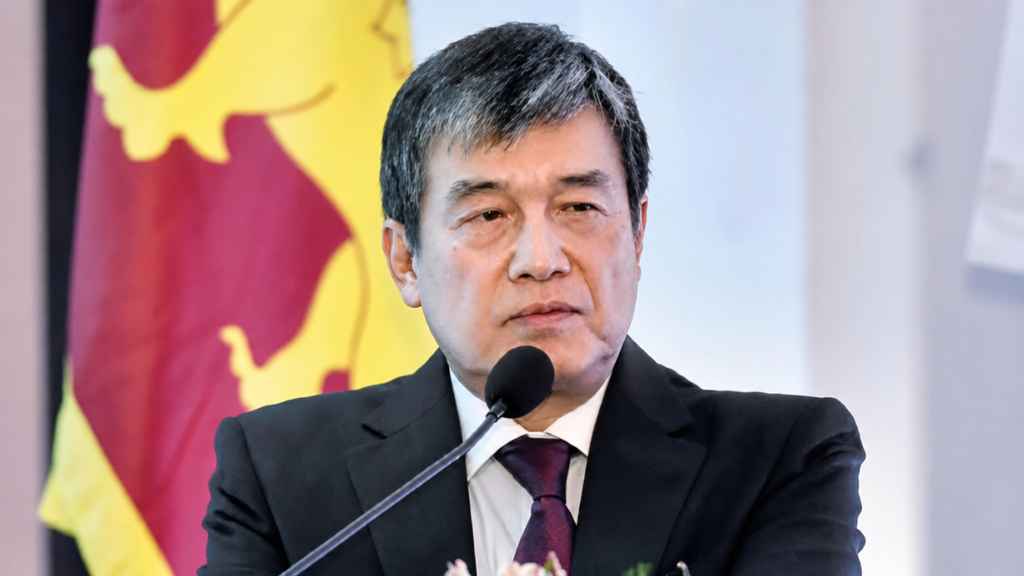
SL must ‘walk the talk,’ not talk the talk: Japanese Envoy — Sri Lanka has been urged to move beyond rhetoric and accelerate concrete action to unlock export growth and investment potential, particularly through stronger regional partnerships and policy reforms.
SL must ‘walk the talk,’ not talk the talk: Japanese Envoy urges export action
Sri Lanka must shift from discussion to implementation if it is to capitalise on emerging export opportunities, Japanese Ambassador Akio Isomata said, stressing the urgency of tangible progress in trade and industrial development.
Addressing the ‘Exports to Japan: Seizing the Opportunity Now’ forum organised by the Sri Lanka Japan Business Council (SLJBC), Ambassador Isomata emphasised that decisive execution—not prolonged dialogue—will determine the country’s export trajectory. He underscored that Sri Lankan exporters must act swiftly to leverage global shifts and position themselves competitively in international markets.
A central focus of his remarks was the proposed export-oriented industrial corridor linking Japan, Sri Lanka, and India. The initiative, which has received approval from the Government, is projected to contribute significantly to economic expansion, with estimates suggesting a potential 9.3% increase in GDP by 2030. However, the Ambassador cautioned that delays in implementation could undermine investor confidence and reduce the initiative’s long-term viability.
Working groups have already been established on both sides to advance the corridor project, but Isomata stressed the need for accelerated momentum. He noted that while Japan remains committed through its Government agencies, including the Japan International Cooperation Agency (JICA) and the Japan External Trade Organisation (JETRO), sustained engagement depends on timely progress and clear deliverables.
Beyond infrastructure and trade facilitation, the Ambassador highlighted the importance of aligning Sri Lanka’s economic strategy with broader geopolitical and market trends. With global uncertainties, including ongoing tensions in the Middle East, he recommended that Sri Lanka adopt a “Look East” approach, strengthening ties with fast-growing Asian economies.
He pointed out that Southeast Asia and India present substantial opportunities for trade expansion and investment flows. For Japanese businesses, Sri Lanka’s domestic market alone is relatively limited. However, its strategic location and potential integration with India’s large and import-driven economy could make it an attractive node within a broader regional supply chain.
The success of such initiatives, Isomata noted, will depend heavily on private sector participation. While governments can establish frameworks and agreements, it is ultimately businesses in Japan, Sri Lanka, and India that must operationalise these opportunities. Strengthening collaboration between public and private stakeholders will therefore be critical.
Despite longstanding bilateral relations, Sri Lanka’s exports to Japan have remained modest, averaging below $ 200 million annually. This underperformance highlights the need for diversification and targeted export development strategies. The Ambassador urged authorities to identify high-potential sectors and create enabling conditions for exporters to scale operations.
A key concern raised was the absence of a clearly defined industrial strategy. Isomata observed that Sri Lanka lacks a cohesive policy framework to guide industrial development, which is essential for improving productivity and competitiveness. He called for structured and consistent policy direction, supported by reforms that encourage innovation and efficiency.
In addition, he emphasised the importance of a robust and forward-looking trade policy. This includes better utilisation of existing Free Trade Agreements (FTAs) and the pursuit of new partnerships. He also suggested upgrading current trade arrangements with India into a more comprehensive economic partnership, which could unlock deeper integration and market access.
Japan’s own experience—with 22 FTAs and Economic Partnership Agreements—demonstrates the value of proactive trade engagement. Sri Lanka, he noted, can benefit from adopting a similarly strategic approach to international trade.
Improving the business environment was another critical priority. The Ambassador pointed to the need for ongoing reforms to enhance ease of doing business, streamline regulatory processes, and address operational challenges faced by investors. A bilateral business environment improvement committee has already been working to resolve such issues, but continued effort will be necessary to sustain investor confidence.
Ultimately, Isomata concluded that Sri Lanka must deliver measurable outcomes to maintain and strengthen its partnerships. While the historical relationship between Japan and Sri Lanka remains strong, he cautioned against complacency. Progress, he stressed, must be visible, consistent, and results-driven.