

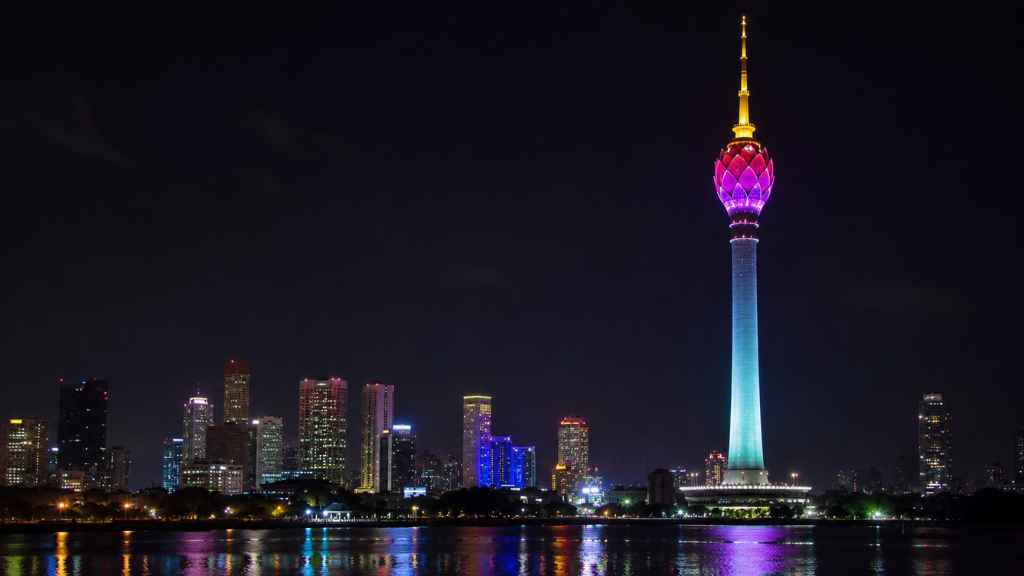
HSBC takes best of SL global with a renewed strategic direction aimed at showcasing Sri Lanka’s strengths to international markets, marked symbolically by the illumination of the Colombo Lotus Tower in HSBC branding on Friday night.
HSBC takes best of SL global as Colombo Lotus Tower displays new Wholesale Banking identity
The move reflects a broader repositioning of HSBC’s operations in Sri Lanka following the sale of its Retail Banking portfolio, with the institution now focusing more sharply on Wholesale Banking and cross-border financial services aligned with global corporate clients.
The transformation was visibly marked when the Colombo Lotus Tower, South Asia’s tallest self-supported structure, was illuminated with HSBC branding, creating a high-profile visual statement of the bank’s evolving strategy in the country.
Bank officials said the branding initiative is intended to signal a new phase where Sri Lanka is positioned not only as a domestic financial market but also as a platform for international business connectivity. The approach aligns with HSBC’s broader global strategy of linking local markets to global trade and investment flows.
As HSBC takes best of SL global, the bank is focusing on leveraging Sri Lanka’s strategic geographic location, skilled workforce, and growing export-oriented sectors to strengthen its role as a financial intermediary between South Asia and international markets.
Industry observers note that the decision to highlight Colombo Lotus Tower as part of the branding exercise carries symbolic importance. The tower, widely regarded as an iconic landmark in Colombo’s skyline, represents modern infrastructure development and the country’s aspirations for greater global visibility.
The initiative also comes at a time when the Sri Lanka banking sector is undergoing structural changes driven by economic reforms, digital transformation, and shifting investor expectations. Financial institutions are increasingly re-evaluating their business models to align with evolving global banking trends, including digital-first services and corporate-focused banking solutions.
HSBC’s decision to exit retail banking operations while strengthening its wholesale segment reflects a strategic shift seen in several global banking institutions that are consolidating operations to focus on higher-value corporate and institutional clients.
The branding of the Colombo Lotus Tower is seen as part of a broader communication strategy aimed at reinforcing HSBC’s commitment to Sri Lanka’s corporate and trade ecosystem. By aligning its image with one of the country’s most recognizable architectural landmarks, the bank is signaling long-term confidence in Sri Lanka’s economic potential.
According to financial sector analysts, HSBC takes best of SL global also reflects an effort to reposition Sri Lanka within global investment narratives, particularly in areas such as trade finance, infrastructure funding, and export-oriented industries.
Sri Lanka has historically been viewed as a key strategic location in the Indian Ocean, and financial institutions like HSBC are increasingly focusing on its role as a regional connectivity hub. The Wholesale Banking segment is expected to benefit from growing demand for cross-border trade facilitation and corporate financing solutions.
The illumination of the Lotus Tower also highlights the increasing role of corporate branding in shaping public perception of financial institutions. Large-scale visual campaigns are becoming more common as banks seek to strengthen brand identity in competitive regional markets.
Within the broader Colombo Lotus Tower context, the structure has become a focal point for major national and international events, often used to highlight milestones in business, tourism, and infrastructure development. Its use in HSBC’s branding initiative further reinforces its symbolic value as a representation of modern Sri Lanka.
The shift in HSBC’s strategy is also expected to influence how multinational banks operate within the country. By focusing on Wholesale Banking, institutions can prioritize corporate lending, trade finance, and advisory services that support large-scale economic activity.
As HSBC takes best of SL global, the bank is also expected to deepen its engagement with export-driven sectors, including apparel, tea, IT services, and logistics—industries that play a significant role in Sri Lanka’s foreign exchange earnings.
Experts believe this realignment may contribute to increased financial flows into export-oriented businesses, while also enhancing Sri Lanka’s visibility among global investors seeking emerging market opportunities.
At the same time, the Sri Lanka banking sector continues to face challenges such as currency volatility, regulatory adjustments, and the need for digital transformation. However, analysts suggest that strategic moves by major international banks could help strengthen market confidence and encourage further investment in the financial system.
HSBC’s renewed focus on Sri Lanka’s global positioning aligns with broader regional trends where financial institutions are increasingly acting as enablers of trade rather than purely domestic lenders. This shift is expected to reshape how banking services are delivered in the country over the coming years.
Ultimately, the illumination of the Colombo Lotus Tower serves not only as a branding exercise but also as a signal of evolving financial priorities, where Sri Lanka is being positioned as a more integrated player in global trade and investment networks.