

EU project prepares Sri Lanka rubber industry for deforestation regulations as the country strengthens its readiness to comply with new European sustainability requirements aimed at promoting deforestation-free supply chains and protecting continued access to key export markets.
EU project prepares Sri Lanka rubber industry for deforestation regulations through EUDR training
A European Union-supported capacity-building initiative is helping Sri Lanka’s rubber sector prepare for the implementation of the European Union Deforestation Regulation, a new framework that will shape future trade with European markets by requiring products to meet strict sustainability and traceability standards.
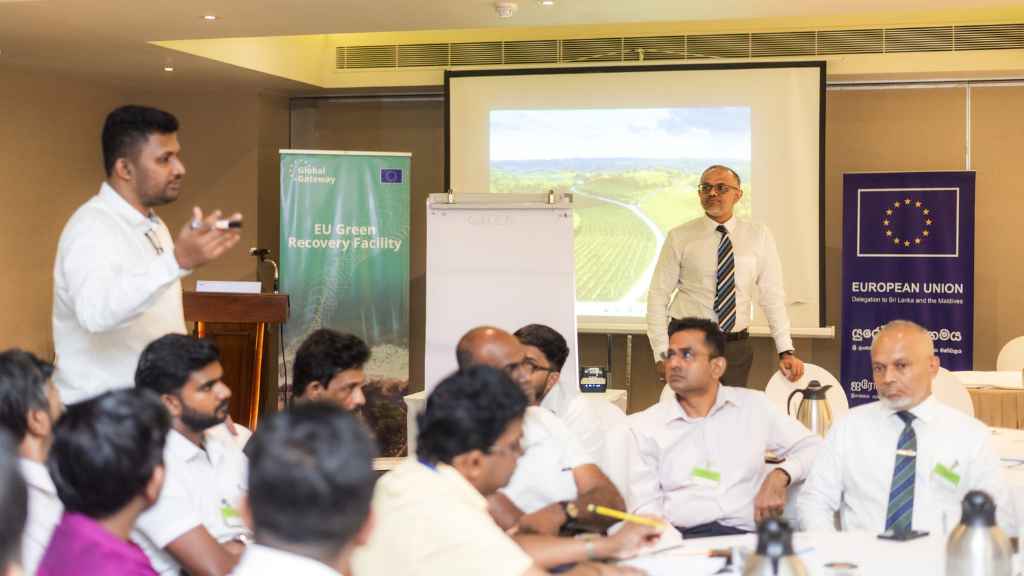
The workshop, organised by the Rubber Development Department in collaboration with the European Union-funded Green Recovery Facility, brought together stakeholders from across Sri Lanka’s rubber value chain to improve understanding of the Regulation and its implications for the industry. The Green Recovery Facility is implemented by Expertise France under the European Union’s Global Gateway strategy.
The European Union Deforestation Regulation (EUDR) is designed to encourage sustainable agricultural production while reducing the global impact of deforestation. It supports international commitments on climate action, biodiversity conservation and forest protection by requiring businesses exporting to the European Union to demonstrate that their products are not linked to deforestation.
For Sri Lanka, the Regulation presents a favourable opportunity. The country has been classified as a “low-risk” nation under the EUDR, reducing the regulatory burden compared with higher-risk countries while allowing exporters to strengthen their reputation as reliable suppliers of sustainable rubber products.
The EU project prepares Sri Lanka rubber industry for deforestation regulations by focusing on practical improvements in traceability systems, due diligence processes and stakeholder awareness. These measures are expected to help maintain the competitiveness of Sri Lanka rubber exports while ensuring continued compliance with evolving international sustainability standards.
Secretary to the Ministry of Plantation and Community Infrastructure, Gunadasa Samarasinghe, stressed the importance of ensuring that Sri Lanka’s rubber industry remains globally competitive by responding proactively to changing environmental and market expectations. He noted that strengthening sustainability practices would position the sector to capture new opportunities in international markets.
The broader initiative combines technical assessments, consultations with industry stakeholders and targeted capacity-building programmes designed to improve compliance across every stage of the rubber value chain. Discussions during the workshop examined current awareness levels, implementation challenges, the role of government agencies, international best practices and available digital traceability tools that can support EUDR compliance.
Participants also identified priority areas where additional training and institutional support will be required. The recommendations gathered during the workshop will guide the design of the project’s next phase, ensuring that future training programmes address the practical needs of producers, processors, exporters and government officials.
As part of the initiative, organisers will develop a comprehensive three-and-a-half-day Training of Trainers (ToT) programme alongside specialised training sessions tailored to different stakeholder groups. These programmes will equip industry participants with the knowledge and technical skills needed to meet the new regulatory framework effectively.
The project is expected to directly train approximately 280 stakeholders across Sri Lanka’s rubber value chain. By improving technical capacity and strengthening due diligence systems, the initiative aims to help safeguard access to European markets while enhancing the long-term sustainability of Sri Lanka rubber exports.
As global buyers increasingly prioritise environmentally responsible sourcing, initiatives such as this are expected to play an important role in supporting Sri Lanka’s export competitiveness. Strengthening compliance with the European Union Deforestation Regulation will not only facilitate market access but also reinforce the country’s reputation as a trusted supplier committed to sustainable production and responsible supply chain management.