

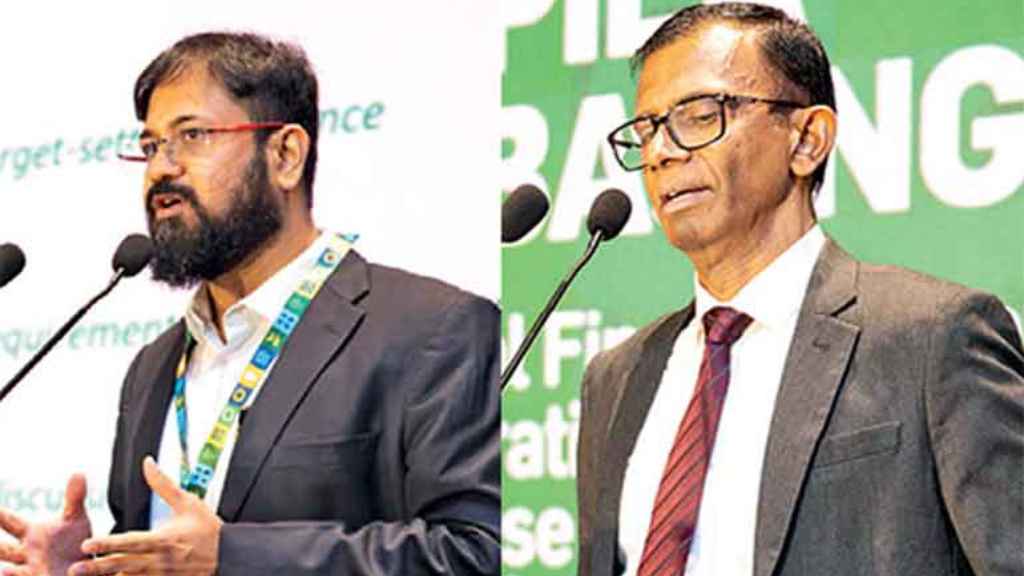
UN Global Compact Network Sri Lanka brought together business leaders, policymakers and sustainability experts through CATALYZE 2026, reinforcing the private sector’s role in advancing environmental responsibility, climate resilience and long-term sustainable economic growth.
UN Global Compact Network Sri Lanka advances business leadership on climate and sustainability
Held over two days, CATALYZE 2026 served as a platform for dialogue, collaboration and practical learning, focusing on the social and environmental dimensions of sustainability. The forum aligned with the UN Global Compact’s 2026–2030 Strategy, which is built around the pillars of “Equip, Catalyze and Advance,” encouraging businesses to move beyond commitments and accelerate measurable action.
The event featured two complementary sessions. CATALYZE: Social, held on 24 June 2026 under the theme From Commitment to Collective Impact, examined the people-centred aspects of sustainability. This was followed by CATALYZE: Environment, themed Growth Against the Grain, which explored the environmental challenges and opportunities facing today’s businesses.
The environmental programme addressed a broad range of priorities, including climate action, nature stewardship, circular economy principles, energy transition, disaster resilience and strategic sustainability communication. Through expert-led discussions and technical workshops, participants explored how organisations can strengthen environmental performance while maintaining long-term competitiveness.
Opening the forum, United Nations Resident Coordinator’s Office Sri Lanka Partnerships and Development Finance Specialist Azam Bakeer Markar emphasised the urgency of accelerating sustainability efforts across the corporate sector.
“The question is no longer whether we need to act—it is how fast we are willing to move, and how bold we are willing to be,” he told participants, urging businesses to adopt faster and more ambitious approaches to addressing climate and environmental challenges.
The keynote address was delivered by Accelerating Industries Climate Response Sri Lanka Project National Finance Expert Kapila Subasinghe, who examined the financial requirements needed to support industrial decarbonisation. He highlighted the importance of mobilising investment to help businesses reduce emissions while strengthening Sri Lanka’s transition towards a greener and more competitive economy.
A series of specialist sessions provided participants with practical guidance on implementing sustainable business strategies.
The Corporate Climate Action Lab, facilitated by Deloitte South Asia experts Aditya Parchure and Piyush Yadav, focused on translating climate commitments into action through net-zero planning, science-based emissions targets and sector-specific decarbonisation pathways. The session also encouraged collaboration between industries to accelerate collective progress.
Nature-related Financial Disclosures (TNFD) Taskforce Global Lead Tajeshwar Goyal delivered a virtual plenary session examining how businesses can identify, assess and manage nature-related risks while integrating biodiversity considerations into corporate strategy, governance and long-term value creation.
Participants also explored circular economy principles during the Rewire the Economy Masterclass, led by Dr. Mayuri Wijesundara and the Anvarta Ltd. team. Using an interactive simulation, attendees developed circular transition roadmaps while gaining practical insights into systems thinking and collaborative problem-solving.
The forum further addressed Sri Lanka’s evolving energy landscape through the Energy Transition Strategy Lab, facilitated by Control Union Ltd.’s Piyumali Jayasundara. Discussions examined opportunities for adopting low-carbon energy systems, improving energy security and supporting sector-specific decarbonisation efforts.
Recognising that businesses must also prepare for increasing climate-related risks, the Climate Adaptation and Disaster Resilience Scenario Analysis, led by A-PAD Sri Lanka facilitators Gethmi Adikari and Raeesha Ikram, focused on organisational preparedness, business continuity planning and resilience-building strategies.
The programme concluded with a Strategic Storytelling Masterclass conducted by Arosha Perera, highlighting the importance of transparent and compelling communication in strengthening stakeholder confidence and demonstrating genuine sustainability progress.
The technical content delivered during CATALYZE 2026: Environment was developed in strategic partnership with Deloitte and Anvarta PTY Ltd., with Sampath Bank PLC serving as the main partner. Additional technical expertise was provided by INSEE Ecocycle Ltd., Hayleys Mobility Ltd., Control Union Ltd. and the Asia Pacific Alliance for Disaster Management (A-PAD) Sri Lanka.
Support for the initiative also came from the patrons of UN Global Compact Network Sri Lanka working groups. These included organisations representing the Climate Emergency Task Force, Water and Ocean Stewardship Working Group, and Sustainable Supply Chain and SME Working Group, demonstrating strong private sector collaboration across industries.
As sustainability expectations continue to evolve globally, UN Global Compact Network Sri Lanka is positioning itself as a catalyst for business transformation by equipping organisations with practical knowledge, technical expertise and collaborative partnerships. Through initiatives such as CATALYZE 2026, the network aims to help Sri Lankan businesses strengthen climate action, adopt more sustainable business practices and contribute to a more resilient, competitive and environmentally responsible economy.