

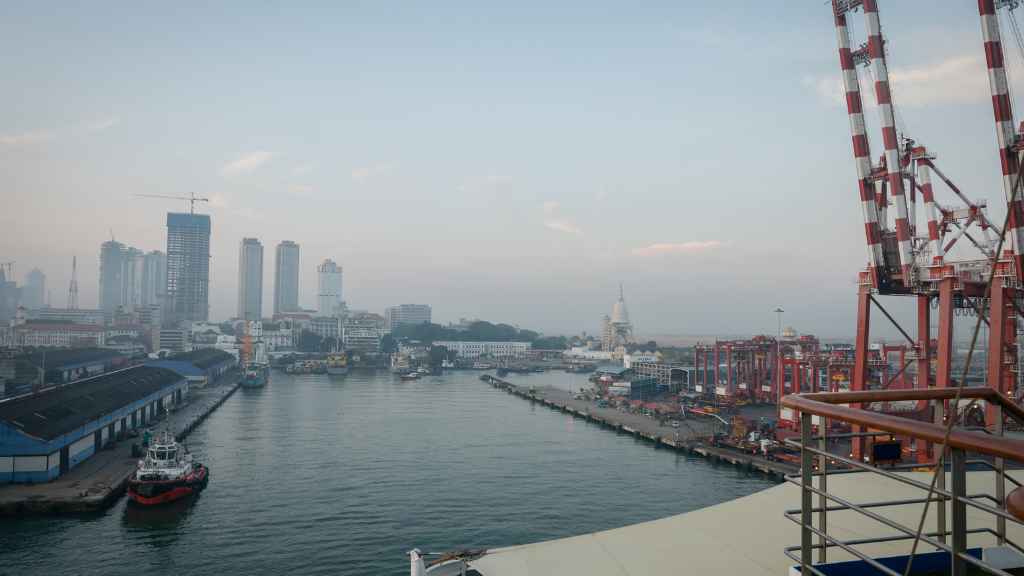
Colombo Port City project valued at US$540 million with Clothespin Management and Development has expired without a signed agreement, although discussions are continuing on a revised development proposal, according to the Colombo Port City Economic Commission.
Colombo Port City project with Clothespin enters new talks after original deal lapses
The proposed investment, which aimed to develop a landmark mixed-use hotel complex within Colombo Port City, was initially granted a 25-year tax holiday under a government Gazette published in July 2025. The project was expected to feature a twin-tower development, including what was promoted as the world’s largest art gallery and a clock tower designed to surpass London’s iconic Big Ben.
However, the agreement was required to be signed within six months of the Gazette issued on 14 July 2025, setting a deadline of 14 January 2026. The contract was not executed within that period, causing the original proposal to lapse.
Speaking on the development, Revan Wickramasuriya, Director General of the Colombo Port City Economic Commission, confirmed that the investor had decided not to proceed with the original project.
“The investor advised us he’s not going ahead with that development,” Wickramasuriya said, adding that discussions are continuing regarding alternative investment proposals.
According to a source familiar with the project, the developer was unable to finalise the agreement because of bond-related complications arising from Sri Lanka’s economic situation, which affected the investment process. The source clarified that the issue related to bond complications rather than board-related matters.
Despite the expiry of the original agreement, Clothespin Management and Development is continuing discussions with both the Colombo Port City Economic Commission and China Harbour Engineering Company (CHEC) on a possible new lease arrangement.
Both the commission and project sources indicated that any future agreement would involve a different land plot from the one originally allocated. The initial proposal covered Hotel Use Land Plot 2-01-11, spanning approximately 24,324 square metres within Colombo Port City.
The source also revealed that one of the project’s most distinctive features—the oversized clock tower—has been removed from the revised concept after commercial assessments concluded that it would not be financially viable.
Under the original investment plan, the company committed US$540 million, including US$75 million for the land lease and US$465 million for construction. The project was expected to become one of the largest hospitality and mixed-use developments within Colombo Port City, combining luxury accommodation, commercial space and cultural attractions.
The expiration of the agreement does not necessarily signal the end of the investment. Instead, negotiations appear to be shifting towards a redesigned project that better reflects current market conditions and financing realities following Sri Lanka’s economic crisis.
The latest development highlights the challenges large-scale foreign investment projects continue to face despite improving economic conditions. While Colombo Port City remains a strategic investment destination, developers continue to reassess project scope, financing structures and commercial viability before committing to long-term investments.
If a new agreement is successfully concluded, the revised Colombo Port City project could still represent a significant foreign direct investment for Sri Lanka, although its scale, location and design are expected to differ substantially from the original proposal.