

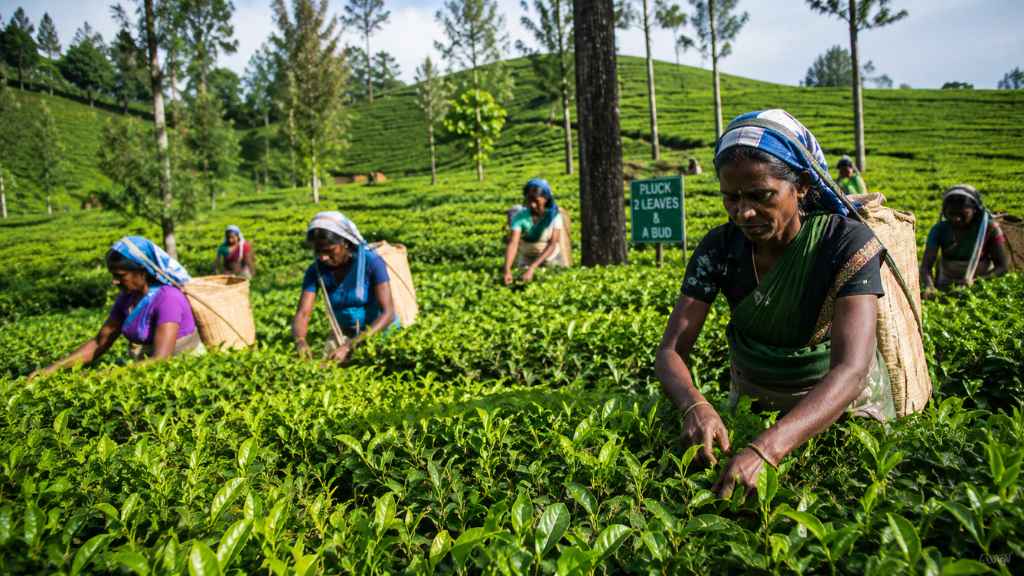
Ceylon Tea Village program has been launched by the Government as a nationwide initiative to modernise Sri Lanka’s tea smallholder sector, improve rural livelihoods and support the ambitious goal of increasing annual tea export earnings to US$2.5 billion by 2030.
Ceylon Tea Village program targets $2.5 billion in Sri Lanka tea exports by 2030
The flagship programme marks a new approach to tea sector development by combining agricultural productivity, value addition, climate resilience and community development to strengthen one of Sri Lanka’s most important export industries.
The first phase of the Ceylon Tea Village program began simultaneously across the country with the establishment of 144 tea villages, representing one village in each of Sri Lanka’s 144 tea inspection divisions. The Ministry of Plantations and Community Infrastructure plans to gradually expand the initiative to 500 tea villages over the coming years.
The Government hopes the programme will help raise national tea production to 400 million kilograms annually while increasing Sri Lanka tea exports to US$2.5 billion by the end of the decade.
Unlike traditional support schemes focused mainly on production, the new programme adopts a broader rural development model that integrates agricultural modernisation with social protection, access to finance, mechanisation, tourism and environmentally sustainable farming practices.
Each participating village will receive a comprehensive package of support designed to strengthen the productivity and resilience of tea smallholders. Planned interventions include high-density tea cultivation demonstration plots, tea nurseries, mechanisation assistance, concessional financing, insurance schemes for small tea estates and pension benefits for eligible tea growers.
The programme will also provide specialised training and equipment for handmade tea production, enabling producers to diversify into higher-value products. In addition, the Government plans to strengthen links between tea cultivation and tourism, creating new opportunities for rural communities to generate additional income through tea-based visitor experiences.
Other initiatives include promoting regenerative agriculture, improving rural infrastructure, strengthening producer cooperatives and encouraging supplementary income-generating activities that reduce dependence on tea cultivation alone.
The Government expects to complete the rollout of the initial 144 villages during 2026 before expanding the Ceylon Tea Village program nationwide.
Speaking at the national launch in Kandy, Agriculture, Livestock, Lands and Irrigation Minister K.D. Lalkantha said the programme is intended to address rural poverty by improving the economic foundations of tea-growing communities.
He noted that many rural areas depend heavily on smallholder tea cultivation and emphasised that strengthening these communities would contribute directly to improving livelihoods and supporting long-term economic development.
The Minister also stressed that the programme’s success will require close cooperation between government institutions, elected representatives and local communities. He encouraged political leaders at both national and local levels to actively monitor implementation while calling on the public service to work closely with policymakers to ensure effective delivery.
Lalkantha further urged tea smallholders to invest in improving the productivity of their own plantations through better soil management, estate maintenance and sustainable farming practices. He said long-term productivity gains will depend not only on government assistance but also on the commitment of growers themselves.
Reflecting on previous rural development programmes, the Minister observed that weak coordination among stakeholders had often limited their effectiveness. He expressed confidence that stronger collaboration could help the new initiative deliver lasting benefits to the tea industry and rural communities alike.
The launch comes as Sri Lanka seeks to revitalise its globally recognised tea sector by improving productivity, encouraging value addition and strengthening the resilience of smallholder producers, who account for the majority of the country’s tea output.
By integrating agriculture, tourism, sustainable farming and rural enterprise development, the Ceylon Tea Village program is expected to become a central pillar of Sri Lanka’s long-term strategy to expand Sri Lanka tea exports, improve rural incomes and reinforce the country’s reputation as one of the world’s leading tea-producing nations.