

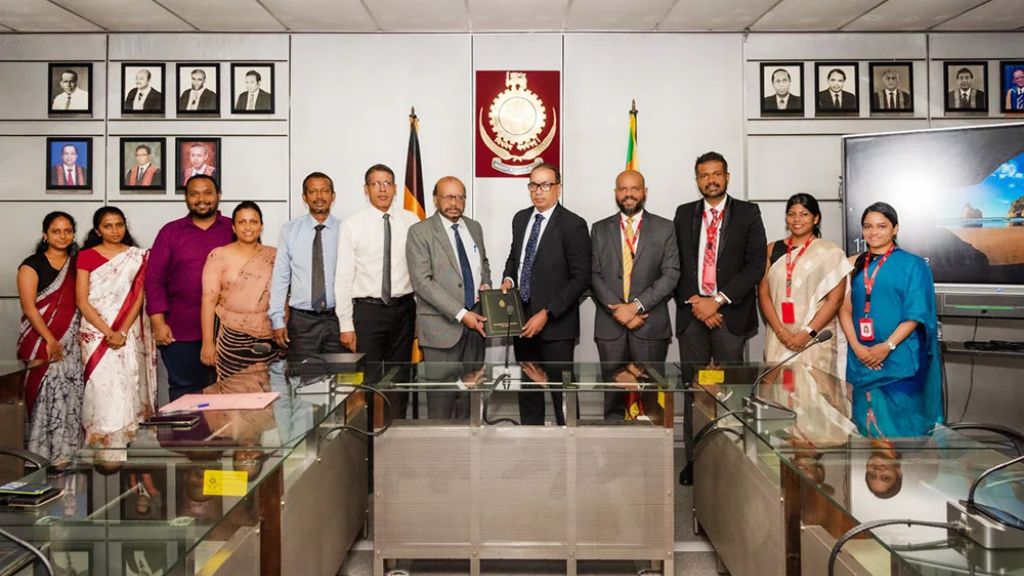
NDB Bank has partnered with the University of Moratuwa’s Faculty of Business to strengthen links between academia and industry while helping prepare Sri Lanka’s next generation of business professionals for the changing workplace.
NDB Bank expands industry-academia collaboration to develop future business leaders
The partnership was formalised through a Memorandum of Understanding (MOU), establishing a framework for greater collaboration between the bank and the university. The initiative is expected to provide students with opportunities to gain practical experience and a closer understanding of the demands of the business environment.
Under the partnership, students will have access to internships, industry engagement programmes, knowledge-sharing sessions and exposure to NDB’s business operations. These opportunities are intended to complement academic learning with practical insights that can help students develop the skills and competencies required in their future careers.
The collaboration comes as employers increasingly seek graduates who can combine academic knowledge with practical problem-solving, communication and industry-specific skills. By creating direct connections between students and professionals, partnerships of this nature can help reduce the gap between what students learn in the classroom and what organisations expect from new entrants to the workforce.
For NDB Bank, the initiative forms part of a broader capacity-building programme focused on developing relationships with leading state and private universities across Sri Lanka. The bank is seeking to strengthen engagement with higher education institutions while contributing to the development of a skilled and employment-ready graduate population.
The partnership with the University of Moratuwa provides a platform for students in business-related disciplines to gain exposure to the operations and professional practices of a major financial institution. Such exposure can help students better understand how theoretical concepts are applied in areas including management, finance, marketing, human resources and organisational decision-making.
Internships are expected to be an important component of the collaboration. For students, workplace experience can provide an opportunity to develop professional skills while gaining a clearer understanding of potential career paths. For employers, engagement with university students can also create opportunities to identify and nurture emerging talent.
The programme’s knowledge-sharing sessions and industry engagement activities are expected to provide another avenue for interaction. Direct access to experienced professionals can give students insight into current business trends, workplace expectations and the challenges facing organisations operating in a rapidly changing economic environment.
The initiative also reflects the increasing importance of industry-academia collaboration in developing a workforce capable of responding to technological, economic and organisational change. Universities provide the academic foundation, while businesses can contribute practical knowledge and exposure to current industry requirements.
For Sri Lanka, closer cooperation between universities and businesses can support broader workforce development objectives. A stronger connection between education and employment can help graduates transition more effectively into professional careers while giving businesses access to a larger pool of appropriately skilled talent.
Lasantha Dasanayaka, Vice President – Human Resources at NDB Bank, said the future of the industry depends on giving the next generation opportunities to learn, innovate and grow.
He described the partnership with the University of Moratuwa as an important step in creating meaningful connections between academia and industry. According to Dasanayaka, the collaboration will enable students to gain practical experience while preparing them to become future leaders capable of contributing to Sri Lanka’s economic progress.
The partnership also supports NDB’s efforts to strengthen its position as an employer focused on talent development, innovation and professional growth. By engaging with students before they enter the workforce, the bank can build greater awareness of career opportunities while establishing relationships with potential future employees.
For the university, collaboration with a major financial institution can provide students with additional exposure to the professional environment and help align aspects of business education with current industry expectations. It can also create opportunities for academic and corporate professionals to exchange knowledge and perspectives.
The initiative comes at a time when the nature of work is changing rapidly. Digitalisation, new business models, evolving customer expectations and increasing competition are reshaping the skills employers require. Graduates entering the workforce therefore need more than academic qualifications; they also require adaptability, practical experience and an understanding of how businesses operate.
Through the MOU, NDB Bank and the University of Moratuwa are creating a structured channel through which students can gain that exposure. The focus on internships, engagement programmes and knowledge sharing gives the collaboration a practical dimension beyond a formal institutional partnership.
The initiative is also expected to form part of a wider network of university partnerships as NDB continues its capacity-building efforts. Expanding such collaborations across Sri Lanka could provide more students with opportunities to interact directly with industry professionals and gain experience relevant to their chosen fields.
Ultimately, the partnership highlights the role financial institutions can play beyond their core banking activities. By investing in education, talent development and professional exposure, businesses can contribute to building a stronger workforce while supporting their own long-term talent requirements.
The collaboration between NDB Bank and the University of Moratuwa therefore represents a step toward closer integration between higher education and the corporate sector, with the shared objective of preparing young Sri Lankans for professional careers and future leadership roles.