

Market liquidity climbs from LKR 274.0Bn as the rupee strengthens against the US dollar
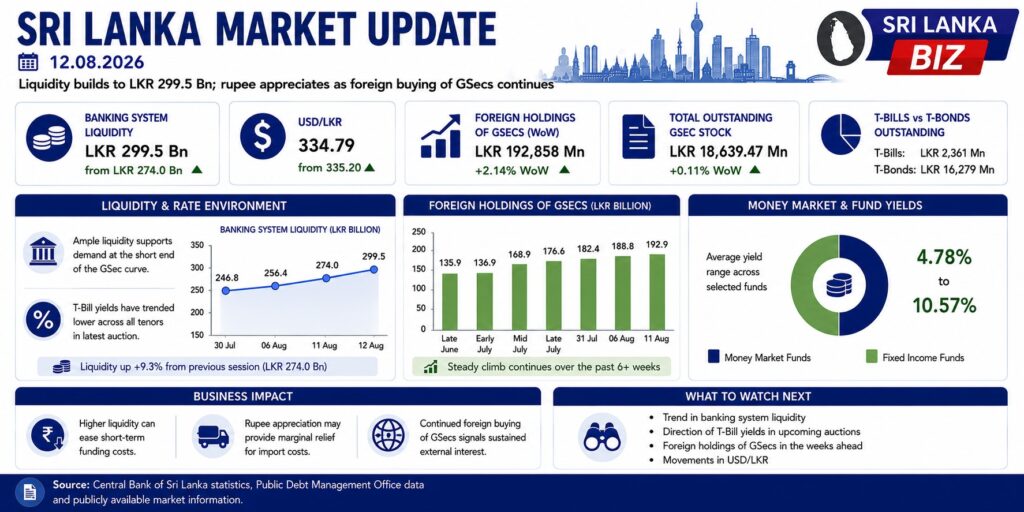
Liquidity in Sri Lanka’s banking system expanded to LKR 299.5 billion, up from LKR 274.0 billion in the previous session, as excess funds in the money market continued to build.
The rise in system liquidity comes at a time when short-term Treasury bill yields have been trending lower, with the latest weekly auction seeing weighted average rates decline across all three tenors. Ample liquidity conditions typically support demand at the short end of the government securities curve, as banks and primary dealers deploy surplus funds.
On the currency front, the Sri Lankan rupee appreciated against the US dollar, trading at LKR 334.79 compared to LKR 335.20 in the prior session. Central Bank data shows the stock of outstanding Treasury bills held domestically stood at LKR 2,361 million, against a much larger Treasury bond stock of LKR 16,279 million, out of a total government securities stock of LKR 18,639.47 million.
Foreign holdings of Sri Lankan government securities continued to build, rising 2.14% week-on-week to LKR 192,858 million, extending a steady upward trend seen over recent weeks from LKR 135,858 million as of late June.
Money market conditions were also reflected in unit trust performance, with money market and fixed income-focused funds posting average yields ranging from 4.78% to 10.57% across products tracked in the market.
Key Numbers
| Metric | Value | Change |
|---|---|---|
| Banking system liquidity | LKR 299.5 Bn | Up from LKR 274.0 Bn |
| USD/LKR exchange rate | 334.79 | Appreciated from 335.20 |
| Foreign holdings of GSecs | LKR 192,858 Mn | +2.14% WoW |
| Total outstanding GSec stock | LKR 18,639.47 Mn | +0.11% WoW |
| T-Bills outstanding | LKR 2,361 Mn | — |
| T-Bonds outstanding | LKR 16,279 Mn | — |
Business Impact
Higher system liquidity generally eases short-term funding pressure for banks and can support lower money market and short-term lending rates over time, a relevant signal for businesses managing working capital costs or reviewing short-term borrowing plans. The rupee’s modest appreciation may offer marginal relief for importers on near-term input costs, though a single-session move is not indicative of a sustained currency trend. Steady growth in foreign holdings of government securities also points to continued external interest in Sri Lankan debt, a factor businesses with foreign currency exposure may want to monitor over coming weeks.
Source Attribution
Source: Central Bank of Sri Lanka statistics, Public Debt Management Office data and publicly available market information.