

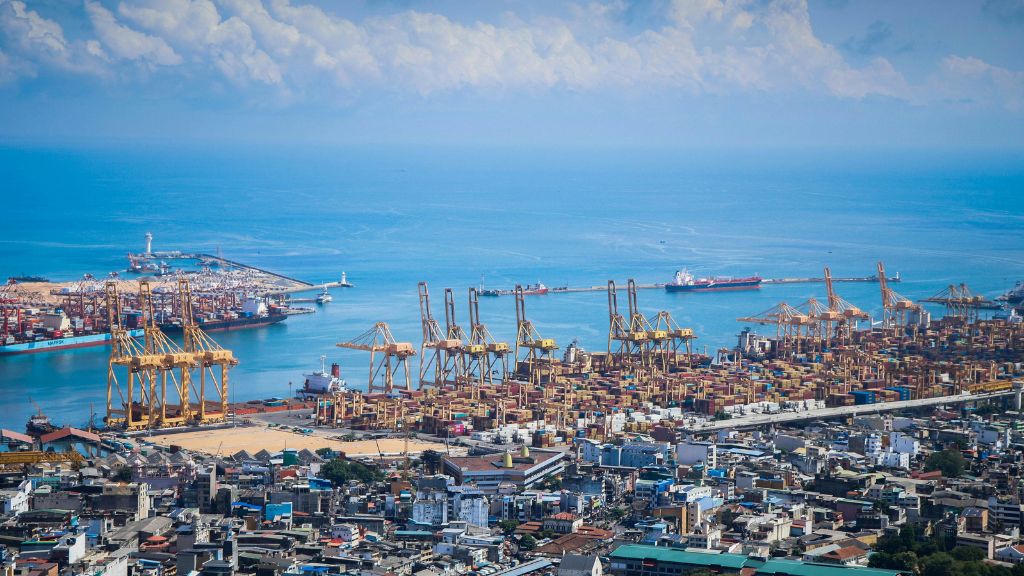
Port City Colombo is positioning itself to reshape Sri Lanka’s tourism proposition by encouraging visitors to stay longer, spend more widely and combine business with leisure in an integrated urban environment.
Port City Colombo seeks to connect tourism, investment and business travel in Sri Lanka
Sri Lanka’s tourism industry has made a strong recovery in visitor numbers, but the next challenge is to translate that growth into greater economic value. In 2025, the country recorded approximately 2.36 million international arrivals, around 15% more than the previous year, while tourism earnings rose more gradually to approximately US$3.2 billion. The figures underline a central question for the sector: how can Sri Lanka encourage visitors not only to arrive, but also to extend their stays and broaden their spending?
For years, Colombo’s role in the tourism journey was often that of a gateway. Travellers arrived in the capital before heading to the beaches, hill country or cultural attractions elsewhere on the island. Port City Colombo introduces the possibility of adding a new layer to that experience—one that combines tourism, commercial activity, entertainment and longer-term urban living.
The objective is not to replace Sri Lanka’s established leisure destinations. The beaches, central highlands and Cultural Triangle remain fundamental to the country’s tourism appeal. Instead, the opportunity is to complement those attractions with a high-value urban offering capable of appealing to business travellers, investors, international professionals and visitors seeking a more diverse city experience.
This is where the development’s integrated design becomes significant. Rather than functioning solely as a hotel district or a conventional commercial zone, Port City Colombo is being developed as a broader urban environment that brings together business, residential, leisure and public spaces. The underlying proposition is that visitors are more likely to remain in a destination when the amenities they need are available within a connected and accessible setting.
Several planned and developing attractions are intended to strengthen that proposition. The Marina district’s yacht marina, with a proposed capacity of approximately 200 to 250 vessels, is designed to introduce a new dimension to Colombo’s waterfront economy. The Downtown Duty Free precinct, described as the first of its kind in a South Asian city centre, is intended to expand the city’s retail and lifestyle offering.
The development also includes approximately 1.7 kilometres of public beach and a natural coral reef within its footprint. The combination of a financial district, waterfront amenities and public recreational space gives Port City a distinctive proposition in the region. A central business district that also provides access to a coastline can create opportunities for visitors to extend their activities beyond formal meetings and conferences.
That connection between tourism and business is increasingly important. Business travellers often have limited time, but destinations that offer convenient dining, entertainment, shopping and recreation can encourage them to extend a work trip into a leisure stay. The emerging model of business and leisure travel—often described as “bleisure”—creates opportunities for destinations to capture spending that might otherwise take place outside the host city.
The tourism proposition is also closely linked to the question of talent and investment. International companies considering a regional presence evaluate more than commercial incentives, infrastructure and tax conditions. The availability of education, housing, lifestyle amenities and services can influence whether executives and their families are willing to spend extended periods in a location.
Port City Colombo’s planned international school and university focused on areas such as IT and business education are therefore relevant to the wider development strategy. These facilities form part of an effort to build an environment that can support not only visitors, but also international professionals, students and businesses seeking a longer-term presence.
The connection between Colombo tourism and investment also extends to the companies already showing interest in the project. More than 200 companies have reportedly applied to establish operations at Port City, with over 175 approved and operating, according to the supplied information. These companies represent markets including the United Arab Emirates, Singapore, China, the United Kingdom, the United States and Australia.
This international participation suggests that the project is being considered as more than a domestic real estate development. Its potential role as a regional business location could create additional demand for accommodation, conferences, dining, retail and related services. A planned convention centre and hotel, together with an operational business park located near the marina and duty-free precinct, could further connect commercial activity with visitor spending.
Ultimately, the success of Port City Colombo should not be measured only by the scale of its buildings or the appearance of its skyline. A more meaningful measure will be whether it changes how visitors experience Colombo and whether it encourages them to stay longer, return more frequently and spend across a wider range of services.
The most valuable visitor may not be the traveller who passes through the capital on the way to another destination, but the one who combines a business meeting with a weekend by the waterfront, or a regional assignment with an extended family stay. For Sri Lanka, that intersection of tourism, talent and investment could become an important source of future economic value.
Port City Colombo therefore represents more than a new urban development. It is an opportunity to broaden the country’s tourism model, strengthen Colombo’s role as a regional business destination and create a more integrated experience for visitors whose travel increasingly combines work, leisure and lifestyle.