

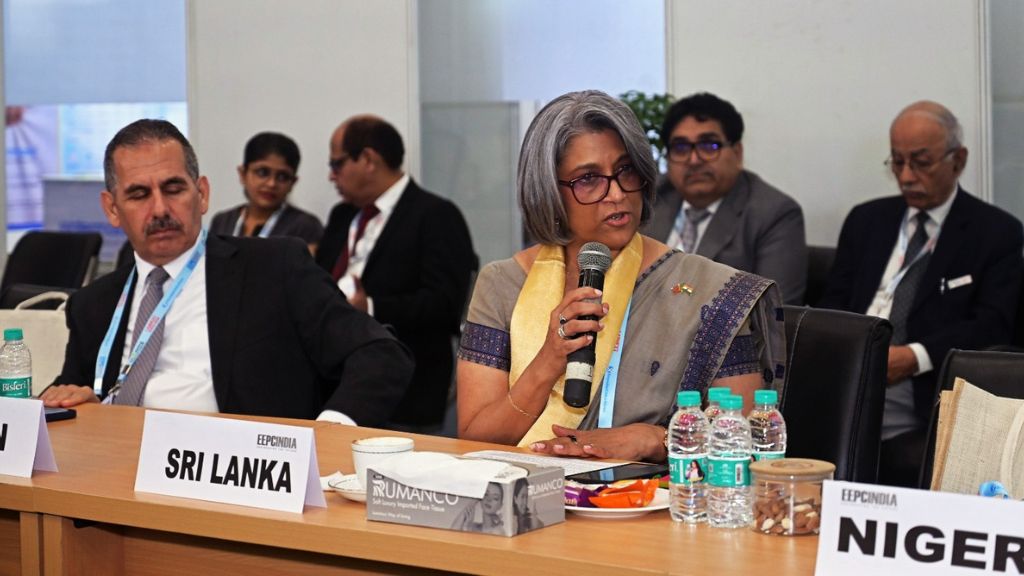
Pharmaceuticals: SL seeks deeper manufacturing ties with India as Sri Lanka looks to expand domestic production, attract investment and strengthen healthcare supply chains through greater technology and manufacturing cooperation.
Pharmaceuticals: SL seeks deeper manufacturing ties with India to strengthen health security and investment.
Sri Lanka has called for closer cooperation with India across pharmaceutical manufacturing, healthcare technology, investment and supply-chain development, highlighting opportunities to build domestic capacity while creating stronger links between the two countries’ healthcare industries.
The call was made by Sri Lanka’s High Commissioner to India, Mahishini Colonne, during an Ambassadors’ Conference on Healthcare Technologies and Pharmaceutical Manufacturing held in New Delhi. The conference formed part of the Pharma MachTech Expo and LabNext Expo 2026.
Organised by the Engineering Export Promotion Council of India (EEPC India), the conference brought together diplomatic representatives from 15 countries, senior Indian policymakers and industry representatives. Discussions focused on investment and trade opportunities, emerging pharmaceutical technologies and potential international partnerships.
High Commissioner Colonne said Sri Lanka and India already have a well-established pharmaceutical trading relationship, but significant opportunities remain to move beyond trade towards manufacturing, investment and technology partnerships.
She highlighted potential cooperation across a broad section of the pharmaceutical value chain, including active pharmaceutical ingredients, medical devices, laboratory technologies, diagnostic equipment and quality-control systems. Such partnerships could help Sri Lanka develop greater domestic capabilities while providing Indian companies with opportunities to expand their regional manufacturing and market presence.
Sri Lanka currently depends heavily on imported medicines and pharmaceutical products to meet domestic requirements, leaving the country exposed to international supply disruptions and changes in global prices. Increasing local manufacturing capacity has therefore become an important consideration for both economic and health-security policy.
The government has identified pharmaceutical manufacturing as a priority investment sector, with qualifying projects eligible for extended tax incentives and expedited regulatory approvals through the National Medicines Regulatory Authority. These measures are intended to improve the investment environment for companies considering manufacturing and related healthcare projects in Sri Lanka.
A dedicated pharmaceutical manufacturing zone in Hambantota was also highlighted during the conference. The zone is intended to provide a platform for companies seeking to establish manufacturing operations and develop technology capabilities in the country.
For potential Indian investors, Sri Lanka’s geographic proximity and existing commercial relationship with India provide a natural foundation for deeper cooperation. The existing Free Trade Agreement between the two countries could also support market access. According to the Sri Lankan High Commission, more than 50 categories of pharmaceutical products and medical devices currently receive duty-free access to the Indian market under the agreement.
The potential benefits extend beyond increasing the volume of pharmaceutical trade. Greater manufacturing cooperation could support technology transfer, workforce development, research and development and improvements in production standards. These areas are increasingly important as countries seek to build more resilient healthcare systems and reduce excessive dependence on concentrated international supply chains.
India-Sri Lanka healthcare cooperation could therefore develop around complementary strengths. India has a large and established pharmaceutical manufacturing sector, while Sri Lanka offers geographic proximity, an educated workforce and opportunities for investment in a market seeking to strengthen local production.
High Commissioner Colonne emphasised that manufacturing closer to end markets has become increasingly important in the context of health security and supply-chain resilience. The disruptions experienced by global supply chains in recent years have encouraged governments and companies to reassess their dependence on distant sources for essential medicines and medical products.
For Sri Lanka, stronger domestic manufacturing could also generate wider economic benefits. New pharmaceutical facilities could create skilled employment, encourage supporting industries and increase opportunities for research and technical services. Over time, a stronger manufacturing base could also improve the country’s ability to participate in regional healthcare value chains.
The emphasis on technology transfer and skills development is particularly relevant. Establishing manufacturing facilities alone may not be sufficient to create a competitive pharmaceutical sector. Sustainable growth would also require investment in technical expertise, quality assurance, regulatory capacity and research capabilities.
Pharmaceuticals: SL seeks deeper manufacturing ties with India at a time when both countries have an opportunity to broaden their existing commercial relationship. The focus on manufacturing, rather than trade alone, could help Sri Lanka move towards greater value addition within the healthcare sector.
High Commissioner Colonne also invited Indian industry representatives to participate in Sri Lanka Expo 2027, the country’s flagship trade and investment exhibition. The event is scheduled to take place in Colombo from 14 to 17 January 2027 and could provide another platform for Indian companies to explore investment opportunities in Sri Lanka.
The three-day Pharma MachTech Expo and LabNext Expo 2026 was held in New Delhi from 7 to 9 September. The discussions at the event have highlighted the potential for Sri Lanka and India to build a deeper healthcare partnership based on manufacturing, technology, investment and more resilient supply chains.