

LKR appreciates to 330.35 against the greenback as banking system liquidity edges higher
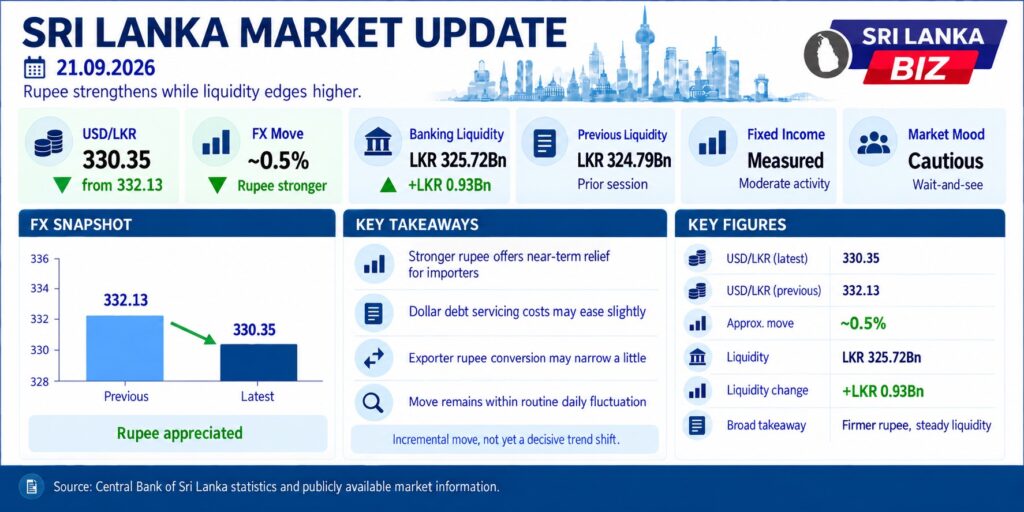
The Sri Lankan rupee strengthened against the US dollar in the latest session, appreciating to LKR 330.35 per dollar from LKR 332.13 previously, a move that will be closely watched by importers, exporters and businesses with dollar-denominated obligations.
The appreciation, equivalent to roughly 0.5%, came against a backdrop of moderate activity in the domestic fixed income market, where investor participation and trading volumes were described as measured through the session.
Liquidity conditions in the banking system showed a marginal improvement, with excess liquidity rising to LKR 325.72 billion, up from LKR 324.79 billion in the prior session. This level of liquidity continues to provide the banking system with room to support credit and market activity, though it remains within the recent trading range seen over the past two weeks.
The rupee’s movement comes at a time when broader investor sentiment across Sri Lankan capital markets has remained cautious, with equity market turnover falling to a six-week low in the same session and heightened attention on external developments, including the situation in the Middle East, contributing to a wait-and-see approach among market participants.
For businesses engaged in international trade, a stronger rupee typically eases the cost of imported goods, raw materials and dollar-denominated debt servicing, while potentially narrowing margins for exporters who earn in foreign currency. The scale of today’s movement, however, remains within the range of routine day-to-day currency fluctuation rather than a decisive directional shift.
Key Numbers
| Metric | Value | Change |
|---|---|---|
| USD/LKR (latest) | 330.35 | Appreciation |
| USD/LKR (previous) | 332.13 | — |
| Approximate Move | ~0.5% | LKR strengthened |
| Banking System Liquidity | LKR 325.72 Bn | +LKR 0.93 Bn |
| Previous Liquidity | LKR 324.79 Bn | — |
Business Impact
A firmer rupee offers modest near-term relief for importers and businesses servicing dollar-denominated debt, potentially easing input costs across sectors reliant on imported raw materials, machinery or fuel. Conversely, exporters converting foreign currency earnings back into rupees may see a slight compression in local currency revenue. The marginal uptick in banking system liquidity suggests no immediate tightening pressure, which should support continued stability in short-term funding costs. Businesses with active FX exposure should treat this as an incremental movement rather than the start of a sustained trend, and continue to monitor the currency alongside broader capital market conditions.
Source Attribution
Source: Central Bank of Sri Lanka statistics and publicly available market information.