

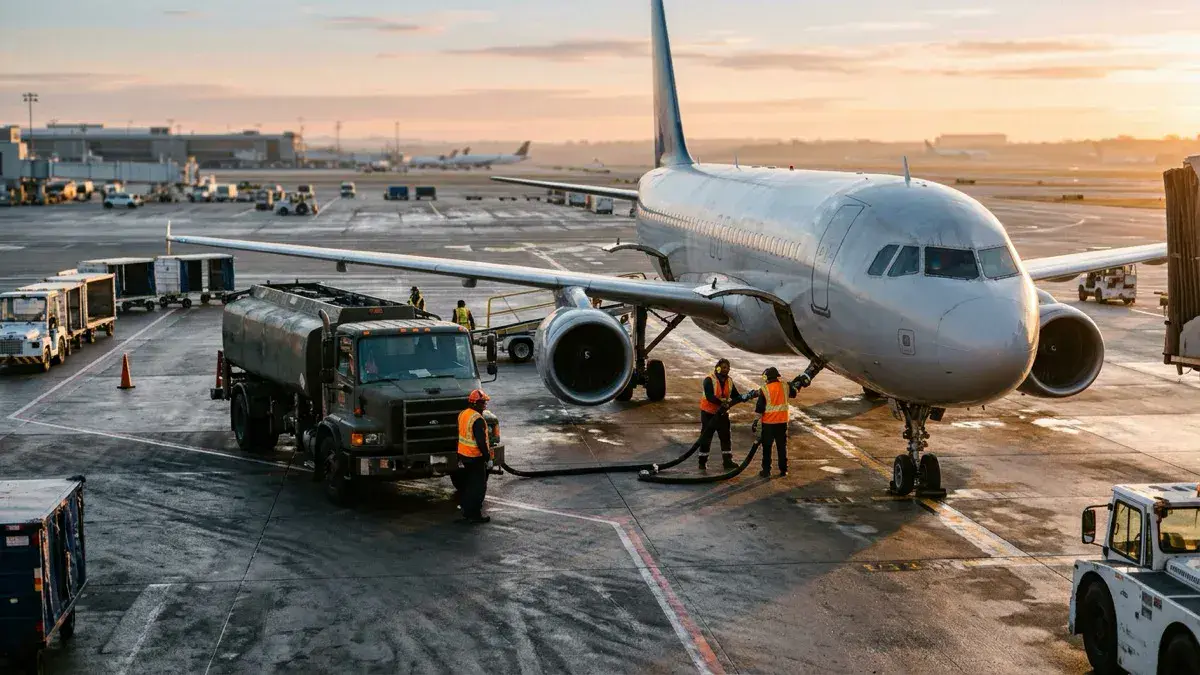
Aviation Procurement at a Glance
- Total Contract Commitment: $12.97 Million (approximately LKR 4.31 Billion)
- Contract Validity Period: November / December 2026 through December 31, 2028
- Designated Overseas Hubs: Incheon (Seoul), Frankfurt, Ahmedabad, and Lahore
- Procurement Modality: Limited International Competitive Bidding (8 bids received)
- Selected Suppliers: World Fuel Services Trading DMCC and Aviation Service Management FZE
- Operational Objective: Safeguarding long-haul and regional route fuel security
COLOMBO (SriLankaBiz): The Cabinet of Ministers cleared a $12.97 million SriLankan Airlines Fuel Contract package covering jet fuel supplies across four international destinations through December 2028, official procurement filings showed on Thursday.
The contracts secure aviation fuel for scheduled flag-carrier operations out of Incheon International Airport in South Korea, Frankfurt Airport in Germany, Ahmedabad Airport in India, and Allama Iqbal International Airport in Lahore, Pakistan.
SriLankan Airlines Fuel Contract Allocation by Airport
The awards followed a formal Limited International Competitive Bidding process administered under government procurement guidelines, drawing competing offers from eight international energy traders.
Minister of Ports and Civil Aviation Anura Karunathilake submitted the proposal based on binding technical and financial evaluations conducted by the High-Level Standing Procurement Committee.
Supply commitments were split between two established United Arab Emirates-based aviation fuel trading houses. World Fuel Services Trading DMCC secured supply agreements for the long-haul European and Far Eastern hubs, while Aviation Service Management FZE was awarded high-volume regional supply contracts across the Indian subcontinent.
Overseas Aviation Fuel Supply Matrix
| Destination Airport | Country / Region | Selected Contractor | Contract Value (USD) | Effective Tenure |
|---|---|---|---|---|
| Incheon International (ICN) | South Korea | World Fuel Services Trading DMCC | $240,021 | Nov 1, 2026 to Dec 31, 2028 |
| Frankfurt International (FRA) | Germany | World Fuel Services Trading DMCC | $293,456 | Nov 1, 2026 to Dec 31, 2028 |
| Ahmedabad International (AMD) | India | Aviation Service Management FZE | $5,954,200 | Nov 15, 2026 to Dec 31, 2028 |
| Allama Iqbal International (LHE) | Pakistan | Aviation Service Management FZE | $6,482,100 | Dec 1, 2026 to Dec 31, 2028 |
| Cumulative Procurement Outlay | Four Global Hubs | Dual UAE-Based Suppliers | $12,969,777 | Multi-Year Forward Coverage |
Managing Fuel Price Volatility and Operating Margins
Aviation jet fuel accounts for roughly 30% to 35% of total operating expenses for SriLankan Airlines. Establishing term supply contracts through late 2028 insulates the national carrier against spot-market pricing premiums at distant international airports.
The substantial values assigned to the Ahmedabad ($5.95 million) and Lahore ($6.48 million) agreements reflect high weekly flight frequencies on regional routes. By contrast, the modest outlays for Frankfurt and Incheon correlate with lower flight frequencies paired with tankering strategies where aircraft carry surplus fuel out of Colombo when local margins allow.
Securing institutional supply terms at major destination hubs prevents operational grounding risks and standardizes foreign exchange disbursement schedules for the airline’s treasury desk.
Strategic Restructuring and Balance Sheet Context
The execution of the SriLankan Airlines Fuel Contract agreements comes as the state enterprise continues its financial reorganization. With legacy sovereign debt obligations transferred onto the central government balance sheet, management has focused on optimizing direct flight operations and cash margins.
Aviation analysts observe that multi-year overseas procurement stability is a prerequisite for sustaining investor interest in ongoing state-owned enterprise (SOE) reform.
By locking in competitive fuel pricing through December 2028, the national carrier protects its bottom line across critical tourist origin markets in Europe and high-density commercial routes in South Asia.