

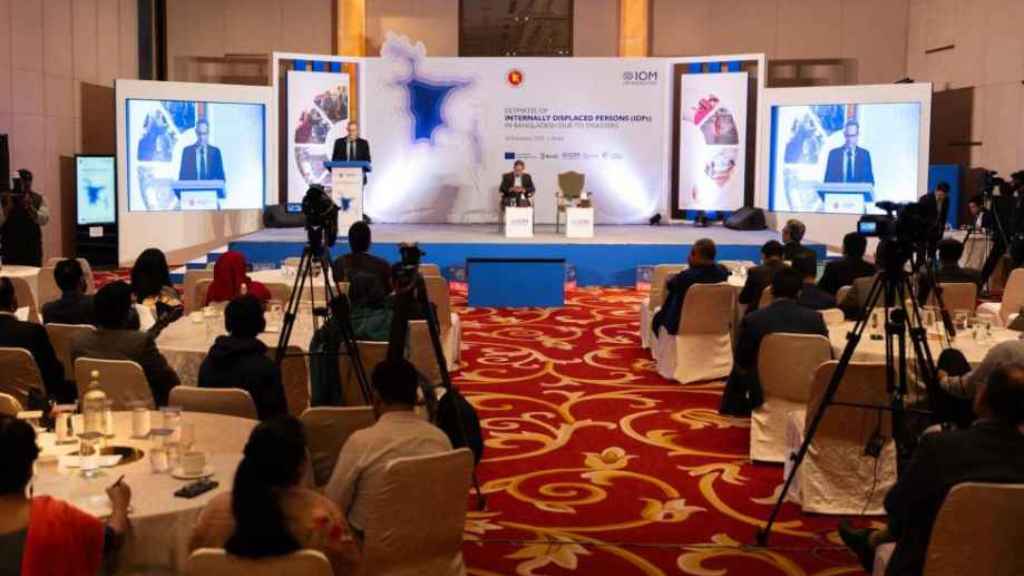
Bangladesh disaster displacement has reached unprecedented levels, according to the first nationwide estimate by IOM. The report details how floods, cyclones, river erosion, and other hazards continue to force millions from their homes across the country.
Bangladesh disaster displacement report reveals scale of internal displacements from hazards
The International Organization for Migration (IOM-UN Migration), in partnership with the Government of Bangladesh and development partners, has released the country’s first comprehensive nationwide estimate of disaster-induced internal displacement. The report provides a detailed picture of how floods, cyclones, river erosion, and other natural hazards continue to disrupt communities, highlighting the ongoing challenges faced by millions of residents across Bangladesh.
Until now, Bangladesh lacked a verified nationwide assessment of internally displaced persons (IDPs), leaving authorities and aid agencies without a clear understanding of the scale of displacement caused by recurring disasters. To address this gap, IOM conducted an extensive field assessment covering all eight divisions, 64 districts, 4,579 unions, 329 municipalities, and 480 city corporation wards. This exercise represents the most extensive survey of disaster-induced displacement undertaken in the country.
The findings indicate that nearly 4.96 million people are currently internally displaced due to natural hazards. Data collection took place between September and October 2025, with more than 29,000 key informants interviewed during 5,388 field visits. The assessment not only quantifies the number of IDPs but also provides insights into the temporal distribution of displacement events, revealing long-term and unresolved patterns that have significant implications for policy planning and disaster response.
Lance Bonneau, Chief of Mission of IOM Bangladesh, emphasised the importance of these findings during the launch event. He stated, “Understanding the scale of displacement is essential for effective disaster management and long-term planning. These findings give national authorities, local leaders, and development partners a shared foundation to respond to displacement with greater clarity and coordination.” His comments underline the critical need for evidence-based interventions to support vulnerable populations and mitigate the humanitarian impact of repeated natural hazards.
The assessment revealed that a significant proportion of IDPs have been displaced for an extended period. Approximately 63 percent of those currently displaced experienced their initial displacement before April 2020, highlighting long-standing, unresolved displacement issues across the country. Another 25 percent were displaced between April 2020 and April 2024, reflecting more recent but still substantial movement of people driven by floods, cyclones, and other hazards. These figures point to both the chronic nature of displacement in Bangladesh and the urgent requirement for integrated solutions that address both immediate needs and long-term resilience.
Regional patterns of displacement further underscore the diverse impact of natural hazards. Coastal districts affected by cyclones and storm surges exhibit some of the highest concentrations of long-term IDPs, while areas along major riverbanks experience recurrent displacement due to erosion and seasonal flooding. Urban areas also face challenges, as internally displaced households migrate to city peripheries or informal settlements, placing additional pressure on municipal services and infrastructure.
The report also provides guidance for policymakers and development agencies. By offering a comprehensive and validated dataset, authorities can better prioritise resources, plan for emergency response, and develop sustainable strategies to reduce vulnerability to future disasters. The survey’s scope ensures that planning decisions are informed by accurate, on-the-ground information rather than anecdotal evidence or fragmented local reports, which has historically limited the effectiveness of disaster management initiatives in Bangladesh.
In addition to shaping disaster response, the IOM assessment aims to support long-term recovery and resilience-building. By identifying populations that have experienced repeated or prolonged displacement, the findings highlight areas where interventions such as housing reconstruction, livelihood restoration, and community resilience programs are most needed. The dataset also facilitates coordination among government agencies, NGOs, and international partners, enabling a more targeted and collaborative approach to displacement management.
Bangladesh disaster displacement remains a pressing issue with social, economic, and humanitarian implications. The release of this first nationwide estimate provides a foundation for evidence-based action, helping authorities and partners align resources with the most affected regions and populations. As natural hazards continue to affect the country annually, such comprehensive data is critical to improving the safety, stability, and quality of life for those forced to leave their homes due to environmental risks.