

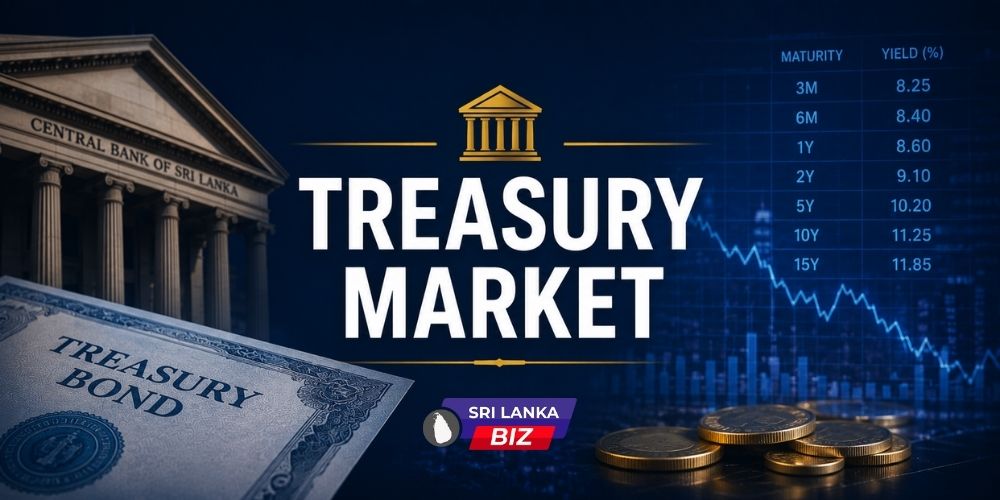
Market liquidity rises to LKR 330.9 billion, extending a multi-week upward trend
Liquidity in Sri Lanka’s banking system expanded further on Thursday, with excess liquidity rising to LKR 330.91 billion from LKR 299.51 billion in the previous session. The increase continues a broader upward trend that has been building over recent weeks, based on daily liquidity data tracked alongside Central Bank holdings of government securities.
The rise in liquidity coincided with a fall in short-term Treasury bill yields at the latest auction, where the 91-day rate dropped 33 basis points and the 184-day and 364-day rates eased 21 and 18 basis points respectively. Ample liquidity in the banking system generally supports stronger demand for government securities, a dynamic that was evident in the auction’s bid-to-offer ratio, where bids of LKR 385.96 billion were received against LKR 140 billion on offer.
The secondary bond market also reflected an active trading session, with both buying and selling interest across maturities from 2028 through 2037, though on moderate volumes. Yields on bonds toward the middle and long end of the curve moved higher over the past week even as short-term rates fell, a divergence that points to differing investor expectations for near-term versus longer-term interest rate conditions.
On the currency side, the Sri Lankan rupee appreciated marginally against the US dollar, trading at LKR 334.33 compared to LKR 334.79 previously — a modest move that nonetheless occurred against the backdrop of improving system-wide liquidity.
Key Numbers
| Metric | Value |
|---|---|
| Excess liquidity (latest) | LKR 330.91 billion |
| Excess liquidity (previous session) | LKR 299.51 billion |
| Change | +LKR 31.4 billion |
| 91-day T-bill yield | 9.44% (-33 bps) |
| USD/LKR | 334.33 (vs. 334.79 previously) |
| T-bill auction bid-to-offer | LKR 385.96 billion bid vs. LKR 140 billion offered |
Business Impact
Rising system-wide liquidity is generally supportive of credit availability and can ease pressure on short-term borrowing costs for businesses, particularly those relying on bank financing or money market instruments. For corporate treasurers and SMEs, a sustained liquidity build alongside falling short-term yields may translate into more favorable terms on short-tenor borrowing, though the diverging trend in longer-dated bond yields suggests this easing has not yet extended across the full maturity curve.
Source: Central Bank of Sri Lanka statistics and publicly available market information.