

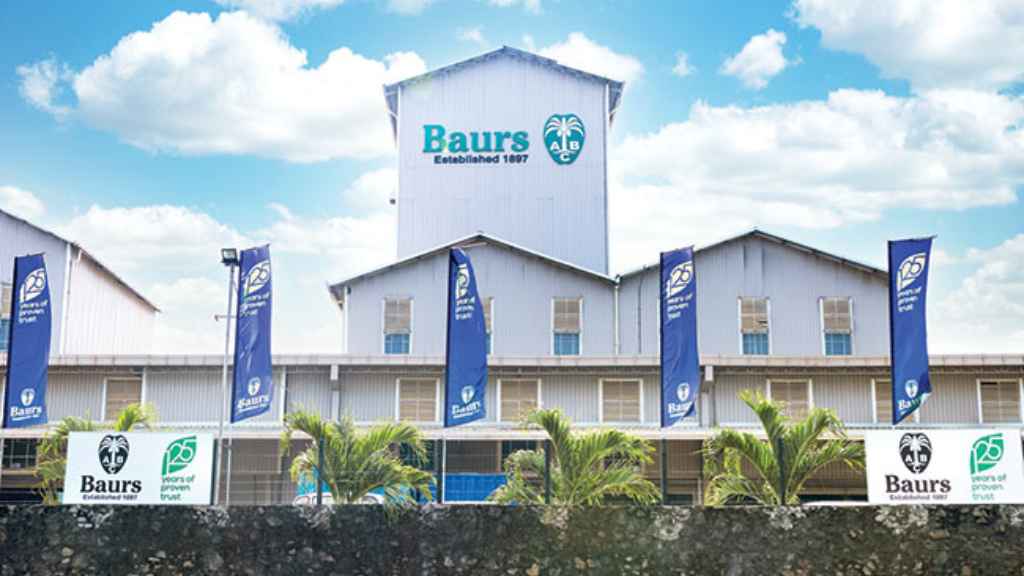
Baurs’ human rights commitment is redefining how one of Sri Lanka’s oldest corporates approaches ethical growth. As the company enters its 125th year, it is strengthening governance, transparency, and people-centred practices that align legacy with modern expectations.
Baurs’ human rights commitment strengthens governance, ethics, and sustainable corporate impact
A. Baur & Co., known widely as Baurs, has entered its 125th year with a renewed focus on human rights, ethical governance, and responsible leadership. This evolution comes at a pivotal moment as global expectations of corporate behaviour intensify, demanding higher standards of transparency, integrity, and sustainability. Under the direction of CEO Rolf Blaser, Baurs is shaping a modern identity rooted in tradition yet aligned with contemporary principles, reflecting a balance between heritage and progressive corporate stewardship.
Blaser describes the company’s philosophy as a fusion of Swiss precision and Sri Lankan purpose. That identity has informed Baurs’ expanding role as Patron of the Business & Human Rights Working Group of the UN Global Compact Network Sri Lanka. In this capacity, the company contributes to national and global conversations on ethical governance, advancing a vision in which long-term growth is inseparable from human dignity and responsible conduct. For Baurs, sustainability is not a marketing message but a business imperative shaped by decades of accountable leadership.
The company’s commitment to responsibility is not new. Since its founding in 1897 by Alfred Baur, the principle of acting in the best interest of the country has guided its decisions. Over the years, this ethos has evolved into a structured ethical framework that governs operations, sourcing, and strategic planning. Blaser emphasizes that the organisation’s values serve as a non-negotiable filter for decision-making. Quality, sustainability, and ethical sourcing override short-term profitability, reaffirming Baurs’ philosophy that integrity is fundamental to business resilience.
A defining cornerstone of this approach is the company’s zero-tolerance stance on corruption. Every operational step is subject to stringent compliance processes. Technology investments undergo evaluation not only for efficiency but for environmental and ethical alignment. These layers of governance help ensure that Baurs’ actions remain consistent with the values that have shaped its identity for more than a century. The company demonstrates that a legacy is meaningful only when it is lived, not merely inherited.
Human rights integration at Baurs is not symbolic; it is systematic. The company’s Code of Moral & Ethics is embedded into employee onboarding and reinforced through frequent training. Expectations around ethical conduct are woven into the supply chain through contractual Human Rights Clauses, supported by due diligence systems, monitoring processes, and mechanisms for remediation. This structure ensures that obligations to people—employees, partners, and communities—are upheld across every operational area.
Blaser notes that respect for human rights is a fundamental responsibility, not an optional ideal. To support transparency, Baurs maintains an anonymous Whistleblower Policy that enables employees and stakeholders to report concerns without fear. A Diversity, Tolerance & Inclusion Policy further ensures fair and equitable treatment throughout the organisation. These systems collectively reinforce the idea that human rights obligations are effective only when supported by robust governance structures.
Recognizing the centrality of human rights due diligence (HRDD) to modern corporate governance, Baurs has fully embedded these processes into its strategic and operational models. From supplier selection to internal audit frameworks, the company ensures that its partnerships and business activities uphold consistent ethical standards. Implementing HRDD in Sri Lanka presents structural challenges, but Baurs’ proactive investment in building internal expertise has strengthened its capacity to respond. This commitment is reflected in initiatives on business integrity, living wages, anti-corruption, and data ethics. Complementary social programs, including a pioneering child support initiative, reinforce the company’s focus on equitable impact. Simultaneously, digital safeguards ensure strong privacy and data protection as the company undergoes technological transformation.
Baurs’ influence spans sectors including agriculture, healthcare, and education. Through sustainable agriculture programs, the organisation contributes to food security and empowers rural growers with modern tools and knowledge. Its healthcare division ensures access to life-saving medicines across Sri Lanka, while education initiatives help equip young people with skills essential to future employment. Blaser describes these initiatives as measures of business success, not side projects—demonstrating the company’s belief that social contribution is intrinsic to corporate performance.
Within the UN Global Compact Network Sri Lanka, Baurs has embraced a journey of continuous learning. Engagement with working groups and peer networks has enabled the company to benchmark progress against global best practices, refine internal systems, and enhance governance frameworks. Blaser credits the Network with providing the tools and expert guidance necessary to transform principles into actionable outcomes. Network Sri Lanka acknowledges Baurs as a key contributor in shaping national standards on business integrity, human rights, anti-corruption, and emerging areas such as AI governance and digital rights.
Looking ahead, Baurs aims to deepen its alignment with the UN Guiding Principles on Business and Human Rights, reinforcing a culture of transparency within the private sector. Blaser highlights the importance of collective leadership, noting that progress depends on collaboration among businesses, government agencies, and civil society. As one of the country’s oldest corporates, Baurs continues to demonstrate that ethical business is not only responsible practice but the foundation of sustainable national development.
Responsibility, for Baurs, is not a milestone but an enduring mindset. Its journey shows that values-driven leadership can build resilience, inspire trust, and shape a legacy that endures through generations.