

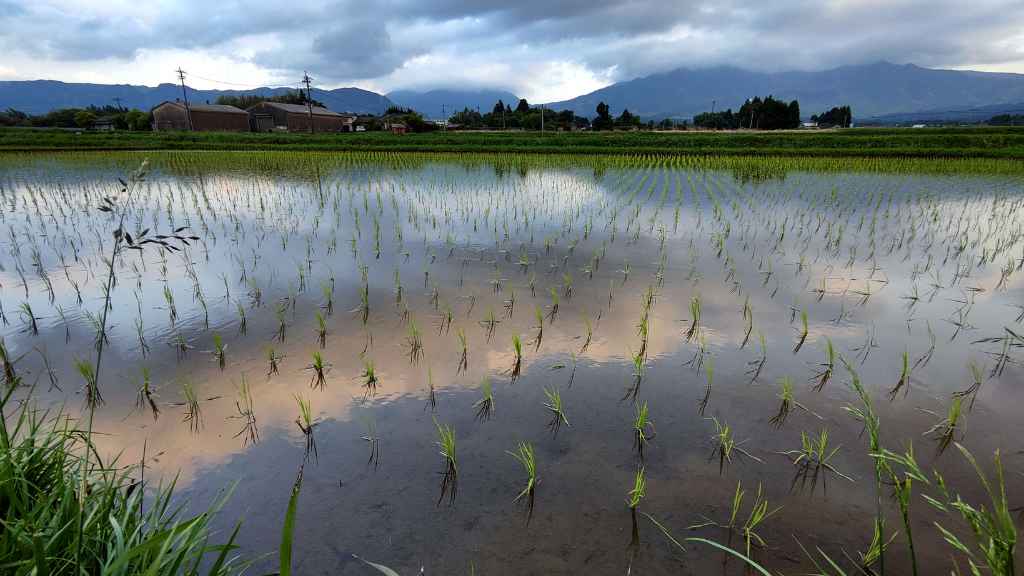
Ditwah destroys paddy in Sri Lanka on a scale not seen in years, leaving the nation’s agricultural sector facing severe setbacks. The cyclone’s devastation has undermined early-season cultivation and forced the government to launch extensive compensation measures.
Cyclone damage worsens as Ditwah destroys paddy in Sri Lanka and hits key crops
The destructive impact of Cyclone Ditwah has dealt a significant blow to Sri Lanka’s agricultural sector, disrupting early-season cultivation and leaving thousands of farming families in distress. According to the Ministry of Agriculture, the cyclone’s forceful sweep across multiple districts resulted in a severe loss of crops, particularly in regions preparing for the Maha 2025/26 season. Government officials confirmed widespread damage to rice paddies, vegetable fields and other essential crop varieties, deepening concerns about food security and rural livelihoods. As Ditwah destroys paddy in Sri Lanka, the scale of destruction underscores the growing vulnerability of the country’s farming systems to extreme climate events.
The Ministry’s preliminary assessments indicate that 108,000 hectares of paddy have been fully destroyed, representing a substantial portion of the 615,000 hectares that farmers had already sown for the Maha season. This loss is especially significant given that the total planned paddy extent for the season was 870,000 hectares. The early onset of the cyclone interrupted cultivation just as fields were stabilizing, leaving farmers with no choice but to restart preparations under difficult conditions. Although Sri Lanka’s paddy farmers are accustomed to seasonal flooding and have historically endured multiple inundations within a year, the timing and intensity of Ditwah have elevated recovery challenges.
Beyond the devastation to paddy fields, Cyclone Ditwah has ravaged several other crop categories essential to household income and national food supply. A total of 11,000 hectares of other field crops were fully destroyed out of 27,600 hectares cultivated. Maize production, a critical input for the livestock and poultry industries, suffered heavily, with 6,600 hectares wiped out from an estimated 87,244 hectares. Vegetable cultivation has also been hit hard, with 6,143 hectares reported damaged, including both low-country and upcountry varieties that supply urban and rural markets. The Ministry reported that 2,613 hectares of upcountry vegetables and 3,530 hectares of low-country vegetables were completely destroyed.
Food security analysts warn that the combined destruction of paddy, maize, and multiple crop categories may create short-term supply gaps and upward pressure on market prices if re-cultivation is delayed. The losses also carry implications for seasonal employment, as rural labor demand typically peaks during cultivation and harvest cycles. With Ditwah destroying paddy in Sri Lanka at such scale, the economic impact will extend beyond farms, affecting transporters, input suppliers, millers and associated service networks.
In response to the widespread destruction, the government has initiated a comprehensive compensation scheme aimed at helping farmers restart cultivation quickly. According to Secretary D.P. Wickremesinghe, farmers will be reimbursed for both the funds used so far and the new costs required to re-establish their crops. The government has allocated 150,000 rupees per hectare for rice, maize and other field crops, while vegetable farmers will receive 200,000 rupees per hectare due to higher input costs. These payments will be channeled through previously established mechanisms to expedite disbursement.
Officials also stated that partially destroyed fields would undergo a detailed assessment to ensure compensation levels accurately reflect the level of loss. Teams on the ground are working to survey affected areas, although some government officers themselves have been impacted by flooding and transport disruptions. To support affected farmers who are unable to contact local offices, authorities have activated the national hotline 1918 to facilitate reporting and coordinate assistance.
Agriculture Ministry leaders emphasized that despite the significant destruction, there remains an opportunity for farmers to re-cultivate because the cyclone struck early in the season. Paddy lands, in particular, can often be rehabilitated after flooding events if water recedes quickly and inputs are supplied promptly. The government aims to accelerate the provision of seeds, fertilizers and advisory support to avoid delays that could reduce yields during the upcoming harvest period.
The long-term implications of Cyclone Ditwah’s agricultural damage extend beyond immediate replanting needs. Specialists note that repeated climate shocks highlight the importance of strengthening resilience across the sector through improved irrigation systems, climate-resistant crop varieties, and expanded crop insurance coverage. As climate volatility becomes more frequent, Sri Lanka’s reliance on seasonal rainfall and traditional cultivation patterns presents increasing risks. The current disaster reinforces the urgency of building adaptive capacity to safeguard national food systems and rural incomes.
Despite the challenges, authorities remain confident that a coordinated response can help farmers recover before the end of the season. Financial support, rapid assessments and restoration of supply chains will be central to minimizing long-term impacts. The Ministry’s assurance that compensation flows will continue through established channels aims to restore confidence among farming communities already battling the fallout of the storm. As assessments continue, policymakers are expected to engage development partners to explore additional support mechanisms for recovery and resilience-building.