

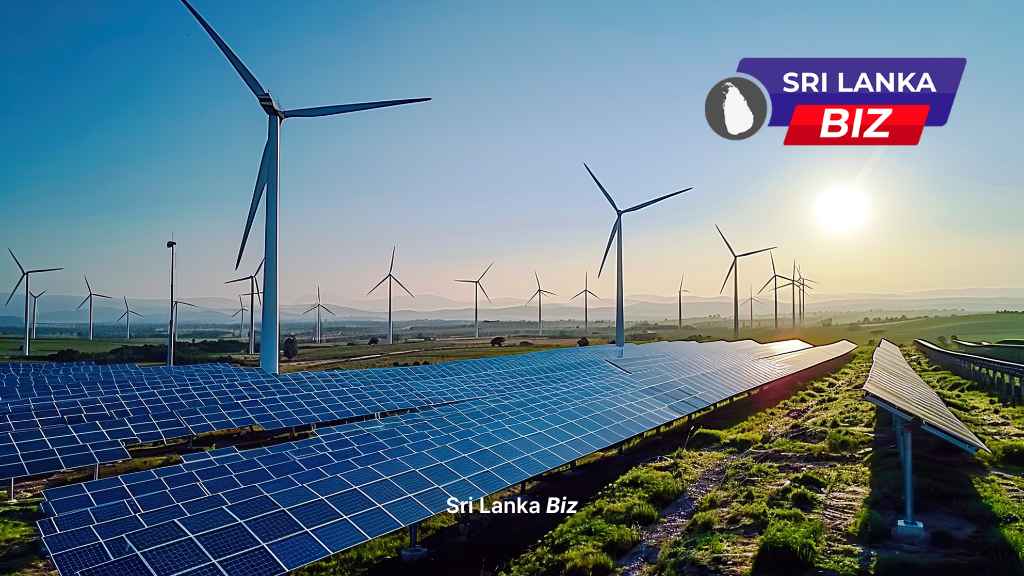
Energy sector stakeholders identify priorities to accelerate Sri Lanka’s renewable energy transition as policymakers, industry leaders, academics and energy experts called for stronger reforms to attract investment and improve the country’s long-term energy security.
Energy sector stakeholders identify priorities to accelerate Sri Lanka’s renewable energy transition through reforms
The Ceylon Chamber of Commerce recently hosted a high-level forum titled “Energy Transition in Sri Lanka: Strategic Insights from Global Markets,” bringing together representatives from government institutions, the private sector, academia and the wider energy industry to discuss the policy measures, regulatory reforms and investment priorities required to accelerate Sri Lanka’s clean energy transformation.
The discussion centred on the growing importance of renewable energy in meeting rising electricity demand while reducing the country’s dependence on imported fossil fuels. Participants agreed that expanding renewable power generation would not only strengthen national energy security but also improve economic resilience by lowering fuel import costs and supporting sustainable development.
Among the various renewable sources, solar energy was identified as one of the country’s most promising growth areas. Industry representatives highlighted the need for attractive purchase tariffs, transparent procurement mechanisms and continued support for distributed renewable energy projects to encourage greater private sector participation.
Participants noted that expanding rooftop solar installations and decentralised renewable energy generation could improve grid reliability, reduce transmission losses and diversify electricity production while supporting households, businesses and industrial consumers.
Despite Sri Lanka’s considerable renewable energy potential, the forum identified several challenges that continue to delay project implementation. These include inconsistent policy direction, lengthy regulatory approval procedures, land acquisition difficulties, grid capacity limitations and administrative delays that discourage investors and slow project execution.
Speakers stressed that creating a predictable and stable policy environment would be essential to improving investor confidence and accelerating the delivery of renewable energy projects. They also called for stronger coordination among government agencies and regulators to streamline approval processes and reduce unnecessary bottlenecks.
The discussion further examined procurement frameworks and financing models needed to attract larger investments into the sector. Participants highlighted the importance of developing more bankable renewable energy projects while ensuring financial sustainability through timely payments to project developers.
Net metering and feed-in tariff arrangements were also recognised as important policy tools that encourage commercial and industrial consumers to invest in solar energy systems by allowing them to export surplus electricity to the national grid. Such mechanisms, participants noted, can play a significant role in expanding distributed renewable generation while improving energy efficiency across the country.
Energy storage technologies emerged as another major focus of the dialogue. Experts explained that battery storage systems would become increasingly important as renewable energy penetration grows, helping maintain grid stability, improve system flexibility and ensure reliable electricity supply even during periods of fluctuating renewable generation.
Global case studies demonstrating successful solar-plus-storage projects were reviewed, with participants emphasising the need for Sri Lanka to establish clear technical standards, safety regulations, financing mechanisms and appropriate market structures to facilitate wider adoption of energy storage technologies.
Beyond electricity generation, the forum also explored the broader economic impact of Sri Lanka’s energy transition. Participants observed that future electricity demand is expected to rise significantly as digital technologies, artificial intelligence, electric vehicles and data centres become more widespread.
To support this transformation, experts highlighted the importance of modernising Sri Lanka’s electricity infrastructure through intelligent grid technologies capable of managing increasingly complex and decentralised energy systems. Such investments, they said, would strengthen the country’s long-term competitiveness while supporting sustainable economic growth.
Human capital development was identified as another critical priority. Participants called for stronger collaboration between universities, technical institutions and industry to expand training opportunities and develop the skilled workforce needed to support the continued growth of the renewable energy sector.
The forum concluded that achieving Sri Lanka’s ambitious clean energy goals will require coordinated action across government, regulators, investors and industry stakeholders. Participants agreed that policy certainty, improved financing, infrastructure upgrades and institutional cooperation will be essential to accelerating Sri Lanka’s renewable energy transition while building a more resilient, affordable and sustainable energy future.