

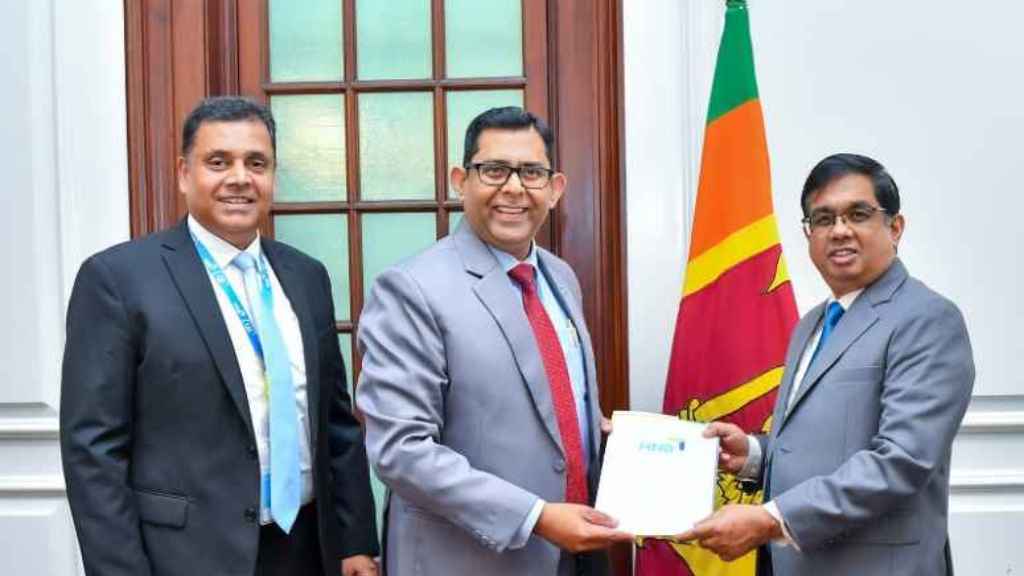
HNB Cyclone Ditwah response has taken a decisive step forward with a Rs. 100 million commitment to national recovery efforts. The initiative underscores the bank’s role in supporting affected communities through immediate relief and long-term rebuilding support.
HNB Cyclone Ditwah response reinforces Sri Lanka’s rebuild efforts
Hatton National Bank PLC has strengthened Sri Lanka’s national disaster recovery efforts with a significant financial contribution and a coordinated relief programme following the widespread devastation caused by Cyclone Ditwah. By committing Rs. 100 million to the Rebuild Sri Lanka Fund, HNB has positioned itself at the forefront of private sector support for communities grappling with the aftermath of the severe weather event.
The contribution reflects the bank’s broader philosophy as a home-grown financial institution with deep-rooted ties to the communities it serves. Cyclone Ditwah left thousands of families displaced, damaged critical infrastructure, and disrupted livelihoods across several regions. For HNB, the impact was not only national in scale but also personal, with customers, employees, and partner communities directly affected.
Commenting on the initiative, HNB Managing Director and Chief Executive Officer Damith Pallewatte emphasised solidarity and shared responsibility. He noted that the bank stands with all Sri Lankans affected by the cyclone, particularly those who suffered the greatest losses. Acknowledging that many HNB customers and employees were among the impacted, he stressed the institution’s commitment to supporting recovery efforts over both the short and long term.
The Rs. 100 million allocation to the Rebuild Sri Lanka Fund is intended to support structured national rebuilding initiatives, recognising that post-disaster recovery is a prolonged and complex process. Through this contribution, HNB has aligned itself with a collective mission that brings together government agencies, the private sector, and community stakeholders to restore livelihoods and rebuild infrastructure in affected areas.
Beyond direct financial support, the HNB Cyclone Ditwah response includes a nationwide disaster relief initiative forming the first phase of a broader, coordinated action plan by the bank. This immediate response focused on stabilising daily living conditions for displaced families while ensuring assistance reached the most vulnerable in a transparent and equitable manner.
As part of the relief programme, HNB donated more than 2,500 essential relief and nutrition packages. These consignments were formally handed over to the Sri Lanka Army, which was tasked with overseeing structured distribution across the impacted areas of Kandy, Gampaha, Kaduwela, and Hanwella. The collaboration with the Army was designed to ensure that aid reached intended recipients efficiently, minimising duplication and ensuring accountability.
The relief packs were carefully curated to address urgent household needs. They included nutrition items to support basic dietary requirements, personal care products to maintain hygiene in temporary living conditions, and essential household necessities aimed at helping families regain a sense of normalcy. Such targeted support is critical in the immediate aftermath of a disaster, when access to food, sanitation, and basic supplies is often disrupted.
In parallel with community-focused assistance, HNB extended dedicated support to its own employees affected by Cyclone Ditwah. Separate relief packages were provided to impacted staff members, recognising that employee wellbeing is integral to organisational resilience. By supporting employees in their personal recovery, the bank sought to ensure stability within its workforce while reinforcing a culture of care and responsibility.
The bank’s response highlights the increasingly important role of corporate institutions in national disaster management. While public sector agencies lead emergency response and infrastructure restoration, private sector participation adds financial capacity, logistical support, and operational efficiency. HNB’s actions demonstrate how financial institutions can leverage their resources, networks, and governance frameworks to contribute meaningfully during national crises.
From a broader perspective, the HNB Cyclone Ditwah response also reflects evolving expectations around corporate citizenship. Stakeholders today look beyond profitability, assessing how organisations respond to social and environmental challenges. By committing significant funds and mobilising on-the-ground relief efforts, HNB reinforces its position as a responsible corporate citizen aligned with national priorities.
The scale of destruction caused by Cyclone Ditwah underscores the need for sustained recovery efforts rather than one-off interventions. Infrastructure rehabilitation, livelihood restoration, and community resilience building require long-term investment and coordinated planning. HNB has indicated that its engagement with recovery efforts will extend beyond immediate relief, supporting longer-term rebuilding initiatives as part of a comprehensive response.
As climate-related disasters become more frequent and intense, such models of private sector engagement are likely to play a growing role in national preparedness and recovery strategies. Financial institutions, in particular, are well positioned to support reconstruction through funding, financial inclusion initiatives, and targeted assistance to affected businesses and households.
In this context, HNB’s contribution to the Rebuild Sri Lanka Fund and its parallel relief operations send a strong signal of commitment and leadership. The initiative not only provides tangible support to affected communities but also reinforces the importance of collective action in the face of national adversity.
Ultimately, the HNB Cyclone Ditwah response stands as a demonstration of how corporate resources, when aligned with national needs, can accelerate recovery and help communities move from crisis toward resilience. As rebuilding efforts continue, such sustained engagement will remain critical to restoring livelihoods and strengthening Sri Lanka’s capacity to withstand future challenges.