

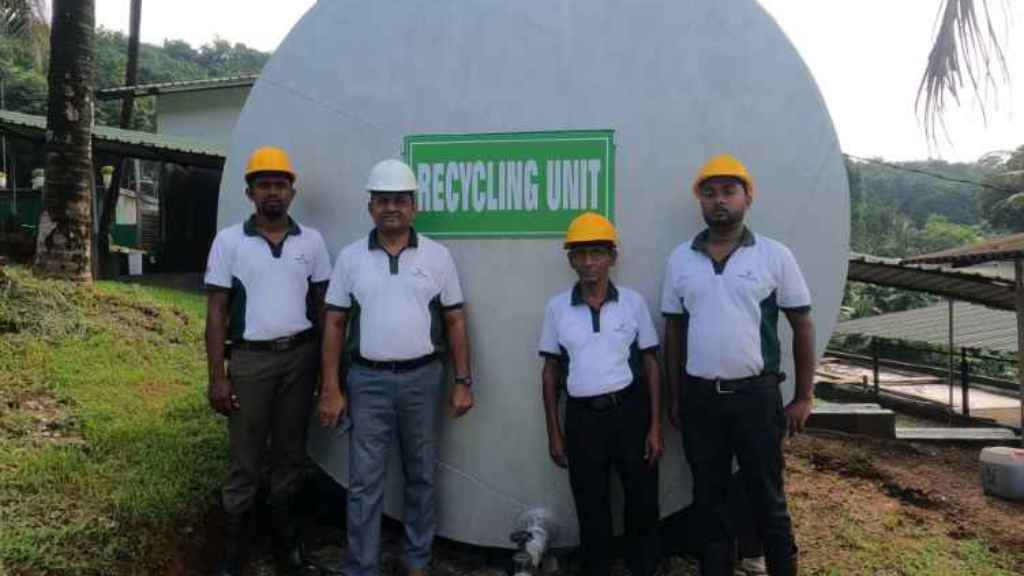
Kelani Valley Plantations sustainability has taken a decisive step forward as the company assumes a national leadership role in water and climate action through the UN Global Compact Network Sri Lanka. The move reinforces a long-standing commitment to responsible agribusiness and environmental stewardship.
Kelani Valley Plantations sustainability drive strengthens water stewardship leadership
Kelani Valley Plantations PLC has emerged as a defining force in Sri Lanka’s sustainability landscape, following its invitation to serve as Patron of the Water & Ocean Stewardship Working Group of the UN Global Compact Network Sri Lanka. The appointment reflects not a sudden pivot, but the recognition of a philosophy embedded deep within the company’s operational and ethical foundations.
At a time when climate volatility is reshaping economies and ecosystems alike, the emphasis on water stewardship has become both an environmental and a business imperative. For Kelani Valley Plantations, the connection between nature and enterprise is inseparable. Operating across some of Sri Lanka’s most ecologically sensitive landscapes, the company has long acknowledged that agricultural productivity, community wellbeing, and environmental health must advance together.
According to Dr. Anuruddha Gamage, Head and General Manager of HR and Corporate Sustainability, Kelani Valley Plantations sustainability has never been treated as a peripheral initiative. He notes that the company’s approach is grounded in accountability, value creation, and long-term thinking rather than short-term compliance. This ethos dates back nearly two decades, beginning with the company becoming the first plantation entity in Sri Lanka to sign the Ten Principles of the UN Global Compact in 2006, followed by alignment with the CEO Water Mandate in 2008.
In an industry historically shaped by extraction-driven models, Kelani Valley Plantations has distinguished itself through a regenerative, research-led agribusiness strategy. Its internal framework, referred to as Corporate DNA, integrates Environmental, Social, and Governance principles into everyday decision-making. This structure ensures that sustainability commitments are translated into measurable outcomes across estates, factories, and communities.
Water stewardship stands at the centre of this transformation. The company has actively worked to dismantle outdated assumptions that water resources are infinite. Through continuous staff engagement, training, and operational reforms, water is now managed as a finite and critical input. This shift is exemplified by innovations introduced at the Dunedin Skim Rubber Factory, one of the country’s leading skim rubber producers.
A detailed assessment of the factory’s processes revealed daily freshwater consumption of approximately 30,000 litres. By analysing discharge points and water quality parameters, the company identified opportunities to reuse effluent from smooth mills following simple pretreatment. Through filtration, sedimentation, and redesigned drainage systems, treated water was redirected for reuse within operations. The result was a 50 percent reduction in daily freshwater use and a 19 percent decline in wastewater generation, delivering significant environmental benefits alongside annual cost savings estimated at LKR 15.6 million. The project’s rapid payback period underscored the commercial logic of sustainable innovation.
Beyond factory gates, Kelani Valley Plantations sustainability initiatives extend into watershed protection and community engagement. The Kelani Valley Protectors Initiative, launched under the National Surakimu Ganga Programme, demonstrates how policy alignment and grassroots action can converge. Through partnerships with government agencies, schools, and local stakeholders, the initiative focuses on protecting water sources, restoring ecosystems, and fostering environmental awareness. More than 4,500 native plants have been established, supported by thousands of volunteer hours dedicated to conservation.
Education plays a critical role in this approach. By forming Green Clubs in estate schools, the company empowers children to act as environmental advocates within their households and communities. This intergenerational model bridges scientific knowledge with everyday practice, ensuring that sustainability principles resonate beyond corporate boundaries.
The company’s philosophy balances four interdependent pillars: product quality, ethical business conduct, environmental responsibility, and social development. Rather than treating sustainability as a cost centre, Kelani Valley Plantations positions it as a driver of resilience and competitiveness. This integrated outlook has strengthened trust with global partners and enhanced credibility in international sustainability reporting frameworks.
As Patron of the Water & Ocean Stewardship Working Group, the company now carries a broader responsibility to share lessons learned and collaborate across sectors. Engagement with the UN Global Compact Network Sri Lanka provides access to global best practices, peer learning, and capacity-building tools that further refine watershed management strategies and climate resilience planning.
Kelani Valley Plantations sustainability goals are closely aligned with the UN Sustainable Development Goals, particularly those addressing clean water, climate action, and partnerships. Long-standing collaborations with international institutions across Asia and Europe have enabled the company to both contribute to and benefit from global sustainability discourse.
Looking ahead, the focus is on scaling impact and strengthening collaboration. The company’s leadership emphasises that Sri Lanka’s private sector must move decisively to remain relevant in a global economy increasingly shaped by environmental accountability. By linking operational discipline with collective action, Kelani Valley Plantations aims to help position the country as a credible contributor to sustainable development.
Ultimately, the company’s journey reflects a broader truth: agribusiness success in the modern era depends on respecting ecological limits and investing in shared futures. Through its expanded role with the UN Global Compact Network Sri Lanka, Kelani Valley Plantations is not only advancing its own agenda but also helping to shape a national narrative where sustainability is integral to progress.