

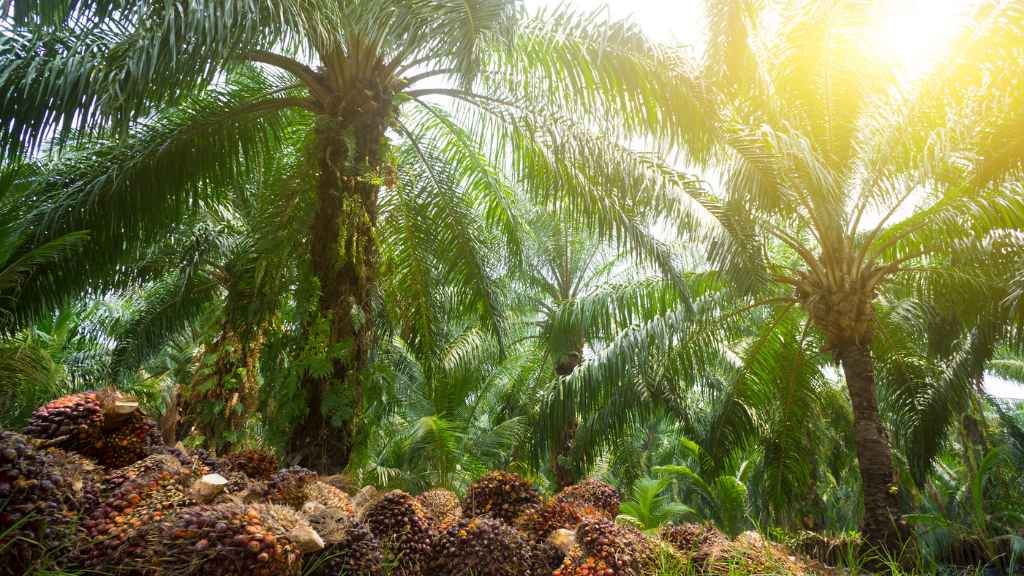
oil palm cultivation Sri Lanka should be assessed through scientific evidence rather than public perception, according to Emeritus Professor of Agriculture Dr. S.P. Nissanka, who has challenged several long-standing environmental criticisms associated with the crop.
oil palm cultivation Sri Lanka debate should be guided by evidence, professor says
The senior agricultural scientist argues that many claims linking oil palm to excessive soil degradation, biodiversity loss, and water shortages lack sufficient scientific evidence within the Sri Lankan context. Instead, he says policymakers should base future decisions on rigorous research and comparative analysis rather than widely held assumptions.
Sri Lanka has debated the future of oil palm for several years, with environmental concerns frequently dominating public discussion. However, Dr. Nissanka contends that many of these concerns have not been supported by comprehensive local scientific studies.
In a detailed review examining the agronomic impacts of oil palm cultivation Sri Lanka, he stated that soil-related problems often attributed to oil palm are not unique to the crop. Rather, they are largely influenced by land management practices, terrain, rainfall, drainage systems, and estate management techniques—factors that similarly affect other plantation crops such as tea, rubber, and coconut.
“Public policy and social discourse must be informed strictly by scientific evidence rather than speculative, unsubstantiated preconceptions,” Dr. Nissanka said.
According to his analysis, oil palm currently covers approximately 10,400 hectares in Sri Lanka’s wet zone low country, primarily on land that had previously been cultivated with rubber or tea. He emphasised that no natural forests had been cleared for oil palm cultivation in Sri Lanka, arguing that environmental comparisons should therefore be made with other commercial plantation crops operating under similar agro-climatic conditions rather than with untouched forest ecosystems.
Dr. Nissanka also challenged the widespread belief that oil palm plantations inherently accelerate soil erosion. He explained that erosion is largely determined by landscape characteristics, rainfall intensity, drainage, and cultivation practices rather than the crop itself.
He noted that internationally recognised conservation techniques—including cover cropping, contour planting, mulching, and well-designed drainage systems—have proven effective in reducing soil erosion in oil palm plantations. These same practices are widely recommended across other plantation crops to support long-term land productivity and environmental protection.
The review further addresses concerns over fertiliser usage. According to Dr. Nissanka, while oil palm generally requires higher fertiliser applications than rubber, its nutrient requirements remain broadly comparable with coconut and lower than tea for major nutrients such as nitrogen.
Importantly, he argues that oil palm delivers significantly higher yields relative to nutrient inputs, making it one of the most nutrient-efficient plantation crops when managed using sound agricultural practices. This efficiency, he suggests, should be considered when evaluating the crop’s overall environmental footprint.
The review also disputes claims that oil palm plantations function as ecological deserts with little biodiversity. While acknowledging that biodiversity levels differ from those found in natural forests, Dr. Nissanka maintains that comparisons should be based on realistic land-use alternatives rather than idealised benchmarks that do not reflect commercial agricultural landscapes.
He stressed that the environmental performance of any plantation depends heavily on management quality and the adoption of sustainable agriculture practices rather than on the crop species alone.
As Sri Lanka continues evaluating the future of oil palm cultivation Sri Lanka, the professor believes policy discussions should incorporate comprehensive scientific assessments that balance environmental sustainability with agricultural productivity and economic considerations.
The debate comes at a time when many countries are reassessing agricultural strategies to improve food security, increase export earnings, and enhance land-use efficiency while meeting environmental commitments. In this context, Dr. Nissanka argues that objective research should remain the foundation for policy development.
He concluded that science-based policymaking is essential for ensuring balanced decisions that recognise both environmental responsibilities and the practical realities facing Sri Lanka’s plantation sector.