

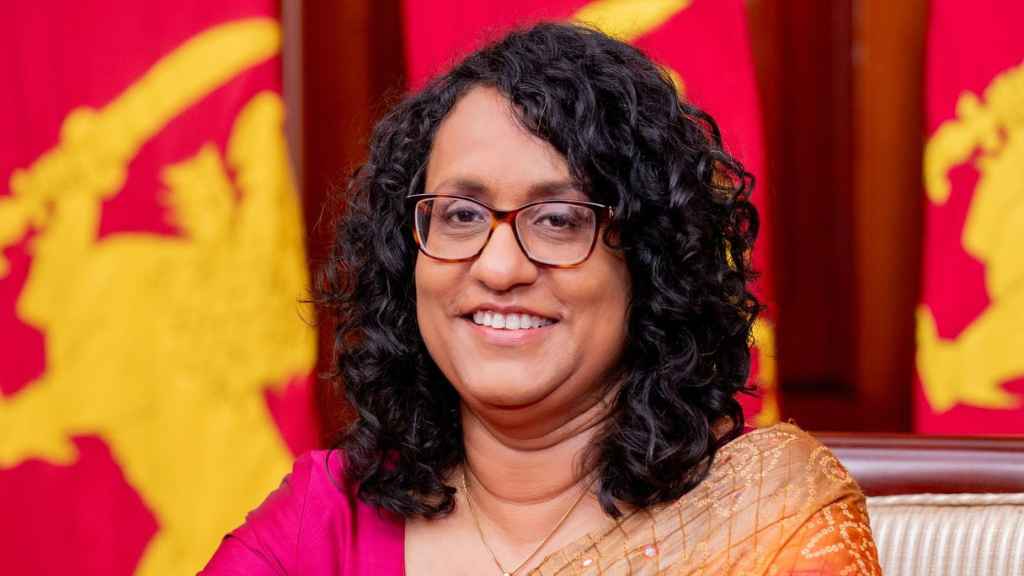
PM reminds tourism sector not to ignore domestic market amid global shocks as Sri Lanka’s tourism industry faces growing external uncertainties and shifting global travel trends. Prime Minister Dr. Harini Amarasuriya urged industry stakeholders to focus on quality-driven, sustainable growth while recognising the importance of local travellers in maintaining sector resilience.
PM reminds tourism sector not to ignore domestic market amid tourism uncertainty
Speaking at the 13th Sancharaka Udawa exhibition in Colombo, the Prime Minister stressed that Sri Lanka’s tourism strategy should move beyond simply increasing visitor numbers and instead prioritise long-term sustainability, diversified destinations, and higher-quality travel experiences.
“It is important that the industry begins to think not so much in terms of numbers, but in terms of quality,” Amarasuriya said, noting that Sri Lanka, as a relatively small island nation, must strategically expand its tourism offerings across different regions instead of concentrating activity within a limited number of hotspots.
Her remarks come as the tourism sector navigates mounting global challenges that have begun impacting visitor arrivals in 2026. According to recent industry data, tourist arrivals in April fell by more than 22 percent year-on-year to 135,643 visitors, marking the weakest monthly performance so far this year. The decline has largely been attributed to geopolitical tensions, flight disruptions linked to the Middle East crisis, and broader global economic uncertainty affecting international travel demand.
Industry observers are also closely monitoring developments in India, Sri Lanka’s largest tourism source market. Indian Prime Minister Narendra Modi recently encouraged Indian citizens to reconsider overseas travel and instead prioritise domestic tourism within India. While concerns remain over the potential long-term impact of this policy shift, Indian arrivals to Sri Lanka have so far remained resilient, accounting for approximately 41 percent of total arrivals during the first 13 days of May.
Against this backdrop, Amarasuriya underscored the strategic importance of Sri Lanka’s domestic tourism market, particularly during periods of external instability. She pointed out that local travellers played a critical role in sustaining hotels, restaurants, and tourism-related businesses during the Covid-19 pandemic when international borders remained closed for extended periods.
“Do not forget the domestic tourists. In down times, domestic tourists have kept this industry going. This is something to cater to, and something our tourism industry needs to accept and promote,” she stated.
Her comments also come amid renewed public criticism over discriminatory practices at certain hospitality establishments. In recent years, several hotels and tourism venues in popular beach and hill country destinations have faced backlash for allegedly discouraging local visitors through informal ‘foreigners only’ policies or by imposing significantly higher room rates for Sri Lankan travellers during peak seasons.
The Prime Minister argued that these outdated perceptions fail to recognise the changing profile of domestic travellers. She noted that many Sri Lankans are increasingly seeking premium travel experiences and are willing to spend on quality accommodation, dining, and leisure activities. Catering to this growing segment, she said, could provide the industry with a stable fallback during periods of international volatility.
Amarasuriya also called for a broader shift towards sustainable tourism by developing untapped destinations across the island. Expanding tourism activity into less-commercialised regions would not only reduce pressure on overcrowded areas but also help distribute economic benefits more evenly among local communities.
She noted that promoting regional tourism development could create new employment opportunities while supporting small and medium-sized enterprises linked to the tourism value chain.
As part of wider efforts to strengthen the sector’s long-term resilience, the government is also integrating tourism into national education reforms aimed at developing future-ready skills and industry knowledge. This initiative includes the introduction of tourism clubs at school level to encourage awareness and career interest among younger generations.
However, the Prime Minister clarified that the government’s role would remain focused on creating the right policy environment, infrastructure, and regulatory framework rather than directly managing tourism businesses.
“Finally, the government’s role is to set the infrastructure, the policy, and the regulatory environment,” she explained. “The rest is up to the private sector. You have to drive this industry and invest in it.”
Industry analysts say the Prime Minister’s remarks reflect growing recognition that Sri Lanka’s tourism recovery cannot rely solely on international arrivals. With global crises increasingly affecting travel patterns, strengthening domestic tourism and investing in sustainable tourism strategies may become essential for ensuring the sector’s long-term stability and competitiveness.