

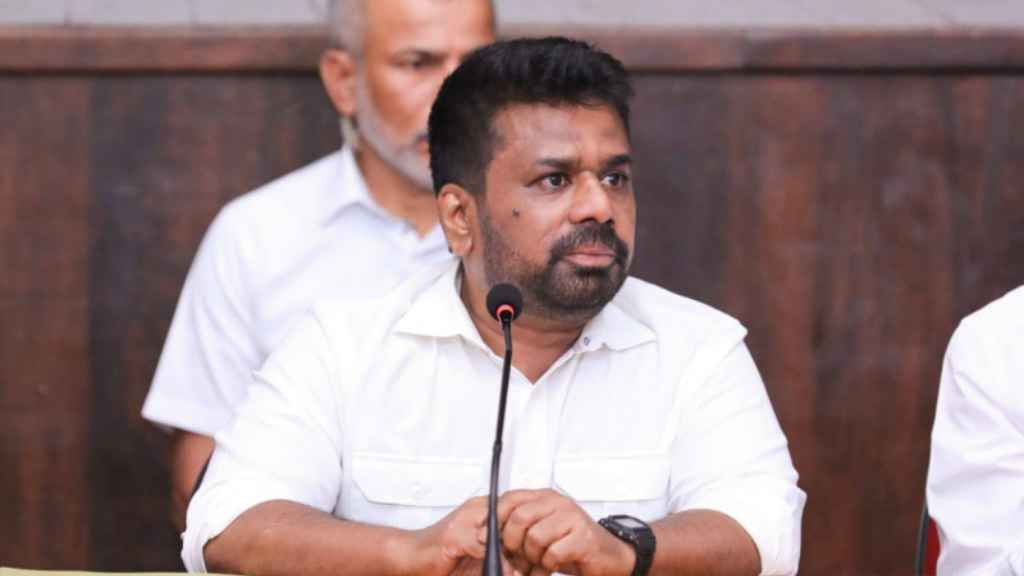
President Anura Kumara Dissanayake highlighted that accurate data is essential for economic decisions, particularly in disaster recovery. He urged officials to ensure compensation and public services are based on precise information to support affected communities efficiently.
Sri Lanka President urges officials to use precise data for disaster recovery
President Anura Kumara Dissanayake has emphasised the critical role of accurate data in shaping effective economic decisions and disaster recovery initiatives in Sri Lanka. Speaking at a special meeting at the Matale District Secretariat, the President underlined that officials must ensure all information is precise and reliable, especially when allocating resources and compensation to disaster-affected communities.
Addressing the ongoing restoration efforts following a recent disaster in Matale, the President stressed the urgency of completing compensation for damaged agricultural lands before 30 December. Officials were instructed to identify accurate data to ensure only genuinely eligible individuals receive assistance. The President referenced a previous incident where data indicating a rice surplus led to a national rice shortage, highlighting the consequences of flawed reporting.
The disaster has impacted 11,804 individuals from 5,501 families across 11 Divisional Secretariat divisions in Matale. Currently, 4,113 people are housed in 44 active safe centres, while 119 homes have been completely destroyed and 2,618 partially damaged. President Dissanayake reviewed the progress of programs aimed at restoring critical infrastructure, including roads, electricity, water, communications, irrigation, and the rehabilitation of agricultural land. He also discussed the revival of small and medium-scale industries affected by the disaster.
Officials reported that 16 main roads were damaged, with 12 already restored for public use. Key remaining routes, such as Wattegama–Kandegedara, Ukuwela–Alkaduwa, Moragahakanda–Wellewala, and Rattota–Ilukkumbura, are being prioritised for repair. In addition, 38 provincial roads sustained severe damage, and 17 experienced partial damage. Restoration efforts have reopened 19 roads fully, with partial access restored on 19 others.
The Ceylon Electricity Board reported 58 power disruptions, with 92% of electricity supply now restored. Some areas, including Rattota, Ambanganga, Laggala, Ukuwela, Yatawatta, Pallepola, and Matale, face delays due to access challenges. The President called for accelerated restoration in these regions to ensure reliable electricity delivery.
Water supply restoration was also a critical topic. Approximately 500 families have been without drinking water for nearly a week due to blocked access roads. President Dissanayake directed coordination among all relevant institutions to remove obstacles and resume water distribution quickly. He emphasised that officials must maintain proactive communication with relevant agencies to ensure timely delivery of essential services, including electricity, water, and communications.
Telecommunication restoration was discussed, with the President urging service providers to accurately identify affected areas and prioritise service resumption. Similarly, rehabilitation of health and sanitation systems was addressed, alongside a proposal to relocate Dambulla Hospital and develop it into a fully equipped medical facility. Officials were instructed to present structured plans for this development.
Education recovery was another focus. The President directed that as many schools as possible be reopened by 16 December and advised officials to create plans for students from affected schools to attend nearby institutions. Additionally, he emphasised the importance of implementing programmes to support the psychological wellbeing of children impacted by the disaster.
Discussions extended to restoring irrigation systems and reservoirs, reviving crop cultivation and livestock farms, and resuming bus services halted by the disaster. The President highlighted the need for accurate data to monitor progress and prioritise interventions effectively.
The meeting included high-level participation, with Professor Sarath Abeykoon, Governor of the Central Province; Deputy Minister of Buddhasasana, Religious and Cultural Affairs Gamagedara Dissanayake; Matale District MPs B. S. J. Biyanwila, Deepti Wasalage, and Dinesh Hemantha; both government and opposition MPs; the Chairman of the Central Provincial Council L. D. Nimalasiri; provincial representatives; and officials from the Ministry of Finance and other state agencies.
President Dissanayake’s insistence on precise data reflects a broader commitment to accountability and efficiency in governance. By ensuring that disaster recovery efforts are guided by accurate information, Sri Lanka aims to protect affected communities, restore essential services, and strengthen economic resilience across impacted districts.