

The AI sentient system introduced by Sentiva marks a turning point in how organisations understand the emotional pulse of work. Its human-centred approach challenges traditional automation-driven platforms. The result is a workplace model built on awareness, interpretation, and real-time intelligence.
How Sentiva’s AI sentient system is redefining awareness and human-centric HR technology
Sentiva’s emergence as an AI-native platform signals a shift in how technology can support people, culture, and organisational consciousness. Positioned as far more than a typical HR management solution, the company argues that the future of enterprise systems lies in cultivating workplaces that can sense, learn, and adapt. Rather than simply accelerating administrative tasks or managing workflows, its AI architecture focuses on interpreting signals, responding in real time, and guiding strategic decisions with a deeper understanding of human dynamics.
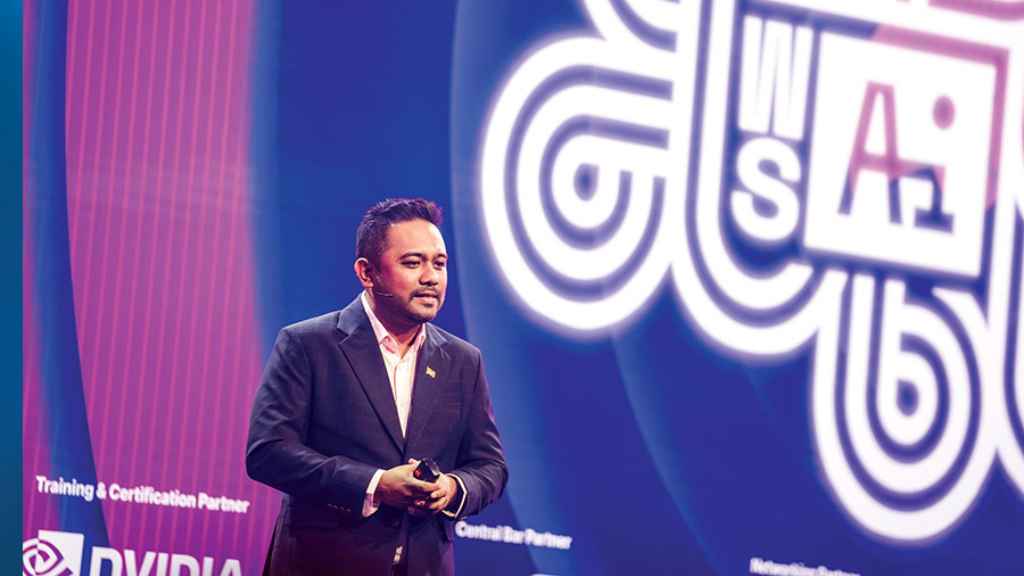
This bold shift was on full display when Sentiva made its global debut at World Summit AI 2025 in Amsterdam. The event, recognised as one of the world’s leading gatherings for artificial intelligence, attracted more than 8,000 participants ranging from global tech giants to innovative startups. Sentiva stood out not as a participant from a small market, but as a category creator from Sri Lanka presenting a compelling alternative to conventional HR systems. Its booth drew HR leaders, technologists, and operational specialists seeking solutions that elevate the emotional intelligence of organisations rather than simply scaling efficiency.
Founder and CEO Yohan Liyanage introduced a narrative that resonated with attendees: AI has spent the past decade accelerating work, yet employees feel increasingly disconnected. Global data reinforces this contradiction. A recent Gallup study reports that 77 percent of workers worldwide are disengaged, costing organisations an estimated nine trillion dollars every year in lost productivity. Even as companies deploy more digital tools, with many using over 100 separate SaaS applications, the result is a fragmented experience that diminishes focus and erodes emotional cohesion. This growing “toggle tax” highlights the paradox of modern enterprises—highly connected yet emotionally numb.
Sentiva’s response is to build a platform centred on awareness rather than automation. Born in Colombo and validated across Asia and North America, it seeks to restore sensitivity to the workplace. The platform introduces the concept of organisational sentience, the ability to sense, interpret, and adapt to the ever-changing emotional context of teams. Its design philosophy, influenced by neuroscience, behavioural economics, and modern computer science, interprets contextual signals to derive what can be described as the emotional metadata of work. Importantly, this process excludes private conversations and maintains clear privacy safeguards, focusing only on aggregate and ethically sourced sentiment patterns.
The company’s keynote at World Summit AI 2025 echoed this ethos. In a session titled “Empathy at Scale: How AI Is Enabling Organisations to Feel,” Yohan argued that the next frontier of enterprise AI is not computation but consciousness. Rather than racing toward greater automation, he encouraged leaders to consider how AI can help organisations notice human signals—shifts in morale, subtle tensions, moments of alignment—and respond with intentionality. Conversations at the summit shifted from product features to philosophical questions about the role of emotional intelligence in business technology.
Central to Sentiva’s ecosystem is Lumi, its conversational AI assistant. Unlike traditional enterprise bots that operate as transactional support tools, Lumi is designed to prompt dialogue rather than simply deliver answers. During summit interactions, attendees experienced personalised workplace persona assessments that evolved into reflective discussions about collaboration, learning, and motivation. Lumi’s strength lies in contextual awareness, integrating insights from recruitment, engagement, and learning processes to reveal patterns across the organisation. Over time, it learns organisational language, helping leaders interpret shifts long before they appear in surveys or performance reports.
Sentiva structures its product suite around the full employee lifecycle through three integrated dimensions: Talent, People, and Ascend. Sentiva Talent enhances recruitment by using AI to create role descriptions, score candidates, and assist with bias-mitigated interviews. Early adopters report notable reductions in time-to-hire and improvements in candidate experience. Sentiva People provides real-time engagement insights, offering personalised reflections to employees while giving leaders aggregated behavioural patterns that support proactive management. Instead of labelling disengagement, the platform encourages conversations that address root causes and strengthen well-being.
Sentiva Ascend completes the employee journey by transforming performance feedback into actionable development pathways. After evaluations, the system generates personalised growth kits that map learning needs and career trajectories. In markets where skill half-lives are shrinking, this adaptive learning layer supports continuous development, turning feedback into fuel for organisational transformation.
To further engage HR and learning leaders, Sentiva hosted a design-thinking workshop titled “Co-Designing the Future of Workplace Learning.” The session explored what sentient learning might look like in practice, examining how adaptive intelligence can co-create development experiences that align with real work rhythms. Participants emphasised that meaningful growth emerges when performance and learning are no longer siloed but treated as interdependent parts of one system.
Sentiva’s rise arrives at a critical moment for the HR technology landscape. While data volumes continue to increase, many employees feel unseen. Analysts predict that more than half of enterprise AI initiatives may fail to improve engagement by 2027 because they prioritise process optimisation over human experience. Regulatory developments such as the EU’s AI Act amplify the need for ethical, explainable, and bias-aware systems—areas where Sentiva’s human-centric design may offer substantial advantages.
As the company expands into Europe, the challenge lies in transforming its philosophical foundation into scalable proof. Plans include deepened integrations, enhanced behavioural modelling within Lumi, and select enterprise deployments. The ambition is clear: to demonstrate that a sentient workplace is not a futuristic concept but a viable operational framework.
Sentiva’s journey is significant not only for its technological innovations but also for its origins. Emerging from Sri Lanka, a region better known for outsourcing than AI invention, the platform is helping shape global conversations on emotionally intelligent technology. Its founding question—what if organisations could feel?—found a compelling answer on the world stage. According to Yohan, the future belongs to organisations that listen better, understand deeper, and operate with empathy at scale. The company’s promise is not disruption but restoration, bringing humanity back to the centre of digital workplaces.