

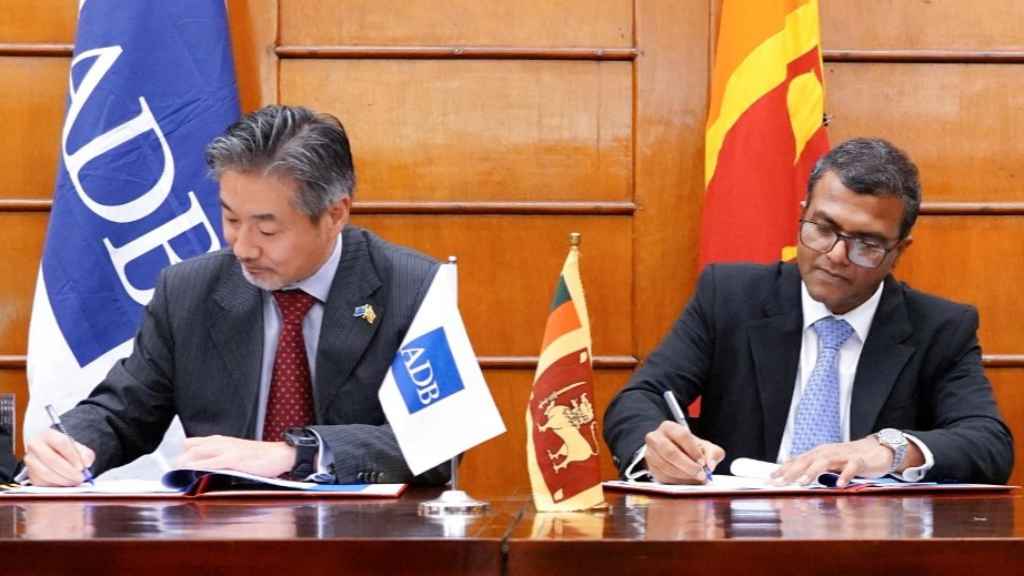
The Sri Lanka ADB loan of 200 million dollars marks a critical step in strengthening irrigation infrastructure and agricultural resilience, as the government moves forward with the second stage of the Mahaweli Water Security Investment Program in the North Central Province.
Sri Lanka ADB loan advances Mahaweli irrigation and farm resilience
Sri Lanka has secured a 200 million dollar financing facility from the Asian Development Bank, reinforcing international support for the country’s long-term water security and agricultural development agenda. The funding will be used to continue Stage 2 of the Mahaweli Water Security Investment Program, a flagship initiative aimed at improving irrigation efficiency, boosting farm productivity, and strengthening climate resilience in drought-prone regions.
The loan agreement was formally signed at the Ministry of Finance, with Secretary to the Treasury Harshana Suriyapperuma representing the Sri Lankan government and Asian Development Bank Country Director Takafumi Kadono signing on behalf of the lender. According to the Finance Ministry, the financing will cover a portion of the total project cost, complementing domestic funding allocations already committed to the program.
The Mahaweli Water Security Investment Program is considered one of Sri Lanka’s most strategically important infrastructure projects, particularly for the North Central Province, which plays a central role in national food production. The second stage of the program is designed to address long-standing water distribution challenges while transitioning parts of the agricultural sector toward more commercial and market-oriented operations.
Officials noted that the primary objective of the project is to enhance agricultural productivity, raise farmer incomes, and improve resilience to climate-related risks such as prolonged droughts and erratic rainfall. By expanding irrigation coverage and modernizing water delivery systems, the project aims to reduce farmers’ dependence on unpredictable monsoon patterns and ensure more reliable cultivation cycles.
Stage 2 of the program comprises two major development streams. The first focuses on completing the North Central Province Canal irrigation infrastructure, which is expected to significantly improve water transfers across key farming zones. The second component concentrates on establishing commercial agriculture development supported by structured distribution networks, enabling farmers to better integrate into domestic and export markets.
A central feature of the infrastructure expansion involves completing the remaining section of the main tunnel, including approximately seven kilometers of tunnel excavation along with essential finishing works. Once completed, this tunnel will play a crucial role in transferring water efficiently across regions that have historically faced shortages during dry periods.
In addition to the tunnel works, the project includes the construction of open and covered canals, conduits, and smaller tunnel sections extending roughly 68 kilometers in total length. These structures are intended to minimize water losses, improve flow regulation, and ensure equitable distribution among farming communities.
Further strengthening the irrigation network, the project will see the construction of eight kilometers of the Ellapothana Irrigation Extension Canal. This extension is expected to unlock new cultivation areas while stabilizing water access for existing farmlands. Complementing this, thirteen pressure distribution networks will be developed to deliver irrigation water directly to crops, enhancing efficiency and reducing wastage.
The Sri Lanka ADB loan arrives at a time when the government is prioritizing productivity-enhancing investments over short-term consumption spending. Policymakers view infrastructure-backed financing as essential to supporting rural livelihoods while aligning with broader fiscal consolidation efforts. By focusing on water security and agriculture, the project directly targets sectors that employ a significant portion of the population and contribute meaningfully to food security.
Economists note that such development-linked external financing differs markedly from short-term borrowing, as it generates long-lasting economic returns. Improved irrigation systems are expected to increase cropping intensity, diversify agricultural output, and reduce vulnerability to climate shocks, thereby strengthening rural income stability over time.
The Asian Development Bank has remained a long-standing development partner for Sri Lanka, particularly in sectors such as water management, energy, transport, and urban development. The continuation of Mahaweli investments signals confidence in the project’s long-term benefits and implementation capacity, even amid broader macroeconomic adjustments.
As construction advances under Stage 2, authorities expect tangible improvements in irrigation reliability and agricultural output across the North Central Province. The Sri Lanka ADB loan thus represents not only a financial inflow but also a strategic investment in sustainable development, rural prosperity, and climate resilience for years to come.