

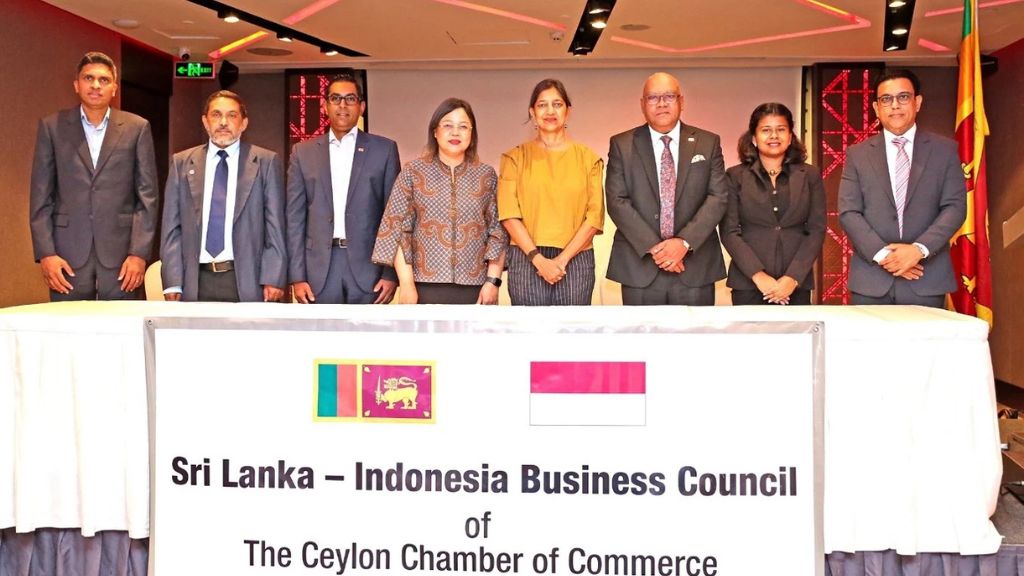
Sri Lanka–Indonesia Business Council of The Ceylon Chamber of Commerce has held its 3rd Annual General Meeting, reviewing the Council’s achievements and outlining priorities for strengthening bilateral trade, investment and commercial cooperation.
Sri Lanka–Indonesia Business Council reviews trade ties and priorities for 2026/27
The AGM brought together Council members and key stakeholders, with Ambassador of Indonesia to Sri Lanka and Patron of the Council, Dewi Gustina Tobing, attending as the chief guest.
Addressing the gathering, Ambassador Tobing provided an overview of Indonesia’s political and economic landscape, highlighting the country’s focus on economic independence, sectoral resilience, public welfare and the facilitation of both inbound and outbound investment.
Her remarks offered business representatives insight into Indonesia’s broader economic priorities and the potential areas of cooperation between the two countries. As Sri Lanka and Indonesia continue to explore opportunities for stronger commercial engagement, understanding the policy direction of each market remains important for businesses considering cross-border partnerships.
Ceylon Biscuits Ltd. Chairman and Group Managing Director Sheamalee Wickramasingha was re-elected President of the Council for the 2026/27 term. In her remarks, she acknowledged the Ambassador’s instrumental role in the re-establishment of the Council and reflected on the progress made during the previous year.
Among the key achievements highlighted was the successful Sri Lanka–Indonesia Business Delegation to Indonesia. The delegation provided Sri Lankan businesses with opportunities to meet Indonesian counterparts, gain insights into the market and explore potential avenues for commercial cooperation.
Business delegations of this nature can play an important role in developing bilateral trade relationships. Beyond formal discussions, they allow companies to identify potential partners, understand market requirements and assess opportunities for collaboration across different sectors. Such engagement is particularly relevant for businesses seeking to expand their regional presence or establish new supply and distribution networks.
The Council’s continued activities are expected to support the development of Sri Lanka–Indonesia trade by encouraging greater interaction between the two business communities. Potential areas of cooperation may include trade in goods and services, technology, manufacturing, logistics, energy and investment, subject to the interests and requirements of participating businesses.
The office bearers appointed for the 2026/27 term include Senior Vice President Gerard Victoria, Director/CEO of North South Lines Ltd.; Vice President Ehantha Sirisena, Founder/Director of OMAK Technologies Ltd.; and Treasurer Marshad Barry, Deputy Head of Orphan Care & Institutional Marketing of Amana Bank.
The Executive Committee includes representatives from Aitken Spence Cargo Ltd., hSenid Business Solutions PLC, Solarray Energy Ltd., Haycarb PLC and MAS Intimates Ltd. The committee also includes Immediate Past President Vish Govindasamy of Sunshine Holdings PLC.
The composition of the Council brings together professionals and business leaders from a range of industries, reflecting the broad commercial interests that underpin bilateral engagement. Representation from sectors such as logistics, technology, energy, manufacturing and financial services can help create a wider platform for identifying opportunities that extend beyond traditional trade activities.
The re-election of Wickramasingha provides continuity for the Council as it moves into the 2026/27 term. Continued leadership and structured engagement will be important as the organization seeks to build on the momentum generated by its previous programmes and translate business discussions into practical opportunities.
The Council’s work also comes at a time when businesses across the region are looking to diversify markets, strengthen supply chains and identify new investment destinations. Indonesia’s large domestic market and expanding economic sectors offer potential opportunities for Sri Lankan companies, while Sri Lanka’s location, services capabilities and established business networks may be relevant to Indonesian businesses exploring regional partnerships.
However, converting potential into measurable commercial outcomes will require sustained engagement, market knowledge and practical support for businesses. Regular business forums, delegations and sector-focused discussions can help address these requirements by connecting companies with relevant counterparts and improving awareness of available opportunities.
The Sri Lanka–Indonesia Business Council has reaffirmed its commitment to strengthening bilateral business relations and creating new avenues for trade, investment, partnerships and commercial collaboration. Its continued role is to provide a platform through which businesses from both countries can deepen relationships and explore mutually beneficial opportunities.
As the Council begins its new term, its focus on business engagement and cross-border cooperation is expected to remain central to efforts to strengthen economic ties between Sri Lanka and Indonesia. The AGM served as both a review of progress and a reaffirmation of the Council’s role in supporting closer commercial relations between the two countries.