

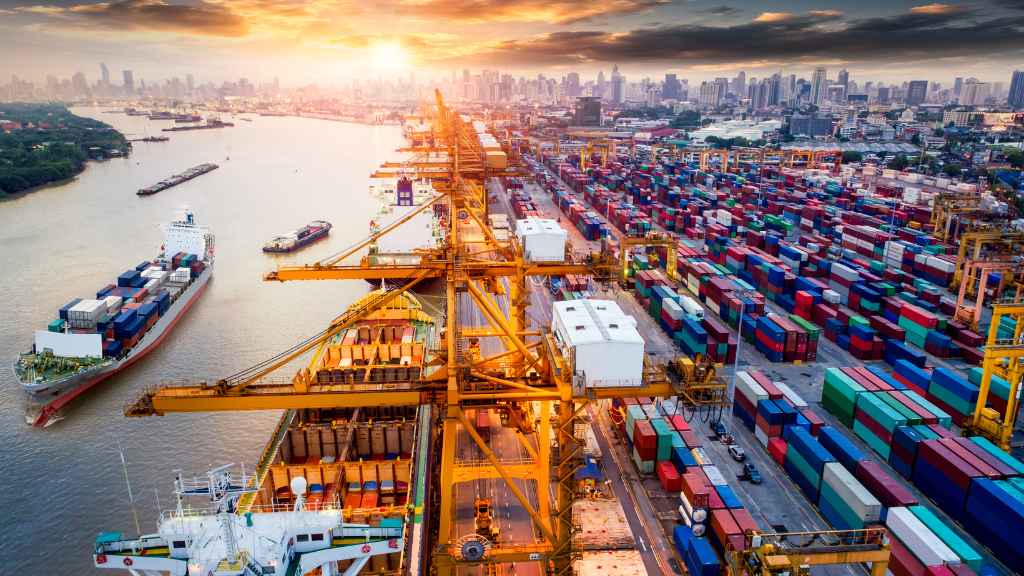
Sri Lanka logistics opportunities are drawing attention from Vietnam as officials explore the island’s potential for warehouse and shipping operations. The move aims to strengthen regional supply chains and improve trade links with South Asia and the Middle East.
Vietnam sees Sri Lanka as a key destination for logistics and warehouse business expansion
Vietnamese trade and industry officials recently highlighted Sri Lanka as a promising destination for logistics and warehouse businesses, underscoring the island nation’s potential role in facilitating regional trade. Officials said that expanding logistics operations in Sri Lanka could help East Asian companies access South Asian and Middle Eastern markets more efficiently, while reducing overall trade costs.
Speaking at a Vietnam-Sri Lanka business forum hosted by the Ceylon Chamber of Commerce, To Ngoc Son, Deputy Director General of the Department of International Market Development under Vietnam’s Ministry of Industry and Trade, noted that Sri Lanka’s transshipment capabilities present significant opportunities. “Sri Lanka has the largest transshipment port in the region, which Vietnamese firms can utilise to lower trade costs,” Son said. “This can become a key pillar in our countries’ shared goal to increase trade volumes over the next three to five years.”
Vietnam has reported robust trade activity, exporting goods worth $430 billion and importing $409 billion as of November 2025, according to the National Statistics Office. Officials indicated that both nations could develop integrated supply chains in sectors such as apparel and footwear, leveraging Vietnam’s extensive industrial and textile base.
Tran Thanh Hai, Deputy Director General of the Agency of Foreign Trade, Ministry of Industry and Trade, emphasised the potential of collaborative logistics and manufacturing strategies. Vietnam hosts around 7,000 textile and apparel companies located in multiple specialised industrial parks, along with 2,000 enterprises engaged in related industries. “For logistics services, we can enhance sea shipping routes between Vietnam and Sri Lanka and establish regional consolidation partners,” Hai said. He also noted plans to exchange delegations of logistics service providers between the two countries to improve service efficiency and coordination.
Vietnam’s infrastructure supports the country’s ambitions as a regional logistics hub. The nation operates 34 seaports, including a major deep-water port in Hai Phong, and has developed a significant cargo hub in Hanoi. Additionally, a new dedicated logistics airport is under development, expected to play a central role in Southeast Asia’s air cargo network. Vietnam Airlines is scheduled to launch direct flights to Sri Lanka from August 2026, further facilitating trade and connectivity.
The delegation highlighted the presence of large international logistics operators, including Maersk, FedEx, and UPS, alongside local players such as Sri Lanka’s EFL, which maintains operations in Vietnam. Officials stressed that regionalisation of logistics services is a key priority, reflecting a broader trend of supply chain transformation across Southeast Asia.
However, Sri Lanka’s potential as a logistics hub faces structural and regulatory challenges. Foreign investment in shipping and warehousing is restricted, limiting the island’s ability to compete with regional centres like Singapore and Dubai. Analysts argue that these restrictions, combined with monetary instability, have slowed the development of Sri Lanka’s logistics sector relative to more stable Asian markets.
Recent policy changes have further complicated the picture. Sri Lanka Customs officials recently withdrew a de facto de-minimis facility for e-commerce trade, disrupting what had become a spontaneous regional de-consolidation hub. Industry critics note that this move adversely affects small and medium logistics operations, which had emerged to serve cross-border e-commerce. Domestic pressure from local apparel brands and other vested interests has historically influenced policy decisions, creating additional obstacles for foreign and regional investors.
Despite these hurdles, Vietnamese officials remain optimistic about the potential for bilateral cooperation in logistics. The delegation indicated that with regulatory reforms and targeted investment, Sri Lanka could become a vital node for regional trade and supply chain integration. By leveraging its strategic location, deep-water ports, and growing transport links, Sri Lanka has the opportunity to strengthen its position as a logistics gateway connecting East Asia with South Asia and the Middle East.
Officials from both countries stressed the importance of continued dialogue, collaboration, and investment to realise the full potential of Sri Lanka’s logistics sector. With planned infrastructure improvements and upcoming initiatives in trade facilitation, there is optimism that bilateral cooperation could pave the way for enhanced connectivity, economic growth, and new business opportunities for both Sri Lanka and Vietnam.