

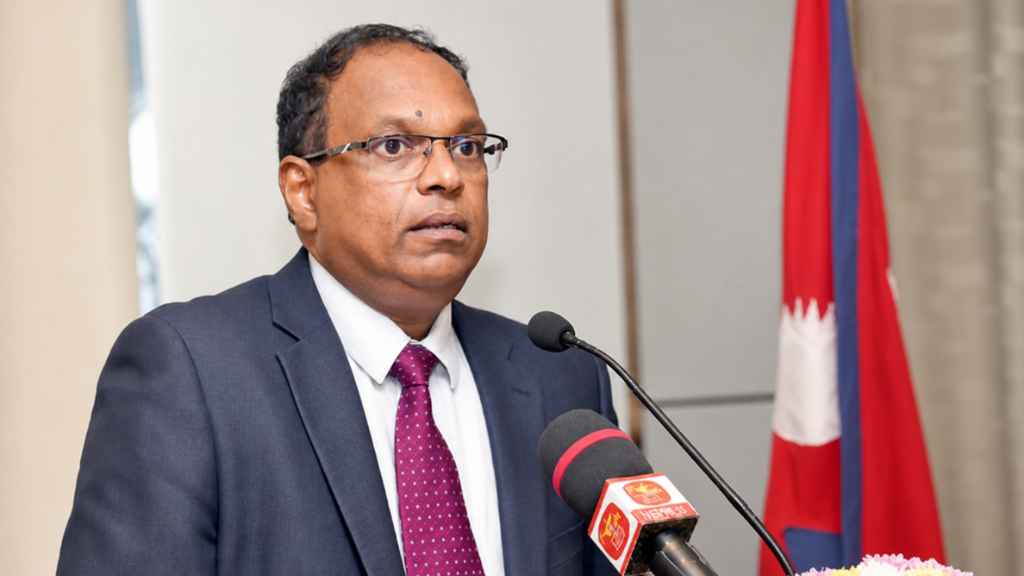
Sri Lanka–Nepal Business Council to drive bilateral trade and investment as a newly launched platform aims to deepen economic ties, unlock new opportunities, and foster sustainable partnerships between the two South Asian economies.
Sri Lanka–Nepal Business Council to drive bilateral trade and investment growth
The Sri Lanka–Nepal Business Council (SLNBC) was officially launched at the Cinnamon Lakeside Hotel, marking a strategic step toward strengthening commercial engagement between Sri Lanka and Nepal. The initiative is expected to serve as a catalyst for enhancing trade, investment, and collaboration across multiple sectors.
The Council’s formation reflects growing recognition of the untapped potential within the Nepal–Sri Lanka corridor. By facilitating stronger public-private partnerships (PPPs), the SLNBC aims to create a dynamic ecosystem that promotes shared economic growth. Its mandate includes advancing trade relations, boosting tourism flows, encouraging investment, and enabling knowledge exchange between the two nations.
The launch event drew a high-level audience, including Nepali Ambassador to Sri Lanka and the Maldives Dr. Purna Bahadur, foreign diplomats, and representatives from both countries’ business communities. Addressing the gathering, Ambassador Bahadur highlighted the importance of institutional cooperation and private sector engagement in unlocking new opportunities. He emphasised that both Governments are committed to strengthening frameworks that support cross-border trade and investment.
Deputy Minister of Industry and Entrepreneurship Development Chathuranga Abeysinghe also underscored the need to build investor confidence and trust between the two countries. He noted that fostering a conducive business environment will be key to enabling sustainable partnerships and accelerating sector-specific collaboration.
The SLNBC envisions playing a proactive role in connecting stakeholders through structured initiatives. As part of its launch, the Council unveiled a dedicated digital platform designed to enhance engagement among members and facilitate business matchmaking. The website is expected to act as a central hub for trade-related information, networking, and collaboration opportunities.
SLNBC President Indhra Kaushal Rajapaksa outlined several areas of potential cooperation, particularly in tourism and cultural industries. He pointed to the opportunity to develop joint tourism packages that leverage the unique attractions of both countries, thereby creating a more compelling value proposition for international travellers. Enhancing logistics and connectivity, including air links, was also identified as a priority to support smoother trade flows.
Rajapaksa further highlighted innovative avenues for collaboration, such as integrating Sri Lanka’s batik craftsmanship with Nepal’s traditional thangka art. Such initiatives, he noted, could generate distinctive cultural products while strengthening economic ties. He also emphasised the role of culinary diplomacy in building people-to-people connections and opening new commercial channels.
Vice President Ajith D. Perera outlined immediate priorities for the Council, including strengthening business-to-business (B2B) engagement, promoting sector-focused partnerships, and facilitating trade delegations. Key sectors identified for collaboration include tourism, small and medium enterprises (SMEs), and handicrafts, all of which offer significant growth potential for both economies.
In the longer term, the Council aims to contribute to policy advocacy, support the development of regional tourism frameworks, and recognise contributions within the bilateral trading community. These efforts are expected to reinforce institutional linkages and create a more enabling environment for sustained economic cooperation.
The involvement of the Confederation of Nepalese Industries further strengthens the Council’s capacity to drive meaningful engagement. Senior Vice President Nirvana Chaudhary reaffirmed the commitment of Nepalese industry stakeholders to enhancing collaboration with Sri Lankan counterparts. His remarks highlighted existing investments in Sri Lanka, including ventures across hospitality, banking, and the automotive sector, which demonstrate the potential for deeper economic integration.
The establishment of the SLNBC comes at a time when both countries are seeking to diversify trade partnerships and strengthen regional connectivity. By providing a structured platform for dialogue and collaboration, the Council is well-positioned to address existing barriers and unlock new avenues for growth.
The Sri Lanka–Nepal Business Council to drive bilateral trade and investment initiative also reflects a broader trend of regional cooperation in South Asia, where economic partnerships are increasingly seen as critical to resilience and competitiveness. By aligning public and private sector efforts, the Council aims to create a sustainable framework that benefits businesses and communities in both countries.
As the Council begins its operations, its success will depend on its ability to translate strategic intent into tangible outcomes. With a clear focus on collaboration, innovation, and connectivity, the Sri Lanka–Nepal Business Council to drive bilateral trade and investment platform is expected to play a pivotal role in shaping the future of bilateral economic relations.