

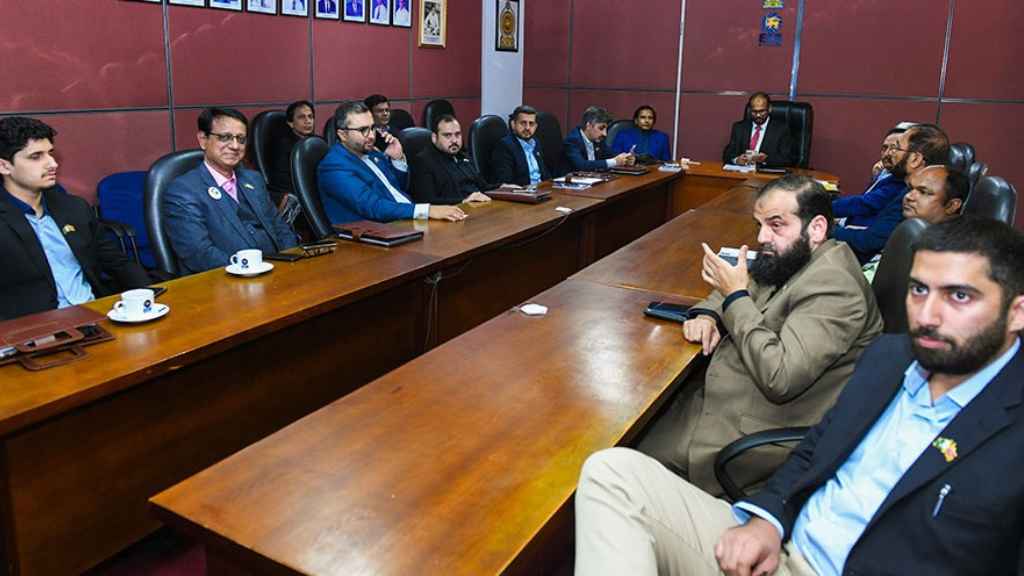
Sri Lanka Pakistan Trade cooperation moved into focus this week as officials and business leaders from both countries discussed expanding bilateral commerce through stronger private sector engagement. The discussions were held during a business meeting hosted by the Sri Lanka Export Development Board (EDB) in Colombo.
Sri Lanka Pakistan Trade discussions aim to strengthen private sector cooperation
Representatives from Sri Lanka and Pakistan explored ways to improve trade facilitation, increase the use of existing trade frameworks, and strengthen business-to-business partnerships between companies in both countries. Officials said the talks reflected a shared commitment to deepening long-term economic cooperation and enhancing regional commercial connectivity.
The meeting brought together delegates from the Karachi Chamber of Commerce and Industry (KCCI), officials from the EDB, and representatives from Sri Lanka’s leading business chambers. Discussions largely focused on identifying new opportunities to expand exports, encourage investment partnerships, and address barriers affecting cross-border trade.
According to the EDB, both sides expressed confidence in strengthening bilateral trade relations and creating more opportunities for businesses operating in sectors such as manufacturing, agriculture, textiles, services, and logistics. Stakeholders also emphasized the importance of greater collaboration between private sector institutions to support sustainable economic growth.
The Sri Lanka Pakistan Free Trade Agreement, which was signed in 2005, remained a key focus during the discussions. Officials noted that the agreement continues to play an important role in supporting trade flows and economic engagement between the two South Asian nations. Business representatives also highlighted the need to maximize the benefits available under the existing trade arrangement.
Trade analysts say the agreement has helped improve market access for selected exports from both countries over the years, although there is still significant untapped potential in several sectors. Expanding utilization of the free trade framework could help businesses diversify export markets and reduce dependence on traditional trading destinations.
EDB Chairman Mangala Wijesinghe participated in the discussions alongside Muhammad Raza, Senior Vice President of the Karachi Chamber of Commerce and Industry. Tilan M. Wijesooriya, Acting Secretary General of the Federation of Chambers of Commerce and Industry of Sri Lanka (FCCISL) and Associate Director of the SAARC Chamber of Commerce and Industry, was also present at the meeting.
Business leaders from both countries stressed that stronger private sector collaboration would be essential in improving trade volumes and encouraging joint commercial ventures. Increased engagement between chambers of commerce and exporters could also support knowledge-sharing, market access, and investment promotion initiatives.
Officials noted that regional economic cooperation has become increasingly important as countries seek to improve resilience against global economic uncertainties. Strengthening bilateral trade relations within South Asia may also help businesses gain access to larger regional supply chains and emerging consumer markets.
Sri Lanka has been seeking to expand export earnings and attract greater foreign investment as part of broader economic recovery efforts. Trade partnerships with regional economies such as Pakistan are viewed as important components of this strategy, particularly in sectors where both countries can develop complementary trade advantages.
Meanwhile, Pakistani business representatives highlighted opportunities for increased cooperation in textiles, pharmaceuticals, information technology, agriculture, and industrial products. Improved trade facilitation measures and streamlined customs processes were also discussed as ways to encourage faster and more efficient trade activity.
Observers noted that enhanced commercial ties between Sri Lanka and Pakistan could support broader regional integration objectives under South Asian economic cooperation frameworks. Closer engagement between private sector stakeholders is also expected to create new business opportunities for exporters and investors in both markets.
The latest discussions reaffirmed the longstanding economic and diplomatic ties shared by the two countries. Analysts believe continued dialogue between government institutions and business chambers could help accelerate trade growth and strengthen economic partnerships over the coming years.
As Sri Lanka continues focusing on export-led growth and regional trade expansion, policymakers are expected to encourage greater participation from private sector stakeholders in international trade initiatives. The ongoing emphasis on Sri Lanka Pakistan Trade cooperation reflects broader efforts to strengthen economic connectivity within South Asia.