

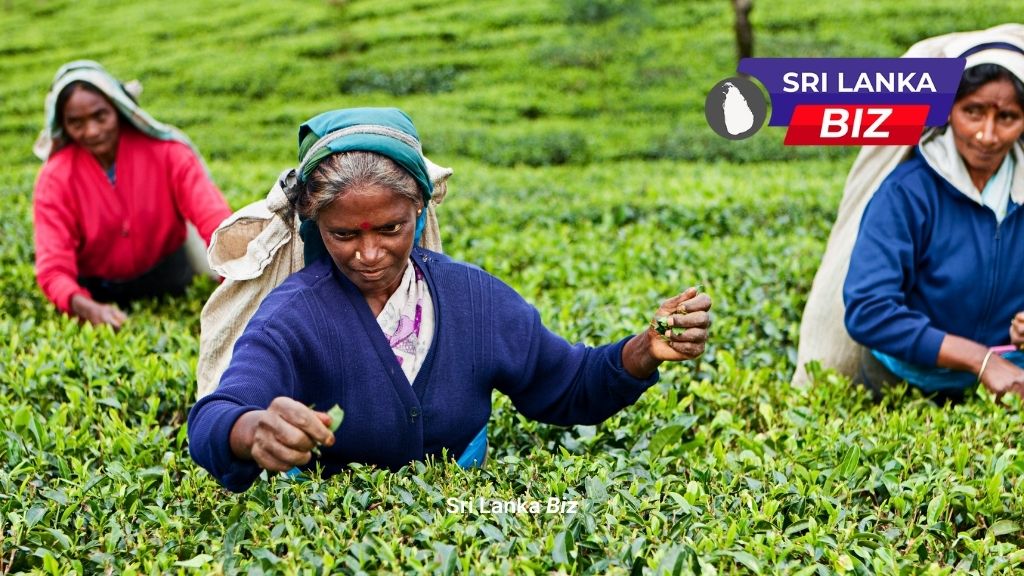
Sri Lanka tea production fell 3.7% year-on-year in August 2026 to 18.9 million kilograms, down from 19.7 million kilograms a year earlier, as heavy rainfall and overcast conditions affected output across key growing regions.
Sri Lanka tea production drops as weather conditions hit key growing regions.
The latest figures from the Sri Lanka Tea Board (SLTB), cited in a Siyaka Research report, show that the decline was driven particularly by weaker production in the High Grown and Medium Grown categories. The figures also highlight increasing weather-related pressures facing the industry.
High Grown tea recorded the sharpest deterioration during the month, with production falling to around 3.1 million kilograms. According to the report, this represented the lowest monthly High Grown output in more than three decades, with the exception of April 1992, when production fell to 2.2 million kilograms during an El Niño-affected year.
The August performance marked a 15.8% decline in High Grown production from approximately 3.59 million kilograms recorded in the same month of 2025. The substantial reduction had a significant impact on overall national production during the month.
Medium Grown tea production also weakened, falling 14% year-on-year to approximately 2.7 million kilograms from 3.1 million kilograms in August 2025. In contrast, Low Grown tea provided some support to overall production, increasing to 13.1 million kilograms from 12.7 million kilograms a year earlier.
The contrasting performance between growing regions illustrates the uneven impact of prevailing weather conditions on the tea industry. While Low Grown production recorded an increase during August, the declines in High and Medium Grown output more than offset the improvement.
Weather conditions remained a major concern for producers during the month. Heavy rainfall and persistent overcast conditions affected tea-growing areas, creating difficult conditions for harvesting and production. At the same time, concerns have emerged over the outlook for early 2027, with extremely dry and hot weather raising fresh risks for future production.
For an industry that depends heavily on suitable rainfall patterns, temperature and growing conditions, such weather fluctuations can have a direct impact on the availability and quality of green leaf. Prolonged disruptions can also influence factory utilisation and the volume of made tea available for domestic and international markets.
For the first eight months of 2026, Sri Lanka tea production totalled 172.2 million kilograms, compared with 176.9 million kilograms during the corresponding period of 2025. The figures represent a decline of approximately 4.7 million kilograms over the period.
The composition of production during the first eight months also showed differing trends across the three major growing categories. High Grown production was marginally higher at 38.3 million kilograms, compared with 38.1 million kilograms during the same period of 2025.
However, Medium Grown production declined by 6% to 30.4 million kilograms from 32.34 million kilograms, while Low Grown production fell by nearly 3% to 103.3 million kilograms from 106.49 million kilograms.
The production data also showed changes according to tea type. Orthodox tea production declined by around 3% during the first eight months of the year, while CTC, or Crush, Tear, Curl, tea production increased by almost 7%.
Green Tea production recorded a stronger performance, rising by approximately 8% during the period. These changes indicate that production trends are not uniform across Sri Lanka’s tea sector, with individual tea categories responding differently to market and production conditions.
The latest figures are relevant to the country’s tea exports, given the importance of production volumes to the availability of tea for auction and export markets. Any sustained decline in production could influence supply conditions, particularly if adverse weather continues into the latter part of the year and affects the next production cycle.
The August decline therefore adds to the challenges facing Sri Lanka’s tea industry as producers navigate changing weather patterns and the need to maintain output. While some segments have demonstrated resilience, the sharp fall in High Grown production highlights the sensitivity of the sector to weather disruptions.
With the first eight months of 2026 already recording lower output than the previous year, the performance of the remaining months will be closely watched by growers, exporters and other industry participants. The outlook for early 2027 will also depend partly on how current dry and hot conditions evolve across tea-growing regions.