

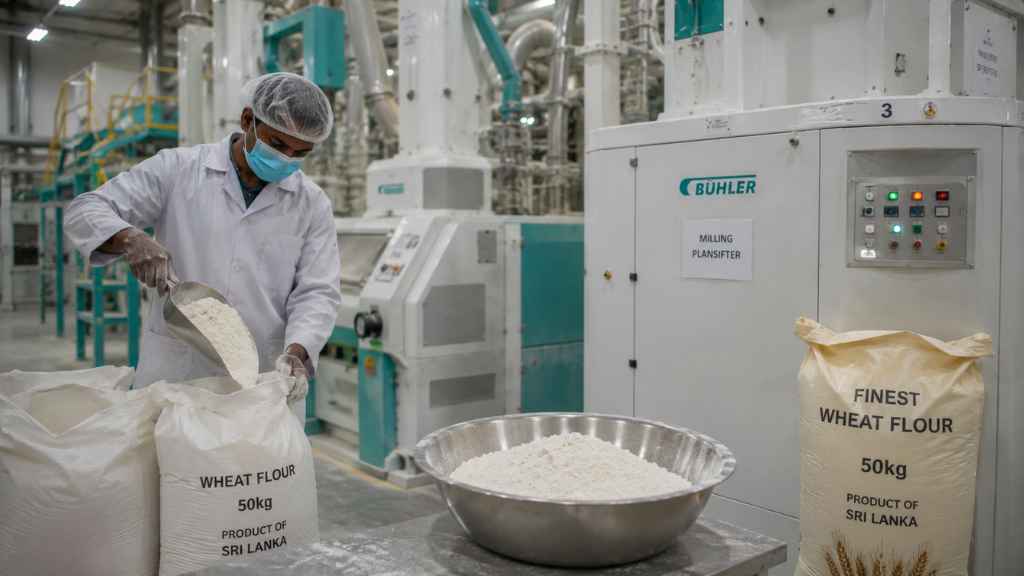
Sri Lanka’s wheat consumption rises as the country’s recovering economy and expanding tourism industry continue to drive demand for flour-based food products, although overall consumption remains below pre-economic crisis levels.
Sri Lanka’s wheat consumption rises as tourism and economy recover
According to the latest report released by the United States Department of Agriculture Foreign Agricultural Service, Sri Lanka’s total wheat consumption for the 2026/2027 marketing year is forecast to reach 1.1 million metric tonnes, reflecting a gradual rebound in food demand and economic activity.
The projected figure marks an increase from the revised estimate of 1.035 million metric tonnes recorded in the previous marketing year. Analysts say the steady growth is closely linked to improved economic conditions, increased household activity, and the rapid recovery of the country’s tourism industry.
The USDA report noted that Sri Lanka’s economic growth outlook is expected to support higher wheat demand over the coming years. Projections cited from the World Bank indicate Sri Lanka’s gross domestic product is expected to grow by 3.5 percent in 2026 and 3.1 percent in 2027.
The recovery of the tourism sector Sri Lanka has emerged as one of the strongest contributors to higher wheat consumption. International visitors typically consume more flour-based products such as bread, pasta, cakes, pastries, and baked snacks compared to the local population, which traditionally relies more heavily on rice-based meals.
Sri Lanka welcomed more than 2.36 million tourists in 2025, while authorities are targeting three million arrivals in 2026. The increase in tourist arrivals has significantly boosted demand from hotels, restaurants, cafes, and catering businesses across the island, resulting in stronger consumption of imported wheat and flour products.
Industry observers note that the hospitality sector’s growth has created renewed momentum for food suppliers, bakeries, and flour millers as businesses prepare to accommodate larger visitor volumes and changing consumer preferences.
Despite the improving economic outlook, the report highlighted that many Sri Lankan households are still struggling to return to pre-crisis consumption patterns due to ongoing financial pressures. Although retail wheat flour prices have stabilised at around Rs.180 per kilogramme, higher taxes, rising utility costs, and limited disposable incomes continue to affect household purchasing power.
As a result, while Sri Lanka’s wheat consumption rises steadily, domestic demand remains below the levels recorded before the country’s economic crisis. Analysts believe consumer spending could improve further if inflation remains stable and income growth strengthens over the medium term.
The report also pointed to evolving government health policies that are reshaping the local wheat market. Authorities have introduced regulations requiring wheat flour fortification with folic acid and iron, alongside a minimum 80 percent extraction rate for refined flour to improve dietary fibre intake and nutritional quality.
Sri Lanka remains entirely dependent on imported wheat because local climatic conditions are unsuitable for commercial wheat cultivation. The market is dominated by two major millers, Prima Ceylon Ltd and Serendib Flour Mills, which operate large-scale milling facilities at Colombo and Trincomalee ports.
To support increasing demand, Sri Lanka wheat imports for the 2026/2027 marketing year are forecast at 1.2 million metric tonnes, up by 50,000 metric tonnes from the previous year. However, imports still remain approximately 19 percent below pre-crisis volumes.
Russia continues to dominate as Sri Lanka’s largest wheat supplier, accounting for 54 percent of total imports. Canada follows with 18 percent, while Turkey contributes around 13 percent. According to the report, price competitiveness remains the key factor influencing sourcing decisions, particularly favouring Russian wheat imports.
Higher-quality grain imported from countries such as the United States and Canada is mainly utilised for specialty flour production and premium bakery products despite the higher costs involved.
Meanwhile, Sri Lanka’s flour milling industry has also expanded its regional export presence due to substantial excess milling capacity. The USDA forecasts wheat product exports to reach 100,000 metric tonnes during the 2026/2027 period, compared to an estimated 90,000 metric tonnes in the previous year.
Export destinations for locally milled wheat products include the Maldives, Malaysia, Singapore, Cambodia, Hong Kong, and Thailand. Industry participants say regional demand has created additional revenue opportunities for Sri Lankan millers amid increasing competition within the domestic market.
As Sri Lanka’s wheat consumption rises alongside tourism recovery and economic growth, the country’s food processing and milling industries are expected to remain key contributors to broader trade and consumer market activity in the coming years.