

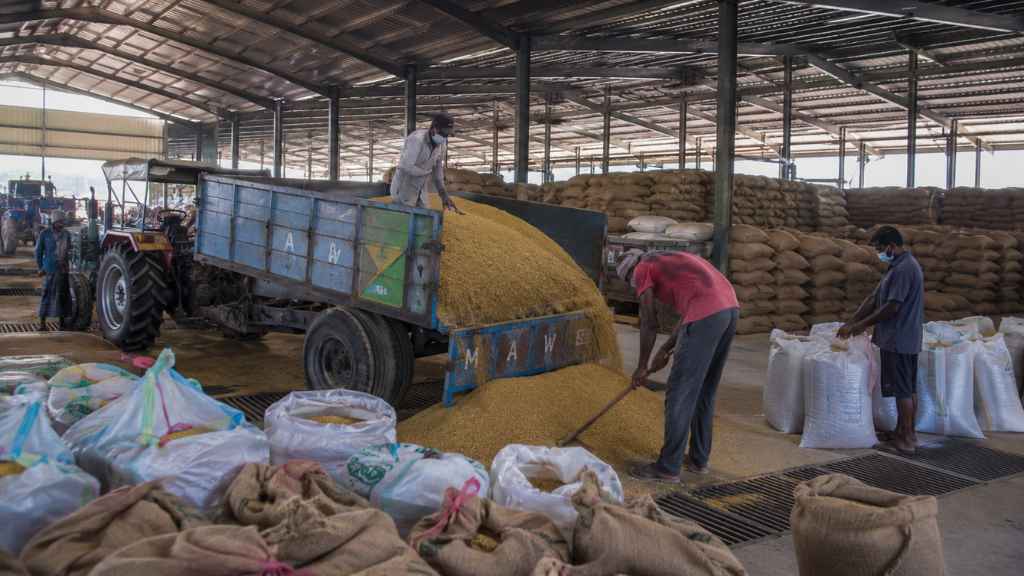
Sri Lanka to buy Yala paddy from Rs120kg starting July 13 as the government begins its annual procurement programme aimed at supporting farmers, maintaining stable market prices and strengthening the country’s strategic rice reserves.
Sri Lanka to buy Yala paddy from Rs120kg starting July 13 as procurement begins
The Paddy Marketing Board (PMB) announced that it will commence purchasing Yala season paddy from July 13, offering guaranteed prices of Rs.120 per kilogram for Nadu, Rs.130 per kilogram for Samba, and Rs.140 per kilogram for Keeri Samba. The programme is expected to provide farmers with a stable market while helping the government build an adequate national buffer stock ahead of future demand.
PMB Chairman Manjula Pinnalanda said state purchasing operations will initially begin in the Ampara and Ruhuna regions, along with parts of the Mullaitivu and Trincomalee districts, where harvesting activities have already started. Procurement in the remaining producing areas is scheduled to commence on July 20 as harvesting expands across the country.
According to Pinnalanda, the board has prepared an extensive procurement network to handle the expected increase in paddy supplies.
“We intend to step in from the 13th onwards to collect and secure the national buffer stock,” he said, adding that purchasing operations will be conducted through 143 warehouse locations across Sri Lanka.
Officials expect a strong Yala season paddy harvest this year, requiring additional storage capacity to accommodate increased volumes. Alongside its own warehouse network, the PMB will utilise facilities managed by the Department of Agrarian Development, the Mahaweli Authority and the Food Commissioner to store purchased paddy.
The board is also preparing contingency plans should state-owned storage facilities reach full capacity. Some warehouses continue to hold stocks following the government’s recent rice imports, prompting discussions on securing additional storage through private warehouses and Co-operative Society facilities if necessary.
To finance this year’s procurement programme, the government has allocated Rs.6 billion directly to the Paddy Marketing Board. An additional Rs.10 billion will be made available through state banks under the concessionary interest Odapana loan scheme, enabling small and medium-scale rice mill owners to purchase and stock paddy during the harvesting season.
Officials confirmed that eligible Co-operative Societies will also be able to access the concessionary financing programme, broadening participation in paddy purchasing and supporting rural agricultural communities.
Private rice millers have meanwhile assured the government that they are prepared to match the state’s guaranteed purchasing prices, provided the harvested paddy meets the required quality standards.
The PMB requires all purchased paddy to contain 14 percent or less moisture content, while chaff and impurities must remain below 9 percent. These quality requirements are intended to maintain storage standards and preserve the quality of the national rice reserve.
Pinnalanda said cooperation between the government and the private sector would play an important role in maintaining market stability throughout the harvesting period.
“If the private sector also stocks paddy and maintains these standards, it will stabilize the market,” he said. “Maintaining this rice supply chain is a collective responsibility, and we must all work together to sustain it.”
PMB Deputy General Manager Saman Palitha Bandara said simultaneous purchasing by state agencies and private millers would create healthy competition across 17 districts, helping farmers receive fair prices without unnecessary delays.
He noted that once government purchasing begins, private buyers are generally encouraged to offer prices at or above the official benchmark, creating a more competitive environment that benefits producers.
“The moment we open state warehouses, the private sector is compelled to purchase at or above that benchmark price,” Bandara said. “Through this mechanism, we ensure that the farmer receives a stable price quickly.”
Authorities also urged farmers to maintain strict quality standards throughout harvesting and post-harvest handling to ensure their produce qualifies for procurement under the government’s purchasing programme.
With Sri Lanka to buy Yala paddy from Rs120kg starting July 13, the procurement initiative is expected to support farm incomes, strengthen national food security and maintain stability in the domestic rice market during the current harvesting season.