

AI marketing in Sri Lanka is gaining momentum as businesses train employees to use artificial intelligence for sales, research and customer communications. As adoption accelerates, companies also need practical systems to ensure AI-generated claims remain accurate before reaching customers.
AI Marketing in Sri Lanka is expanding, but businesses need accountability alongside faster content production
Sri Lankan businesses are increasingly exploring artificial intelligence as a way to improve sales and marketing productivity, with training programmes now focusing on practical applications across the customer journey.
SLASSCOM’s two-day AI for Sales & Marketing workshop, which opened in Colombo on August 19 and runs through August 25, is training professionals to use AI for areas including market research, customer targeting, content creation, proposals, forecasting, analytics and sales communication.
The growing focus on practical applications reflects a broader shift in how companies view AI. Rather than treating the technology solely as an experimental tool, businesses are beginning to integrate AI into everyday workflows where speed and scale can directly influence commercial performance.
However, faster content production does not necessarily mean better business outcomes. One of the most important questions for companies is whether claims generated or assisted by AI remain accurate when they reach customers.
A practical solution is a claim-verification ledger that records the information behind consequential customer-facing statements. For each important claim, companies can identify the authoritative source, assign a human owner, record the date on which the information was last checked and establish a correction process if the claim later proves inaccurate.
Such a system could cover information including product prices, product capabilities, delivery timelines, eligibility requirements, warranties, return policies, regulatory statements, performance figures and contractual commitments.
The need for such controls arises because business information is often fragmented across websites, product documents, spreadsheets, customer relationship management systems and internal employee knowledge. AI systems can generate large volumes of material from that information, but inconsistencies in the underlying sources can also be reproduced and distributed more rapidly.
For companies pursuing AI adoption in business, the objective should therefore not be to prevent automation but to understand where human verification remains essential.
A straightforward 30-day internal test could help businesses identify the problem. Companies could select 20 recurring claims appearing in marketing material, sales proposals, emails and customer responses. They could then track how frequently employees need to correct AI-generated information before publication, how often customers subsequently report confusion, how long verification takes and which information sources create recurring problems.
This approach would allow management teams to distinguish genuine productivity gains from accelerated rework. A marketing department that produces twice as much content but spends its additional time checking facts, correcting customer misunderstandings and updating inaccurate material may have increased output without achieving a comparable increase in value.
The issue is becoming more relevant as Sri Lanka expands its national focus on artificial intelligence. The government has announced Sri Lanka AI Week 2026 for late September and early October as part of efforts to strengthen the country’s AI ecosystem and digital economy. As more professionals receive AI training and more companies incorporate AI into their operations, customer-facing communications are likely to become an increasingly important area of adoption.
A claim-verification ledger could provide businesses with a relatively simple operating mechanism for managing that transition. Repeated corrections could identify weaknesses in source data, while frequent exceptions could reveal unclear decision-making responsibilities or areas where employees need additional guidance.
At the same time, claims that consistently remain accurate and require minimal intervention could eventually become candidates for greater automation.
The broader lesson for AI marketing in Sri Lanka is that speed and accountability should develop together. AI can help businesses produce marketing and sales material faster, but companies remain responsible for what ultimately reaches customers.
For Sri Lankan firms preparing for a wider phase of AI adoption, the priority should therefore be practical rather than theoretical: establish where important claims originate, identify who owns them and create a clear mechanism for correcting mistakes.
As AI becomes more deeply embedded in commercial communication, that discipline could help businesses capture the benefits of automation without allowing faster production to create a larger and less visible accuracy problem.
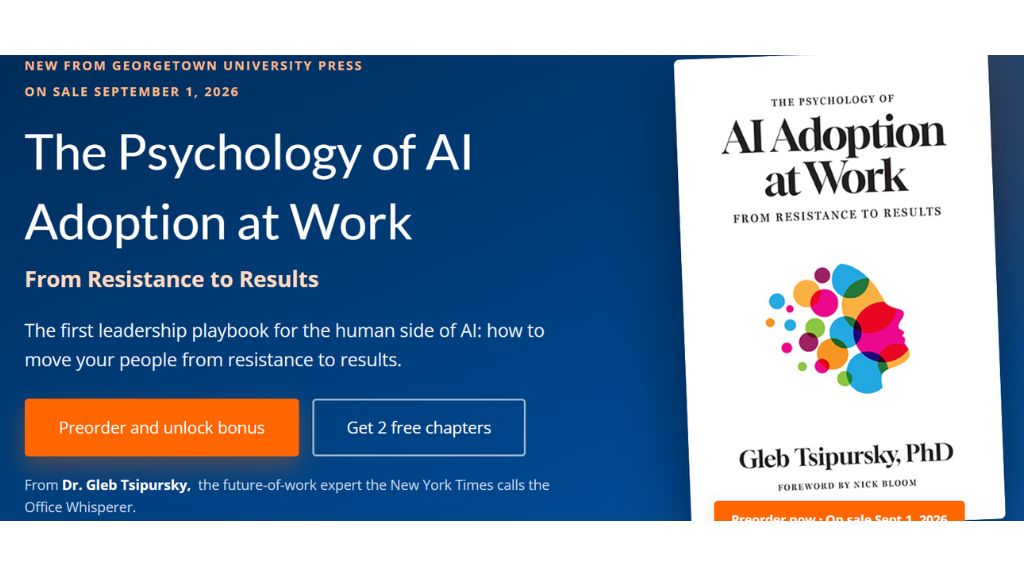
About the contributor: Gleb Tsipursky, PhD, is a behavioral scientist, CEO of Disaster Avoidance Experts and author of The Psychology of AI Adoption at Work: From Resistance to Results, published by Georgetown University Press in 2026. The views expressed in this commentary are those of the contributor.