

Decision Support Systems have been launched for Sri Lanka’s fisheries and plantation sectors under the Inclusive Digital Agriculture Transformation Program, strengthening the Government’s use of integrated data for policy, planning and resource management.
Decision Support Systems strengthen data-driven governance across Sri Lanka’s key sectors
The Government has formally launched and handed over the two platforms as Government-owned digital public assets, marking a significant step in the country’s broader digital transformation agenda. The initiative is designed to help public institutions move away from fragmented reporting towards more coordinated, evidence-based decision-making.
The Fisheries Sector Decision Support System brings together information from six Government institutions: the National Aquaculture Development Authority, Ceylon Fisheries Harbours Corporation, Ceylon Fisheries Corporation, Cey-Nor Foundation, North Sea Ltd. and the Central Fish Market in Colombo.
The platform combines datasets from these institutions with dashboards, visual analytics, reports, monitoring tools and alerts. These features are intended to support decisions covering fisheries production, aquaculture, market intelligence, operational performance, sustainability and resource management.
The development process included consultations with participating institutions, system design, analytical development, validation, capacity building, user acceptance testing and production-readiness activities. This approach was intended to ensure that the technology is aligned with the operational requirements of the agencies expected to use it.
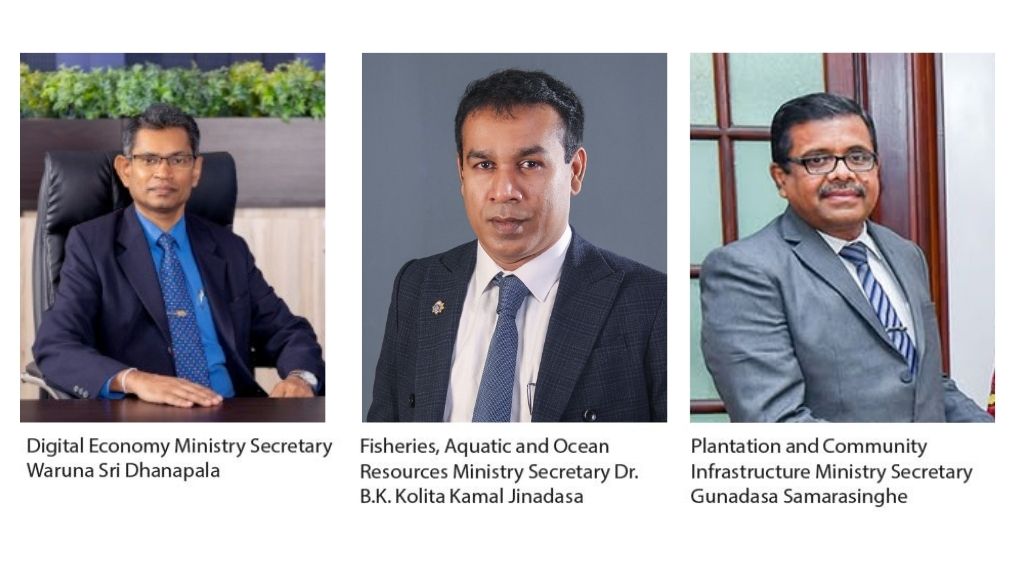
Fisheries, Aquatic and Ocean Resources Ministry Secretary Dr. B.K. Kolita Kamal Jinadasa said the fisheries platform would strengthen planning, monitoring, forecasting and resource management by bringing institutional data together. He also linked the initiative to improvements in institutional efficiency, transparency and responsiveness.
The Plantation Sector Decision Support System similarly integrates information from several key institutions, including the Sri Lanka Tea Board, Tea Small Holdings Development Authority, Rubber Development Department, Rubber Research Institute of Sri Lanka, Coconut Cultivation Board, Coconut Development Authority and Sri Lanka Cashew Corporation.
The plantation platform is designed to give decision-makers a more comprehensive view of developments across major plantation commodities. Through a single Government-owned platform, users can monitor tea, rubber, coconut and cashew performance, examine district-level trends, review exports and investments, track subsidy programmes and assess climate and weather-related impacts.
These capabilities could provide Government institutions with a stronger basis for identifying areas requiring intervention and directing programmes and investments more effectively. The availability of integrated information is particularly relevant for sectors where production, weather conditions, market movements and regional differences can significantly affect outcomes.
Plantation and Community Infrastructure Ministry Secretary Gunadasa Samarasinghe said the platform would improve institutional coordination, operational efficiency and long-term planning. He described the initiative as an example of how collaboration and digital public infrastructure can contribute to a more competitive, resilient and sustainable plantation economy.
The progress of the IDAT programme was also highlighted during a recent visit to Sri Lanka by a Gates Foundation delegation. Government stakeholders demonstrated the fisheries and plantation dashboards to the delegation, highlighting progress in integrating public-sector data for planning and decision-making.
The platforms form part of the Government’s wider push to develop trusted digital public infrastructure and strengthen evidence-based governance across agriculture and fisheries. Their formal handover means responsibility for continued operation and use now rests with the relevant Government institutions.
Digital Economy Ministry Secretary Waruna Sri Dhanapala said interoperable data systems, digital technologies and advanced analytics were becoming fundamental to modern governance. He said the two platforms demonstrated how digital public infrastructure could improve evidence-based decisions, institutional coordination and service delivery in strategically important sectors.
The IDAT Consortium delivered the programme, bringing together the Ministry of Fisheries, Aquatic and Ocean Resources, the Ministry of Plantation and Community Infrastructure, the Ministry of Digital Economy, Sarvodaya, PwC, MillenniumIT ESP and Connect to Care. The participating organisations contributed expertise in areas including sector engagement, institutional assessments, data governance, systems architecture, technology development, analytics, capacity building and operational readiness.
Connect to Care Inclusive Digital Agriculture Transformation Programme Project Director Major General (Retd.) Chandana Priyantha Arangalla said the programme management office had focused on coordination across a complex institutional environment while keeping Government objectives at the centre of delivery.
The long-term value of the platforms will depend on how consistently Government agencies update, share and use the information they contain. Technology alone cannot deliver better public-sector outcomes unless institutions maintain data quality and incorporate analytics into routine decision-making.
The launch of these Decision Support Systems nevertheless establishes an important digital foundation for Sri Lanka’s fisheries and plantation sectors. By connecting institutions around shared information, the Government aims to improve coordination, strengthen planning and turn public-sector data into more measurable outcomes.
For Sri Lanka’s digital transformation programme, the initiative also illustrates a broader shift from simply collecting government data towards using it as an active tool for policy, investment and service delivery. Continued institutional ownership and regular use will determine how effectively the new systems translate that ambition into practical results.