

India Trade Desk is set to create new opportunities for Sri Lankan businesses seeking to enter India’s rapidly expanding economy, offering customised advisory services, strategic partnerships and long-term investment support to navigate one of the world’s most dynamic but complex markets.
India Trade Desk aims to help Sri Lankan businesses expand into India’s growing market
The new platform, launched in Colombo by Global Investment and Trade Advisors (GITA) in partnership with the Indo-Lanka Chamber of Commerce and Industry (ILCCI), aims to bridge the gap between the two neighbouring economies by helping Sri Lankan companies confidently expand into India while also encouraging greater Indian investment into Sri Lanka.
Founded by former senior officials of Invest India, the Government of India’s national investment promotion agency, GITA specialises in investment promotion and investor facilitation. The organisation’s founders have advised multinational corporations and global investors on establishing operations across India and now hope to bring that expertise to Sri Lankan businesses.
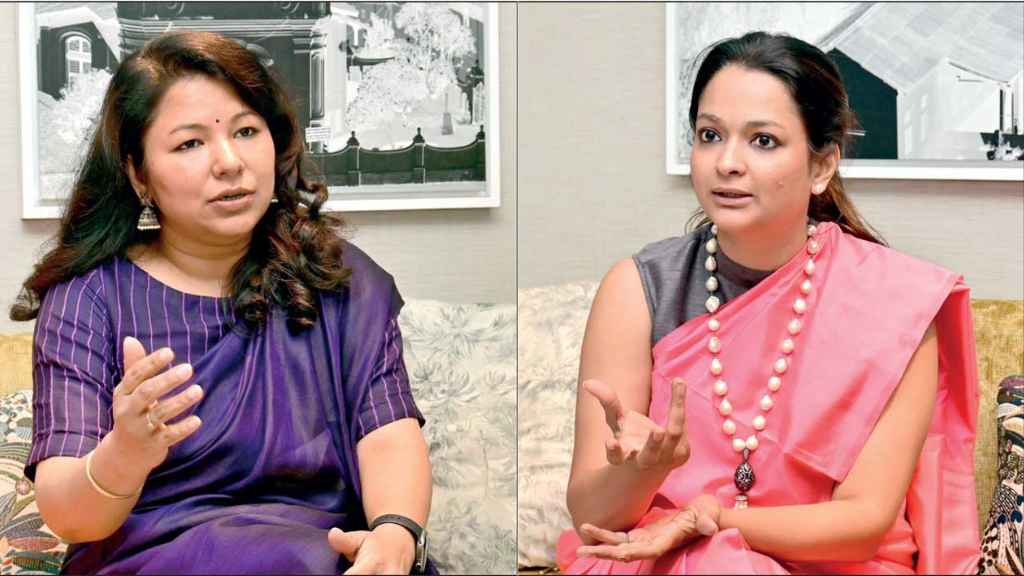
Speaking in an interview with the Daily FT, GITA Founding Partner Priya Rawat said the India Trade Desk was established to provide practical, confidential and personalised support throughout a company’s investment journey rather than simply facilitating networking events.
She noted that despite the complementary nature of the Sri Lankan and Indian economies, commercial engagement remains well below its full potential, particularly for small and medium-sized enterprises (SMEs), many of which continue to perceive India as a challenging market.
Rawat highlighted that India is currently undergoing a significant economic transformation, supported by strong foreign direct investment inflows, a growing middle class and major structural reforms that have improved the country’s ease of doing business.
She pointed to initiatives such as the Goods and Services Tax (GST), Production Linked Incentive (PLI) schemes, PM Gati Shakti, the National Logistics Policy and India’s digital public infrastructure, including Aadhaar and UPI, as reforms that have strengthened logistics, supply chains and the investment climate.
GITA Adviser Sai Sudha Chandrasekaran said one of the biggest misconceptions among Sri Lankan businesses is viewing India as a single market.
Instead, she explained that India should be approached as a collection of 28 states and eight Union Territories, each with distinct industries, regulations, consumer behaviour and investment ecosystems.
Rather than attempting a nationwide expansion, companies should identify the state that best matches their business objectives before gradually expanding their presence.
According to Chandrasekaran, Gujarat offers strengths in manufacturing, ports and logistics, Maharashtra serves as India’s financial and corporate centre, Tamil Nadu is a leader in manufacturing, automobiles and electronics, while Karnataka continues to dominate technology and innovation.
She said the most promising sectors for Sri Lankan companies include apparel and textiles, food processing, ICT and business process management services, pharmaceuticals, logistics, tourism, automobile components and value-added agriculture.
Government-backed manufacturing initiatives such as the PLI schemes and PM MITRA Mega Textile Parks are also creating attractive opportunities for foreign businesses seeking to integrate into India’s expanding industrial ecosystem.
Beyond exports, Rawat believes the greatest opportunity lies in India-Sri Lanka investment through stronger supply-chain integration.
She said Sri Lankan firms, particularly SMEs, could collaborate through industry clusters and joint ventures to supply specialised products and components into India’s growing manufacturing base, enabling both countries to build globally competitive value chains serving regional and international markets.
Unlike traditional trade organisations, the India Trade Desk provides continuous advisory support tailored to each company’s requirements.
Rawat explained that businesses receive assistance ranging from identifying suitable distributors and manufacturing partners to navigating regulations, engaging with government agencies and supporting future expansion.
Chandrasekaran added that the level of assistance is customised according to the size of the business. While larger corporations often require support with policymakers and investment incentives, SMEs typically need practical market research, introductions to buyers, distributors and suppliers, along with regulatory guidance.
She noted that many smaller companies cannot afford dedicated teams in India, making personalised advisory services particularly valuable.
Looking ahead, Rawat said GITA’s long-term objective is to build a sustainable India-Sri Lanka investment corridor rather than simply increase the number of companies entering the market.
Although assisting between 20 and 30 Sri Lankan companies during the first year would represent a strong start, she said success would ultimately be measured by the quality of long-term investments, commercial partnerships and cross-border business relationships established through the initiative.
Both executives encouraged Sri Lankan companies not to delay exploring opportunities in India, noting that the country’s manufacturing capabilities, logistics infrastructure and investment environment have evolved significantly over the past decade.
They revealed that more than 30 Sri Lankan companies had already requested one-to-one discussions within days of the platform’s launch, reflecting growing interest in expanding into one of the world’s fastest-growing major economies.