

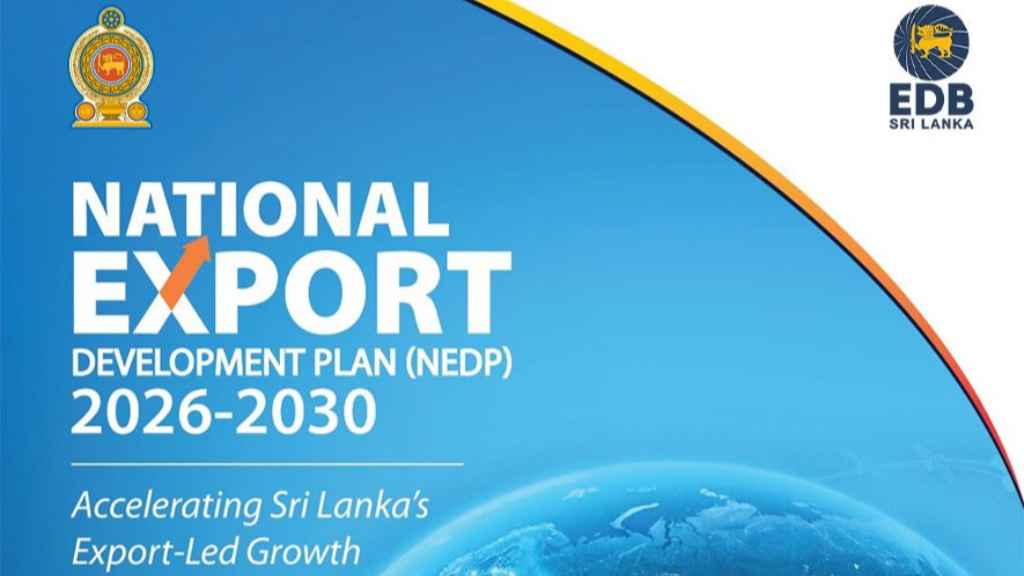
Sri Lanka export plan is set to guide the country’s export sector over the next five years, with authorities targeting export earnings of 36 billion US dollars by 2030 through diversification, value addition and enhanced global competitiveness.
Sri Lanka export plan focuses on diversification, value addition and global competitiveness
The Sri Lanka Export Development Board (EDB) announced that the National Export Development Plan (NEDP) 2026–2030 will be officially launched as the country’s strategic roadmap for export growth. Developed with technical assistance from the Asian Development Bank (ADB), the initiative aims to strengthen Sri Lanka’s position in international markets while creating a more resilient and sustainable export sector.
According to the EDB, the National Export Development Plan has been designed around two key pillars that will support long-term export expansion and economic growth.
The first pillar focuses on what the EDB describes as “Horizontals” — the foundational enablers required to drive growth across multiple export industries. These include trade facilitation measures, improvements to trade finance, investment ecosystem development, market access initiatives, trade promotion activities, and enhanced supply chain management.
The plan also prioritises the development of consolidation centres to improve export logistics and efficiency. In addition, it places strong emphasis on strengthening quality infrastructure, standards compliance, and environmental, social and governance (ESG) practices to ensure Sri Lankan exporters remain competitive in increasingly regulated global markets.
Skills development, innovation and entrepreneurship have also been identified as critical components of the strategy, reflecting the growing importance of technology, productivity and workforce capabilities in driving export-led growth.
The second pillar of the Sri Lanka export plan focuses on eight priority sectors that have been selected to accelerate export diversification and increase value-added production. Authorities believe these sectors offer significant opportunities for expansion in international markets while reducing dependence on a limited range of export products.
The identified sectors include auto components, minerals-based industries, rubber-based industries, marine-based industries including boat and shipbuilding, spices and concentrates, digital products and services, electrical and electronic components, and processed food and beverages.
By targeting these industries, policymakers aim to strengthen Sri Lanka exports through greater product sophistication, improved manufacturing capabilities and increased participation in regional and global value chains.
The inclusion of digital products and services highlights the country’s growing focus on technology-driven exports, while sectors such as marine industries, electrical components and processed foods are expected to contribute to higher-value export earnings in the coming years.
The EDB noted that the National Export Development Plan was formulated through an extensive consultative process involving more than 300 contributors from across the public and private sectors. Civil society organisations and international development partners also participated in shaping the strategy, ensuring that a broad range of perspectives and expertise were incorporated into the final framework.
The collaborative approach is expected to support stronger implementation and greater alignment between government institutions, businesses and industry stakeholders as Sri Lanka pursues its ambitious export growth targets.
The launch of the Sri Lanka export plan comes as the country seeks to accelerate economic recovery, expand foreign exchange earnings and attract greater investment into export-oriented industries. Achieving the 36 billion dollar export target by 2030 would represent a significant milestone for the economy and reinforce the role of exports as a key driver of sustainable growth.
With a clear focus on competitiveness, innovation and diversification, the new roadmap is expected to play a central role in shaping the future direction of Sri Lanka exports over the remainder of the decade.