

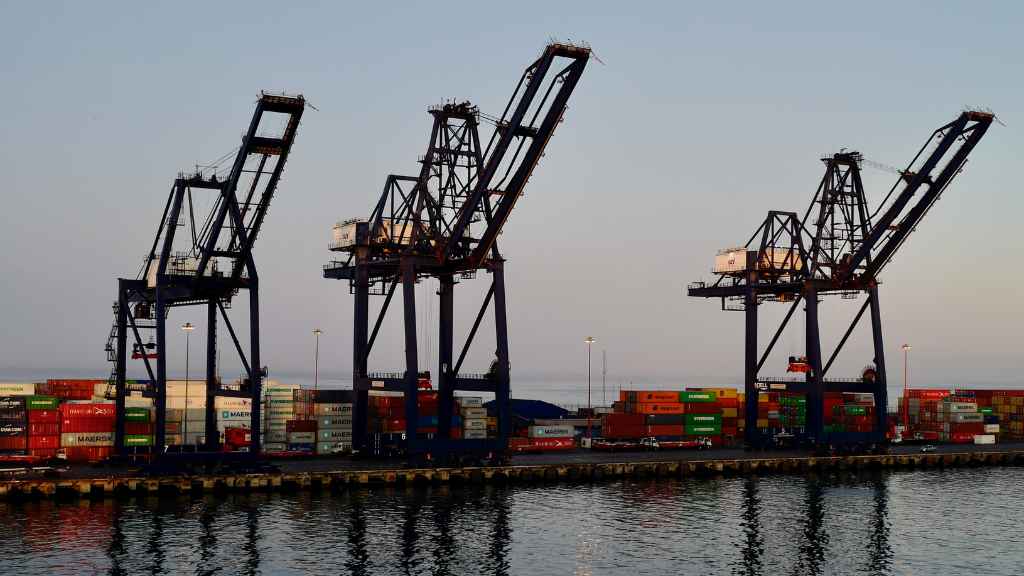
Hambantota International Port invests $108m in new cranes, marking a major upgrade to its container terminal and reinforcing Sri Lanka’s position as an emerging logistics hub in the Indian Ocean. The investment will significantly increase capacity and operational efficiency.
Hambantota International Port invests $108m in new cranes to expand capacity to 2 million TEUs
Hambantota International Port invests $108m in new cranes, signaling a substantial expansion of its container terminal and enhancing its strategic role in global shipping. The agreement, signed on 26 March at the Hilton Colombo, partners HIPG with Shanghai Zhenhua Heavy Industries Co., Ltd. (ZPMC) to procure six quay cranes, 16 rubber-tyred gantry cranes (RTGs), and 40 trailers as part of the Phase II development of the port.
The investment comes amid rising demand for alternative logistics hubs as global shipping patterns shift due to geopolitical tensions and supply chain disruptions. HIP’s location, just 10 nautical miles from the main East–West shipping route, offers shipping lines minimal deviation and operational reliability, reinforcing Sri Lanka’s stature as a strategic logistics hub in the Indian Ocean.
People’s Republic of China Ambassador to Sri Lanka, Qi Zhenhong, emphasized the significance of the project in strengthening bilateral cooperation. “Today’s signing marks another important achievement in deepening China–Sri Lanka port collaboration, reflecting shared commitment to joint development and mutual benefit,” he said, highlighting the long-term strategic impact of the investment on the country’s port system.
Ports and Shipping Minister Anura Karunathilaka highlighted the port’s evolving role beyond transhipment. “Sri Lanka should emerge as a comprehensive marine services hub, providing bunkering, ship repairs, crew changes, and logistics support. Hambantota is evolving into a modern, integrated port and industrial ecosystem capable of meeting global maritime needs,” he noted. The Minister also pointed to the global trend of supply chain diversification and the opportunities for foreign investment in Sri Lanka’s industrial zones.
The new quay cranes, featuring a 72-metre outreach, 55-metre lifting height, and 65-ton lifting capacity, will enable HIP to handle the world’s largest container vessels. The RTGs will enhance yard efficiency and support environmentally sustainable operations through electrification. Once operational, these assets will activate the port’s existing 1,300-metre container berth, increasing annual container capacity to approximately 2 million TEUs and extending the total quay length to nearly 2 kilometres, allowing simultaneous handling of multiple large vessels.
HIP has recorded remarkable growth across its core business segments. In 2025, the port handled 8.24 million tonnes of cargo, up from 3 million tonnes in 2024. Roll-on/Roll-off operations increased to 726,153 units from 579,362, while container throughput surged to 428,036 TEUs compared to 53,169 TEUs in the previous year. These figures demonstrate the port’s rapid emergence as a regional transhipment hub and reflect growing investor confidence.
Ambassador Qi described Hambantota Port as “a flagship project of China–Sri Lanka cooperation” aligned with national development priorities. He noted that the port serves as a development platform benefiting southern Sri Lanka and contributing to regional economic prosperity. The integration of industrial elements alongside container, RoRo, and energy operations is transforming the port into a comprehensive economic engine.
The port’s expansion is also aligned with national sustainability objectives. The shift to electric RTGs reduces emissions, contributing to Sri Lanka’s “Clean Sri Lanka” initiative while enhancing operational efficiency. The development of the port’s industrial park complements container terminal growth, with the first manufacturing facility already operational, demonstrating a coordinated approach to logistics, manufacturing, and value-added services.
The signing ceremony was attended by high-level representatives, including Ports and Civil Aviation Deputy Minister Janitha Ruwan Kodithuwakku, Sri Lanka Customs Director General Seevali Arukgoda, Board of Investment Director General Renuka Weerakone, HIPG CEO Wilson Qu, CMport COO and HIPG Chairman Vincent Lu, ZPMC Vice President Zhang Jian, and ZPMC Deputy Director of Sales and Marketing Michael Yang. Their presence underscores the strategic importance of the project for both Sri Lanka and international partners.
With government support and continued collaboration with international stakeholders, Hambantota International Port is poised to strengthen its position as a resilient and strategically significant logistics hub in the Indian Ocean. The $108 million investment ensures the port can meet rising global demand while advancing Sri Lanka’s ambitions as a regional centre for maritime trade, logistics, and industrial development.